

Just a few weeks ago, the “budget-friendly” Shopee head unit I’ve had on my car finally died. I wasn’t surprised; for two years, I’d put up with a laggy UI, bi-polar Bluetooth, and audio quality that made my Carrozzeria speakers sound like they were underwater. It was a classic case of “you get what you pay for.”
As I was looking for a proper replacement, I gave it a thought about how modern cars now have those “glued-on iPads” for an infotainment system. Don’t get me wrong, it’s functional and (sometimes) simple to use. You get Google Maps at eye level and wireless Apple Carplay or Android Auto which is great for daily commuting.
But as I sat there, staring at the blank screen, I realized that we’ve traded personality for utility. In our obsession with minimalism and smartphone integration, we’ve scrubbed the personality right out of the dashboard. Modern screens are cold, flat, and clinical. They don’t react to the music; they don’t have a “startup ceremony”; they don’t feel like a piece of the car’s soul. They’re just tablets that happen to be in a car.
I didn’t really pay attention to these kinds of stereos before. But looking at them now? I realize they were onto something. Back then, head units were so prized they were notorious for being stolen. You didn’t just park, you popped off the faceplate or watched a Kenwood “D-Mask” mechanically flip over to hide itself.
It wasn’t just a stereo; it was over-engineered “cockpit jewelry.” Companies like Pioneer and Alpine weren’t trying to mirror your phone, they were competing to build a performance.
The “Dolphin” Head Units
This was the era of the Organic EL (OEL) display. You’ll find this tech on the legendary Pioneer or Carrozzeria “Dolphin” series such as the DEH-P6400, and even the motorized Kenwood D-Mask.
During the late ‘90s and early 2000s, these were the ultimate flex for any audio enthusiast, but they also came with a high price…quite literally. This was an era when car break-ins were rampant and the most common stolen item was the faceplate of the headunit. It was because they were the easiest to remove and had a high resale value. If you ever forgot to remove the faceplate right after you parked, you were basically asking for your car to be broken into.
Manufacturers were aware of how rampant the theft was to the point they started designing these 1-DINs to have removable faceplates, or better yet the motorized Kenwood D-Mask, which flipped over to hide its face behind a blank, stealthy panel as soon as you turn the car off.
To a modern observer, the idea of staring at a 1-bit animation of a dolphin jumping through waves or an IndyCar racing across a tiny screen sounds wild. Yeah, it probably had the resolution and graphics of an old Nokia phone, but back then? These weren’t just displays; they were tiny digital cinemas.
The Double-DIN Era
While the 1-DINs had their dolphins and other animations, the Double-DIN (2-DIN) units were the heavy hitters. These were substantial pieces of hardware that completely dominated the center of your dashboard, making your interior feel like a high-end recording studio.
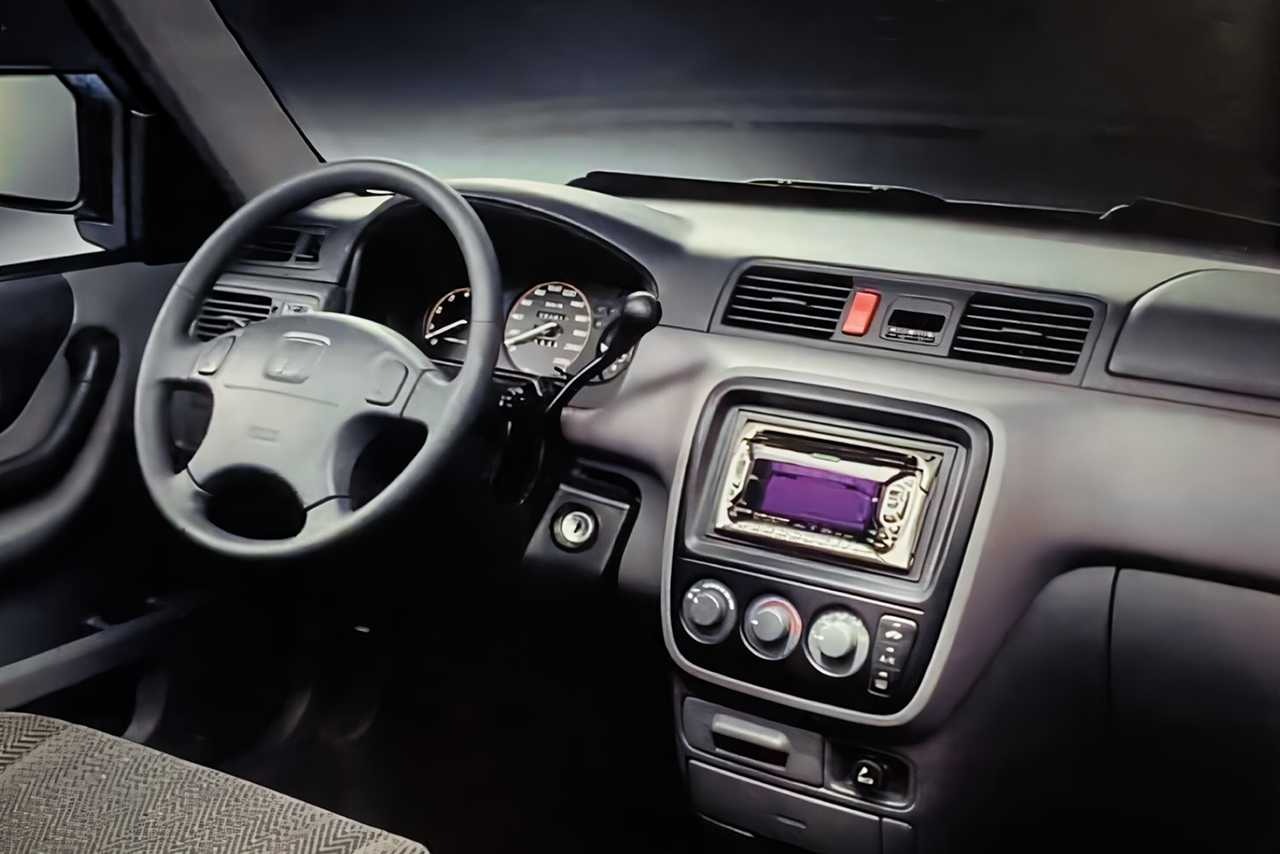
Photo Source: https://www.facebook.com/share/1C2P19o6TA/
Take for example models like the Kenwood DPX-510 and DPX-440. These units were often found on 1st Gen Honda CR-Vs and having the “Honda” logo printed around the faceplate. 2-DIN stereos like these also featured both a CD player and a Cassette deck, catering to an era where we still had tapes in the glovebox but were burning CDs on our computers.
Kenwood’s DPX models and other 2-DIN units from that time also featured a motorized “lean” or tilt function that allowed the entire face to angle itself based on the driver’s preference. It also tilted itself if you wanted to put in a CD or a cassette tape that is located behind the faceplate.
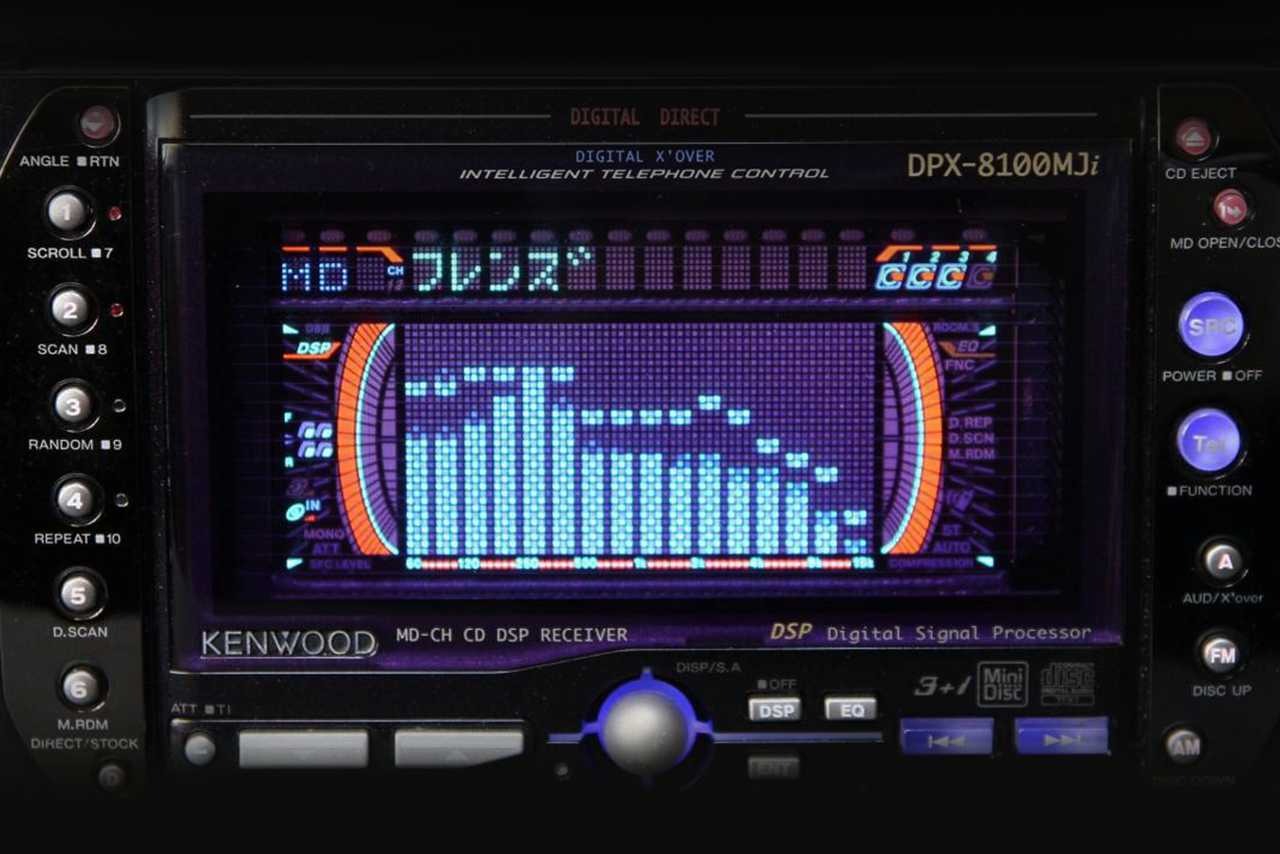
While those Pioneer or Carrozzeria 1-DINs gave you “movies”, these kinds 2-DIN stereos gave you a light show. They featured massive Spectrum Analyzers. Instead of a jumping dolphin, you had rows of glowing bars that visualized your songs in real-time. Combined with a built-in DSP, these kinds of head units turned your cabin into a virtual concert hall.
The Digital Takeover
The stereos I have mentioned are now collector’s items and audio enthusiasts now hunt for clean, surviving units from JDM importers. Much like how music lovers have returned to vinyl records, the car community is rediscovering that these units offer a level of character and build quality that modern tech just can’t replicate.
The best part is you don’t need to sacrifice your Spotify playlist if you really want to go period-correct. Some people go as far as retrofitting Bluetooth modules into the boards, some just simply use an FM transmitter.
The shift away from these units wasn’t just about style; it was simply about the move toward digitalization. I get the convenience, having your entire life synced via CarPlay or Android Auto is undeniably useful. But in that move toward modernization, manufacturers realized it was far more efficient to consolidate every function into a single screen. It’s the same trend we see with AC panels; while a screen looks “clean,” we’ve lost the ability to adjust things by feel alone.
The death of physical media, the transition from CDs to iPods, and now to total wirelessness meant we didn’t need the “theater” of a motorized faceplate or visualizer anymore. Hell, even the Aux port is becoming a rarity. But for some of us, a massive screen in the middle of your dashboard can feel more like a distraction than an upgrade. Some might say a screensaver of a jumping Dolphin or a visualizer is distracting, but it’s nothing compared to a tablet.