

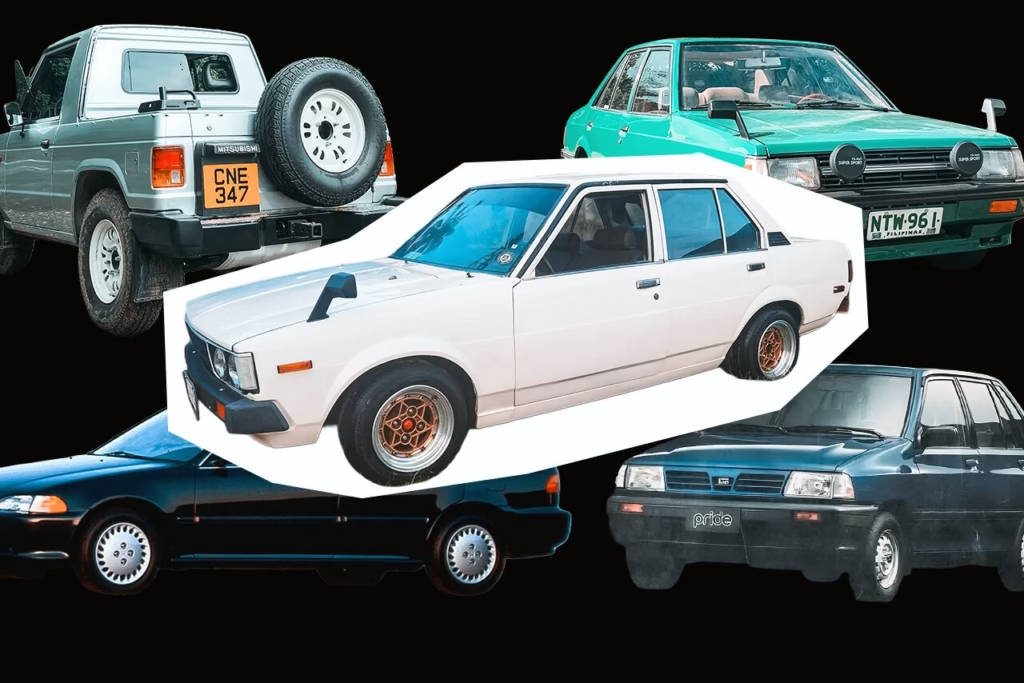
Cars That Defined the Philippines in the ‘80s and Early ‘90s
Car designs come and go, but some models don’t just pass through our roads, they become part of our childhood, our weekends, our family stories.
The ‘80s were a tough era for the Philippines. With factories shutting down, brands pulling out, and new cars becoming harder to afford, families learned to love and hold onto the cars they already had. And by the early ‘90s, when the economy steadied and new models finally returned, our streets filled with a mix of rugged survivors and fresh Japanese compacts that defined an entire generation.
Before crossovers flooded every garage and before modern tech made cars feel the same, we had vehicles with real personality. Boxy silhouettes, chrome bumpers, diesel clatter, cloth seats that survived decades, and engines so tough they outlived their owners’ patience.
These were the cars that filled school parking lots, provincial highways, sari-sari store streets, and Sunday family trips. You didn’t need to own one to remember them, you just had to grow up in the Philippines.
Here’s a nostalgic trip back to the cars that shaped Filipino life in the ‘80s and early ‘90s.
Mitsubishi Lancer “Boxtype” (A173-A174)
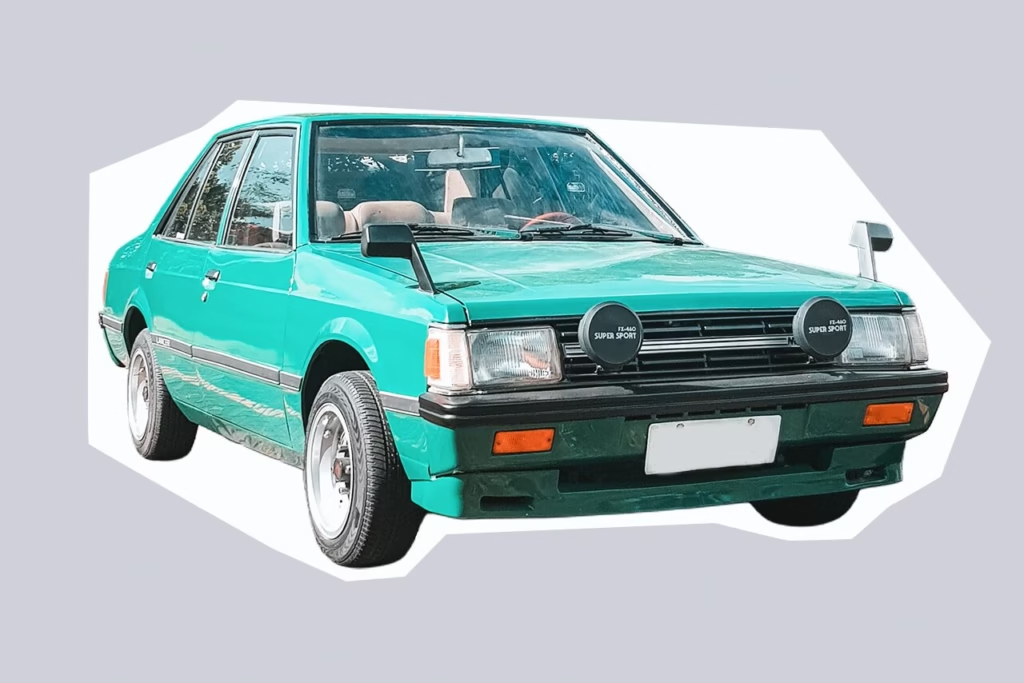
The second-generation Lancer, lovingly called the “Boxtype”, was sold in the Philippines from 1979 to 1987 (some argue 1988), with over 8,600 units finding homes around the country. Its straightforward design, easy maintenance and ever-dependable 4G33/4G32 engines made it a practical and accessible choice for Filipino families during a decade when the local auto industry was facing economic and political turbulence and when new-car options were noticeably limited.
From the humble SL to the sportier GSR and GT trims, which people often joked made you “sosyal” if you owned one. The Boxtype became a familiar sight everywhere, from street racing to local motorsport events, even appearing in ’80s and ‘90s films that needed an authentic slice of Manila life. Decades later, it remains one of the most recognizable cars of its time, remembered for its simplicity, reliability, and the countless everyday stories it carried.
Mitsubishi L300
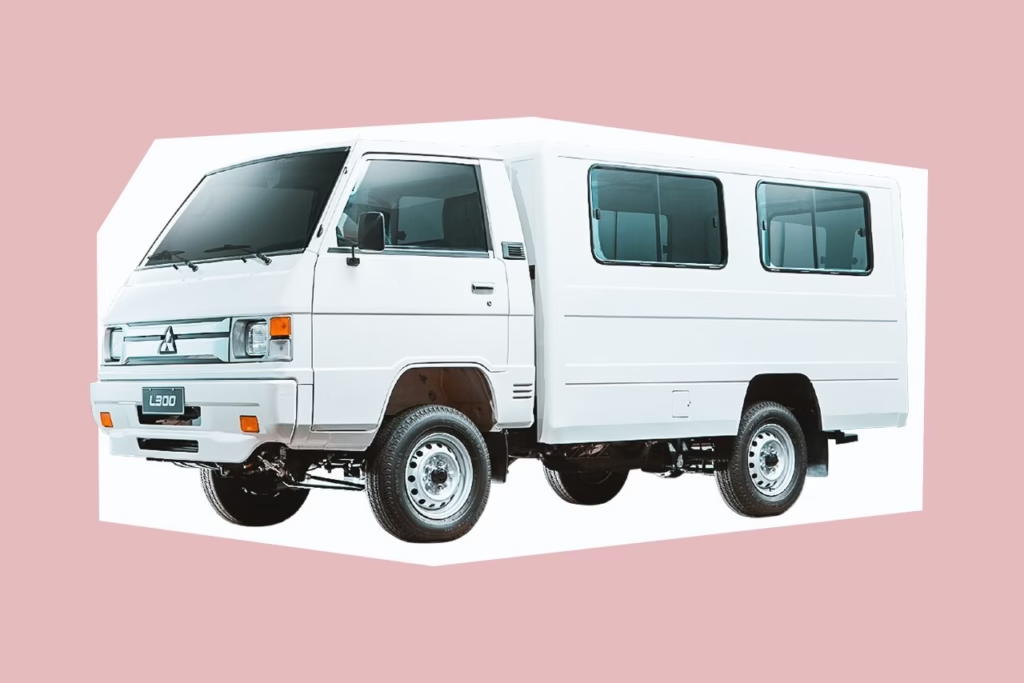
In the 40+ years since its release, no vehicle has worked harder in Philippine history.
Name a Filipino business and there’s a good chance an L300 FB helped keep it running. Whatever job you throw at it, the L300 always says “kaya.” Construction bed? Kaya. UV Express? Kaya. Barangay patrol or SWAT unit? Kaya. Ambulance? Kaya.
Few vehicles have earned mythical status the way the L300 has. It simply refuses to quit no matter the mileage, the route, or the decade. If Filipino vehicles had a superhero, the L300 is the one with unlimited plot armor.
Mitsubishi Pajero (1982-1991)
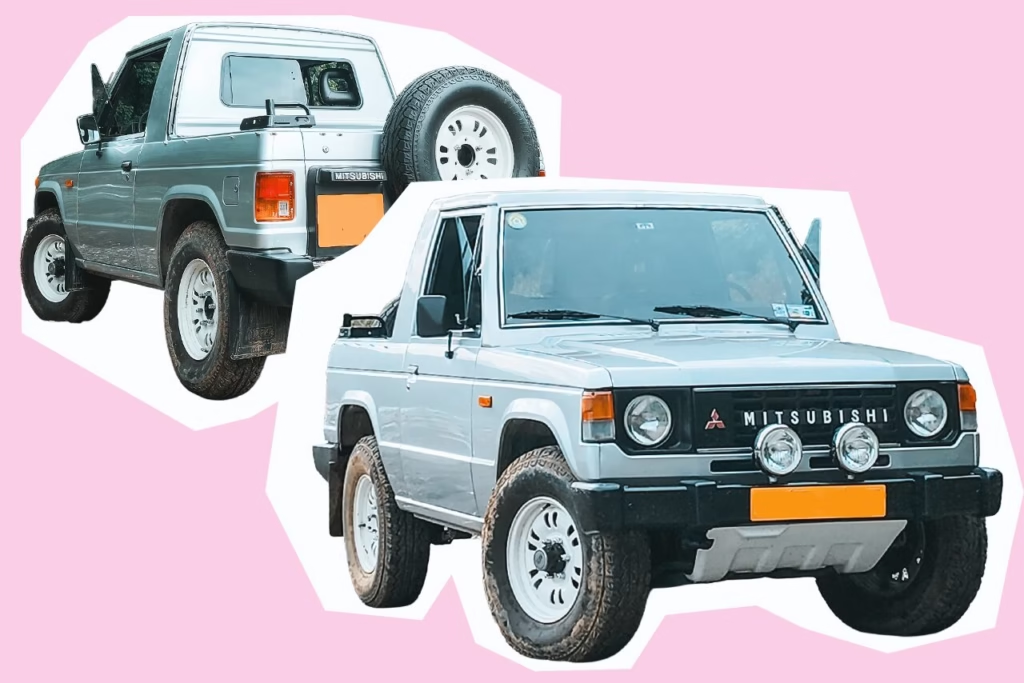
The first-generation Pajero — often called the “Pajero Boxtype” was one of the most eye-catching SUVs of its era.
It came in several body styles, including the familiar 5-door, the small wheelbase 3-door, and the rare J-Top, a soft-top version that looked like a mix between a trail toy and a weekend cruiser. Under the hood, it ran either the dependable 4D56 diesel or the 4G54 gasoline engine, both helping cement its reputation as one of Mitsubishi’s toughest creations. If the L300 was the country’s tireless workhorse and the Lancer “Boxtype” was the everyday family favorite, the Pajero Boxtype was the adventurous one in the family, the one always ready for climbs, mud, and road trips.
People also remember the altimeter, compass, and inclinometer proudly sitting on the dashboard. They weren’t exactly essential, honestly more of a fun gimmick, but they made every kid feel like they were riding in an expedition vehicle. The Pajero was roomy, capable, and dependable, and when Mitsubishi followed it up with the second generation, the name only became even bigger.
Toyota Corolla KE70
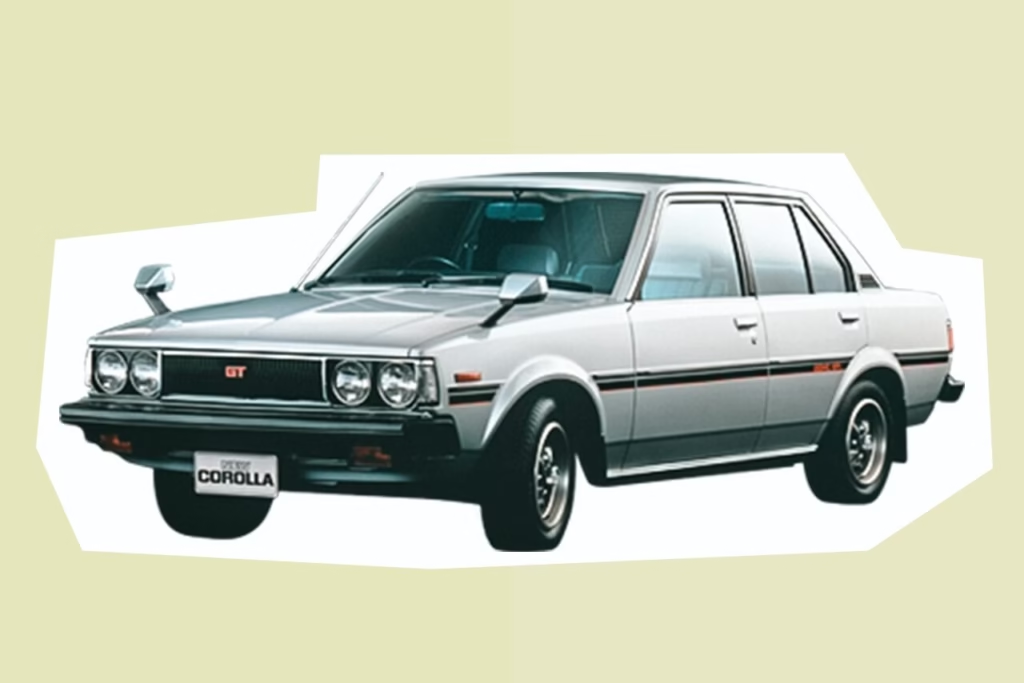
Before the Smallbody era took over the ’90s, the KE70 was the Corolla you’d see everywhere, from city side streets to wide provincial highways. With its clean, squared-off body and classic late-’70s/early-’80s styling, the KE70 had a charm that still hits differently today.
Powered by Toyota’s simple and reliable 1.3L 4K engine, it became known for being nearly unkillable, the type of car you could hand down from kuya to bunso and it would still start every morning without complaint.
The KE70 was the definition of “practical but cool.” Families bought them for reliability, but the younger crowd eventually embraced them too, especially as the rear-wheel-drive layout made it a favorite for early enthusiasts, drifters, and anyone who liked tinkering with old Toyotas.
Whether used as a daily or weekend project, the KE70 earned a reputation for being tough, easy to fix, and friendly to modifications. Today, seeing a clean one instantly brings back memories of an era when cars were simpler, roads were quieter, and the Corolla name already meant one thing: rock-solid dependability.
Toyota Corona “Macho Machine”
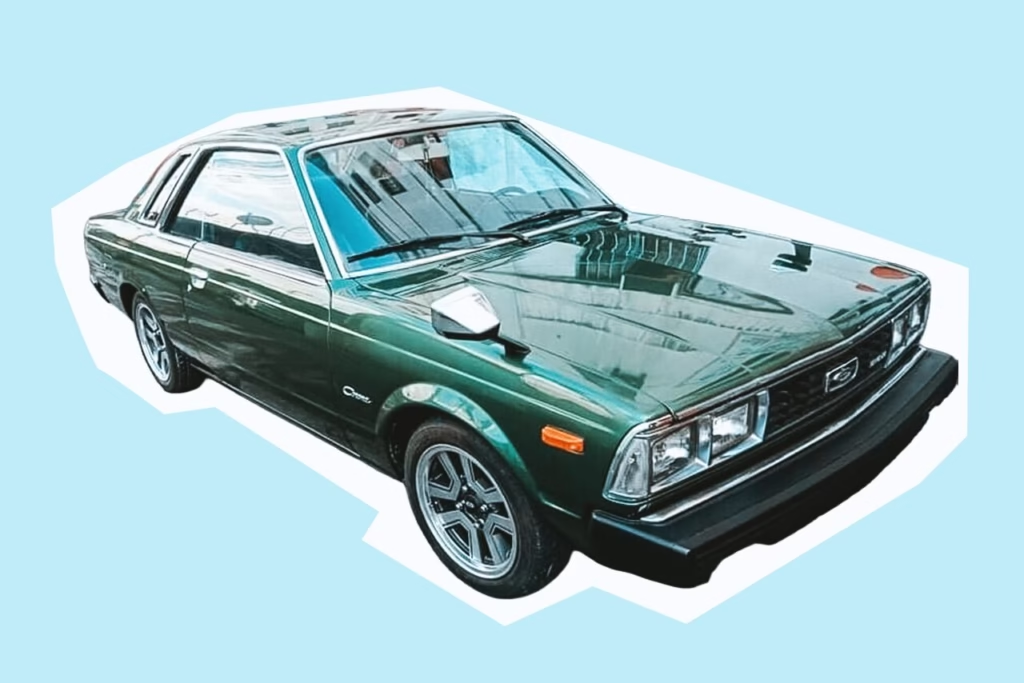
The Toyota Corona Hardtop, better known as the “Macho Machine,” was one of the most unforgettable shapes on Philippine roads in the early ’80s.
With its sharp lines, wide stance, and rear-wheel-drive layout, it had a presence no ordinary sedan could match. It looked tough without trying, the kind of car that seemed like it belonged to the tito who always carried himself with quiet confidence.
What really pushed its “macho” status into legend was its endorsement by none other than Robert Jaworski. When The Big J appeared in ads standing beside the Corona Hardtop, the nickname stuck instantly. From then on, seeing one on the road felt like seeing a car with its own swagger.
ISUZU Gemini
https://web.facebook.com/watch/?v=1138528460108274
Remember when Isuzu made sedans?
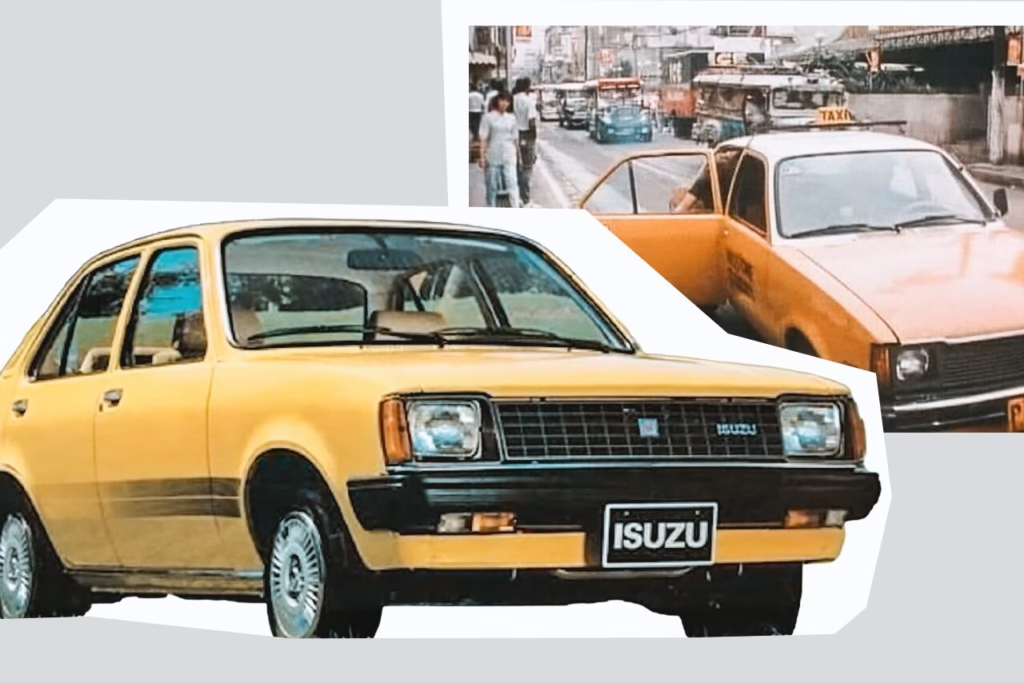
Before the SUVs and delivery trucks defined the brand, there was the Isuzu Gemini, a sedan that once ruled Philippine roads. In the late ’70s and early ’80s, the Isuzu Gemini dominated the streets, and no role was more iconic than its time as the Philippines’ favorite taxi. Its 1.8-liter 4BF1 diesel variants were legendary for surviving brutal daily routes, long idle times, and endless city traffic. Operators loved it, drivers trusted it, and commuters rode it every single day without giving it a second thought.
Known internationally as the Opel Kadett or rebadged under other GM brands, the Gemini brought something ahead of its time to the local market: a rear coil-spring suspension that made it ride smoother than many of its rivals, while still taking on Manila roads like a champ. Most Filipinos remember the four-door diesel sedans, the true workhorses, but enthusiasts still smile when they see the rarer two-door fastback coupes, usually running the 1.6-liter G161Z gasoline engine. Back then, the coupe went head-to-head with icons like the Lancer L-Type and Corolla SR, giving young enthusiasts something sporty and stylish to dream about.
Toyota Tamaraw FX
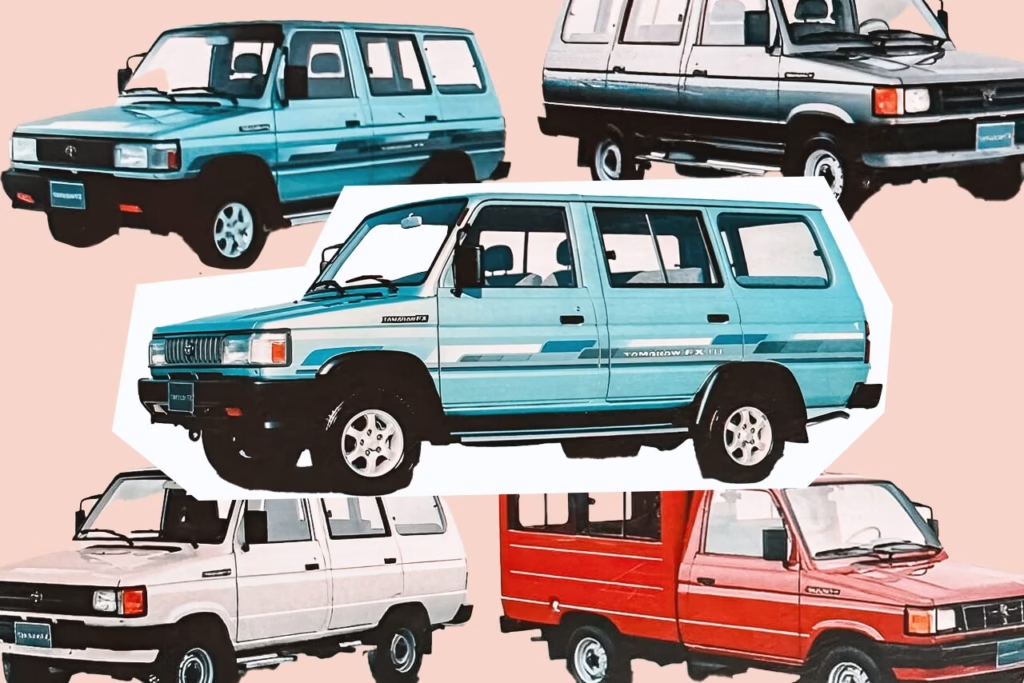
Before SUVs took over every parking slot in the Philippines, there was the Toyota Tamaraw FX.
The unofficial shuttle of an entire generation. If you grew up in the ’90s or early 2000s, you rode one: school service, early UV Express units, pahatid to your tita’s house, grocery runs with half the barangay or half the family tree in the back. The FX wasn’t just transportation, it was a public utility icon, a moving time capsule of Filipino everyday life.
Introduced in the mid-’90s as the third generation of the Tamaraw line (and known as the Kijang abroad), the FX was boxy, simple, and incredibly adaptable. You could get it with the 2C diesel, or the 5K and 7K gasoline engines, all famous for being easy to fix and in typical Toyota fashion, impossible to kill. Operators loved it because it sipped fuel and rarely broke down. Families loved it because it could seat everyone and still have space for pasalubong, schoolbags, pets, and whatever random cargo needed to come along for the ride. And for commuters? The FX was comfortable compared to jeepneys, chaos compared to cars, and nostalgia no matter where you sat.
It also became the foundation of something bigger: the UV Express.
The bench seats, the “kaliwa, kanan,” the “Sampu sa likod!”, these became part of the Filipino commute vocabulary. Today, the Tamaraw FX may have been replaced by the Innova and newer AUVs, but its cultural impact is unmatched. It wasn’t luxurious, fast, or flashy, but it was everywhere, and for many Filipinos, nothing says “1990s Philippines” quite like hopping into an FX with exact fare in your pocket.
And now that the Tamaraw name has returned in modern form, it’s a reminder of how deeply this humble FX shaped our roads and our memories.
Toyota Corolla “Smallbody” AE92
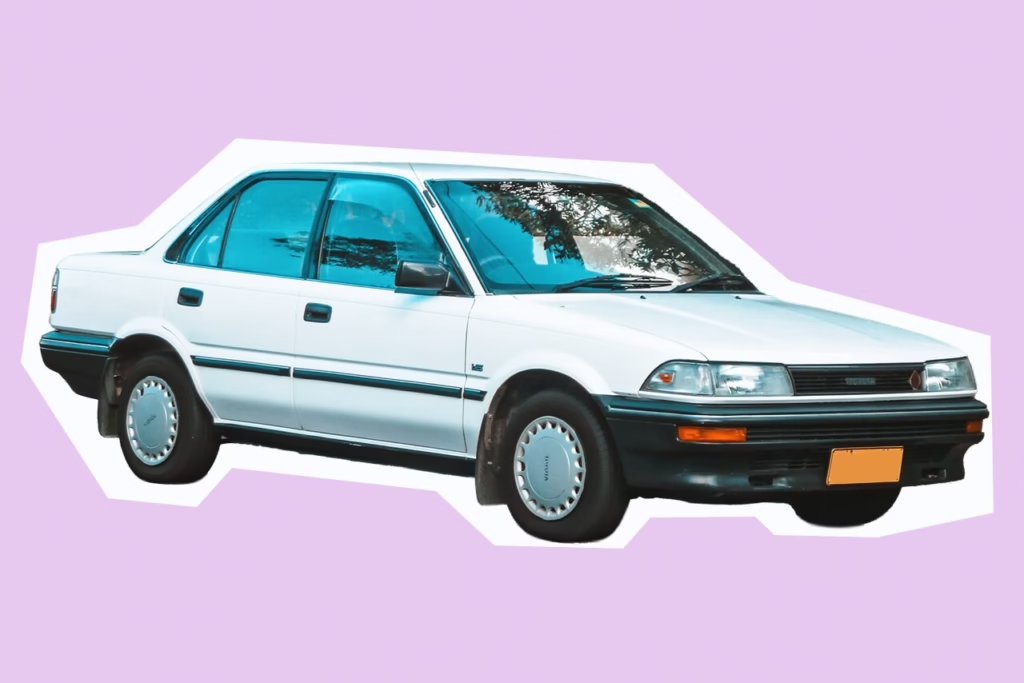

When Toyota Motor Philippines officially took over in 1988 after Delta Motors, one of the first major launches under the new era was the 1989 Corolla, the model Filipinos would soon call the “Smallbody.”
Sold in XE, XL, and GL trims, it came with either the 1.3-liter SOHC 2E engine (for XE/XL) or the more powerful 1.6-liter 4A-F (for the GL). Later units even introduced the twin-cam 16-valve setup, giving the AE92 the distinction of being one of the first mass-market cars in the Philippines to offer a DOHC 16-valve engine right out of the gate. For many Filipinos, this was their first real taste of Toyota’s now-legendary 4A series.
Despite being larger and more refined than previous Corollas, the AE92 earned the nickname “Smallbody” once the bigger ’90s generations arrived. But on the road, it was anything but small, it was everywhere. Taxis, school service, office cars, and first cars; every talyer could work on one, every family knew someone who owned one. The AE92 became a symbol of reliability and practicality, a sedan that simply did its job with no drama.
Nissan Sentra B13
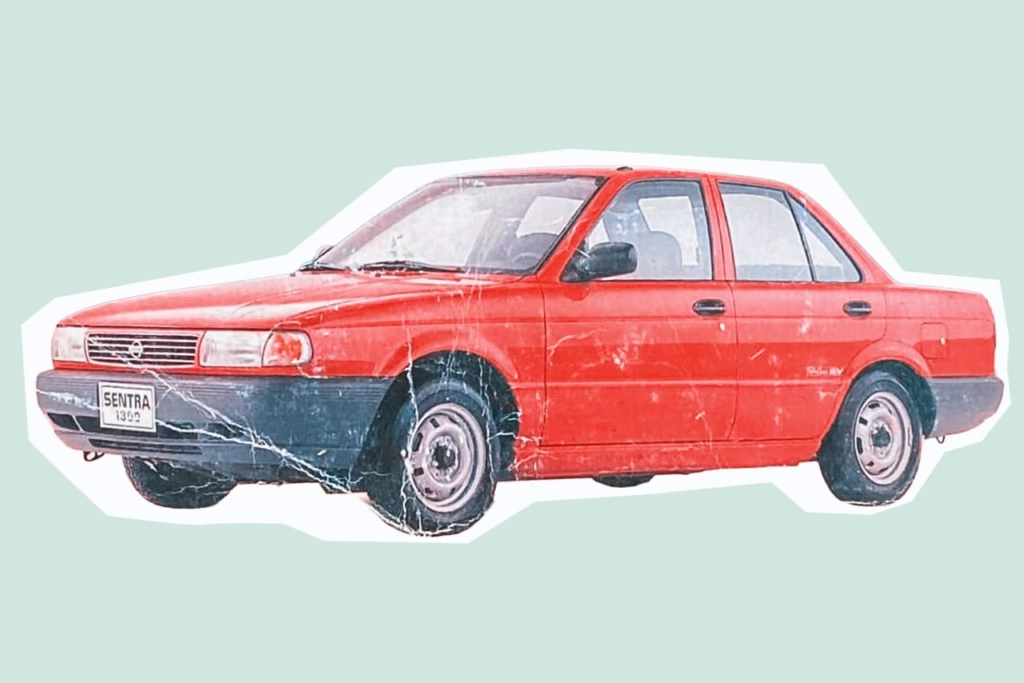
In the ’90s, the “subcompact sedan wars” were everywhere — Corolla, Lancer, Civic, and right in the middle of it all was the Nissan Sentra B13.
Known locally as the Series II and launched in 1991, it became one of the most familiar cars on Philippine roads. No frills, no fuss, just a dependable sedan that drivers and taxi operators trusted every single day.
What made the B13 special was the range of engines and trims it offered. Lower variants like the LEC, JX, and EX Saloon ran carbureted GA13 or GA14 engines — simple, economical, and easy for any talyer to maintain. But the star of the lineup was the SE Saloon, which came with the fuel-injected GA16DE. This was a big deal at the time as the SE Saloon had EFI, four-wheel disc brakes, and even ABS, years before its fellow rivals had that feature.
On the road, the B13 was known for its smooth revving, comfortable ride, and forgiving handling, perfect for new drivers learning the basics. It was also a fleet favorite. When the old Isuzu Gemini taxis began to retire, the B13 became the next workhorse, which is why you’ll hear people say “Avoid ex-taxi units.” They were bulletproof, but abused.
Honda Civic (1992-1995)
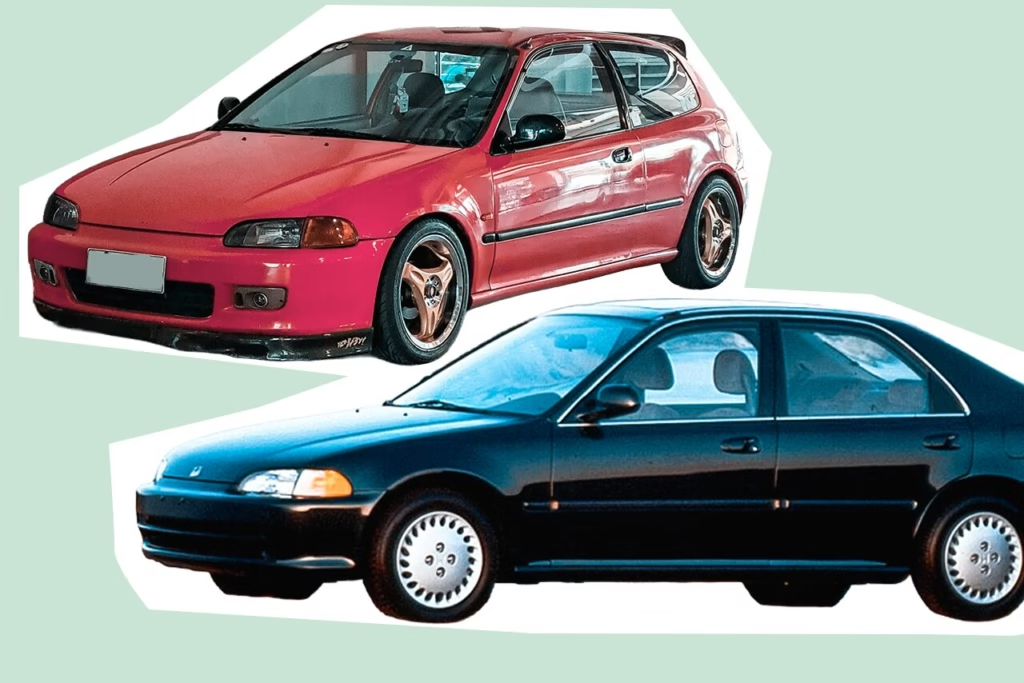
When the fifth-generation Honda Civic hit Philippine roads in the early ’90s, it didn’t just bring a new design, it marked a shift in the country’s growing tuner culture.
The fifth-generation Civic arrived in 1992 under the People’s Car Development Program, replacing the short-lived Civic EF, which only had a brief run locally but already hinted at Honda’s sporty, youthful direction.
The fifth-gen pushed that even further. Sleek, aerodynamic, and instantly recognizable, it stood out in a market still dominated by boxy sedans. The sedan came in three trims: the DX with the PH12 engine, the LX with the PH15, and the now-iconic ESi powered by the PH16 — a 1.6-liter SOHC engine that gave the Civic enough pep to feel more spirited than other family sedans in its class. For many young Filipinos, the ESi became the attainable dream car: modern, fun to drive, and easy to personalize.
Then came the Civic Hatch, known to everyone as the “EG.” Sold locally with the PH12 engine, it was light, simple, and surprisingly playful despite its economy-car origins. And because it was so easy to swap in a D or B-series engine, the EG quickly became the backbone of the early Filipino tuning scene — the favorite of drag racers, weekend builders, Banawe tinkerers, and anyone who wanted a project car that could grow with their budget.
Kia Pride
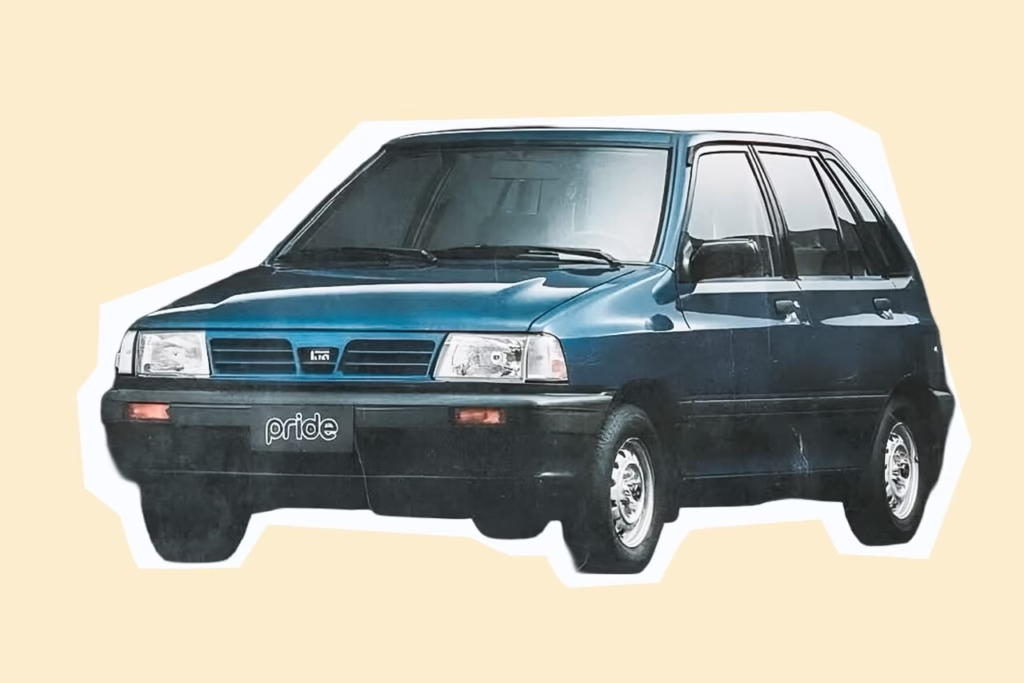
The Kia Pride was one of the most unassuming cars to come out of the People’s Car Program in the ’90s and yet it became one of the most familiar sights on Philippine roads. Sold locally as a sedan or a hatchback, the Pride was just a rebadged Ford Festiva, originally developed by Mazda. In the US and Australia, it wore a Ford badge, but here, it became the little Kia that quietly became a household name.
People never took the Pride seriously, it was neither fast nor flashy, and it wasn’t the kind of car anyone flexed. It was light, simple, and cheap to maintain, it delivered exactly what Filipino families needed at the time: affordable, reliable transportation.
Its Mazda-derived B1 (1.1L) and B3 (1.3L) engines were as basic as they came, but that was the secret to its longevity. Inside, everything was straightforward — vinyl, plastics, no frills, but that simplicity kept it running long after many of its rivals faded away. The Pride may not have had the swagger of a Civic or the following of a Corolla, but it was always there, doing its job without complaint.
Mercedes Benz W123
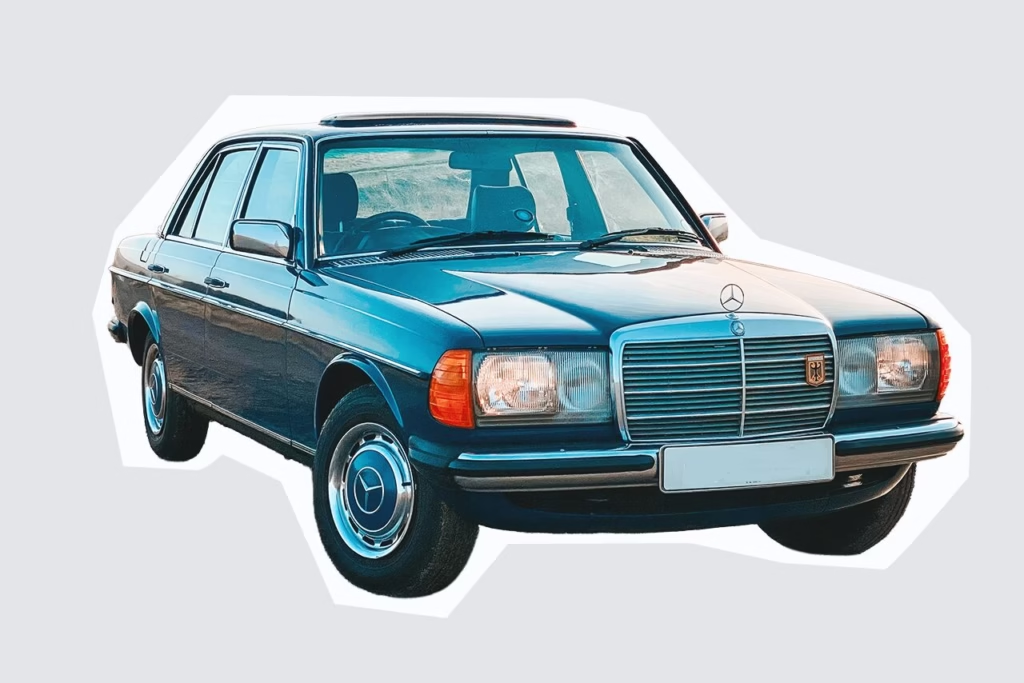
Ask any Filipino tito what a “Chedeng” is, and they won’t point to a modern Benz, they’ll point to the W123. “Chedeng” became the Filipino nickname for Mercedes-Benz cars, a playful twist on the name Mercedes, but it was the W123 that truly cemented that reputation and made the term iconic.
The W123 was the Filipino symbol of success. Sold globally from 1975 to 1986, it stood as the ultimate status car. If a tito rolled up to a reunion in one, you didn’t need to ask, you already knew life was treating him very, very well.
It also came with a wide range of engines — from simple 2.0-liter gasoline units to the smooth 2.3 and 2.8 M110 inline-six options, and the now-mythical diesel lineup that included the 200D, 240D, and the iconic 3.0-liter OM617. That 5-cylinder diesel, especially in turbo form, became the stuff of legend. Built like a tank, it earned a reputation for refusing to die, even when subjected to potholes, heat, and Manila traffic. People joked these engines would outlive their owners…and judging by how many W123s still roam around today, they weren’t wrong.
For many Filipinos, the W123 became more than a car. It was a status symbol, a corporate goal, and sometimes even a family heirloom. Whether in sedan or wagon form, the “Chedeng” defined what an executive car looked like in its era: solid, dependable, and elegant without trying.
When Cars Felt Like Family
Looking back at these cars is like flipping through an old family album. Every model triggers a memory, a story, a moment in time.
These weren’t just machines; they were part of our daily lives. They brought us to school and work, carried our groceries, survived typhoons, and witnessed the country change around them. Some were dream cars, some were workhorses, some were cultural icons, but all of them became markers of the eras we grew up in.
Today’s roads are filled with crossovers, hybrids, touchscreens, driver aids, faster, safer, and smarter in every way.
But there’s something irreplaceable about the cars from the ’80s and early ’90s: the honesty of their design, the simplicity of their mechanics, and that distinct Filipino relationship we formed with them. We didn’t just use these cars, we lived with them.
Because for many of us, these weren’t just cars from the past.
They were the cars that made us love cars in the first place.