

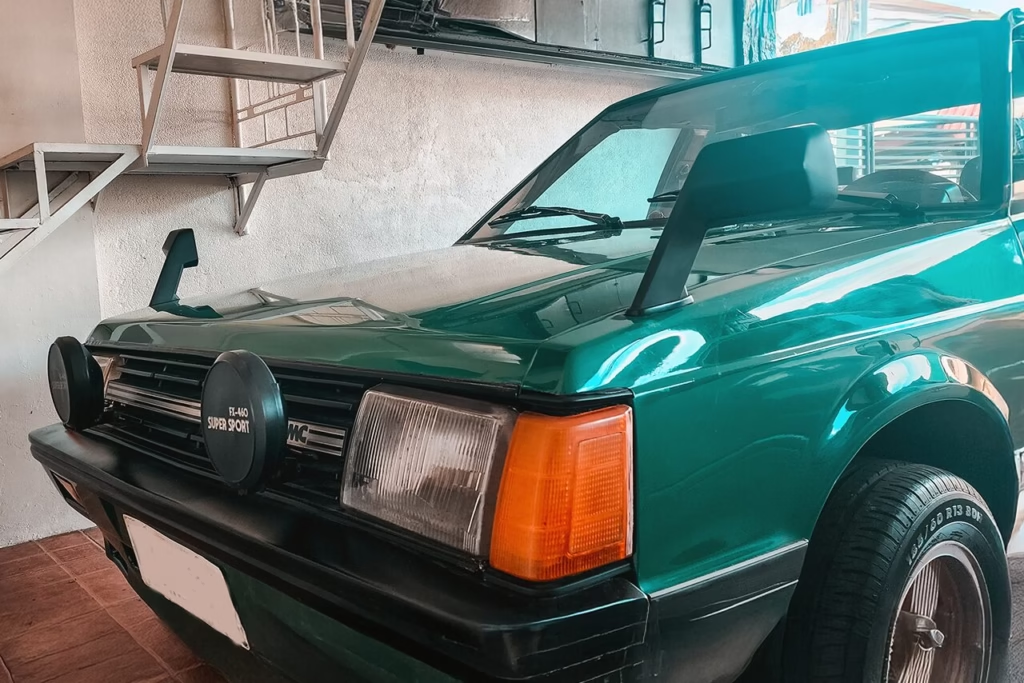
- Old cars were filled with quirky, weird features from pop-up headlights and gooch coolers to power antennas and fake wood trims.
- These oddities defined the driving experience for anyone who grew up around ’80s–2000s cars, especially in the Philippines.
- Modern cars are smarter but less playful, making these forgotten features nostalgic reminders of when driving felt more personal.
Cars today are sleek, smart, and safe — but man, they sure lost a lot of personality.
Cars in the ‘80s, ‘90s, and early 2000s certainly had a unique charm to them, partly because manufacturers kept experimenting with features that were either ahead of their time or just plain weird.
Today, most of them are gone, forgotten, or just hiding in your tito’s garage. Here’s a nostalgic throwback to the quirkiest car features we don’t see anymore.
- Pop-Up Headlights
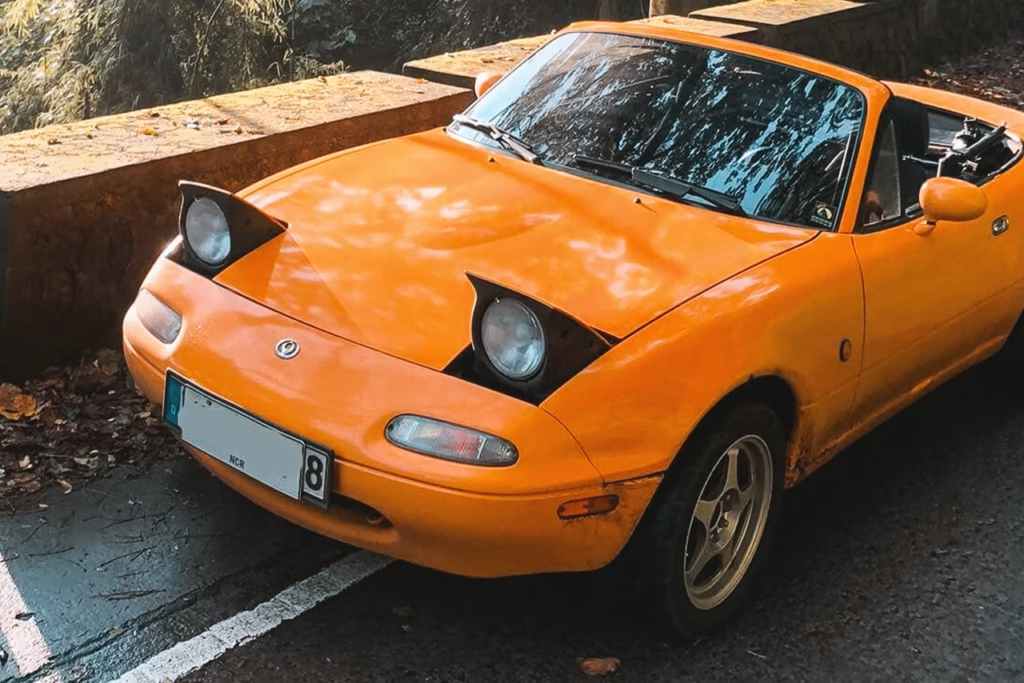
Pop-up headlights were a defining feature of ‘70s to ‘90s sports and supercars, giving legends like the Miata, NSX, Corvette, and RX-7 their unmistakable charm.
But even cars like the Mazda 323 carried them proudly. Gone today because of tighter pedestrian safety regulations but forever iconic.
- Cigarette Lighters & Ashtrays Everywhere
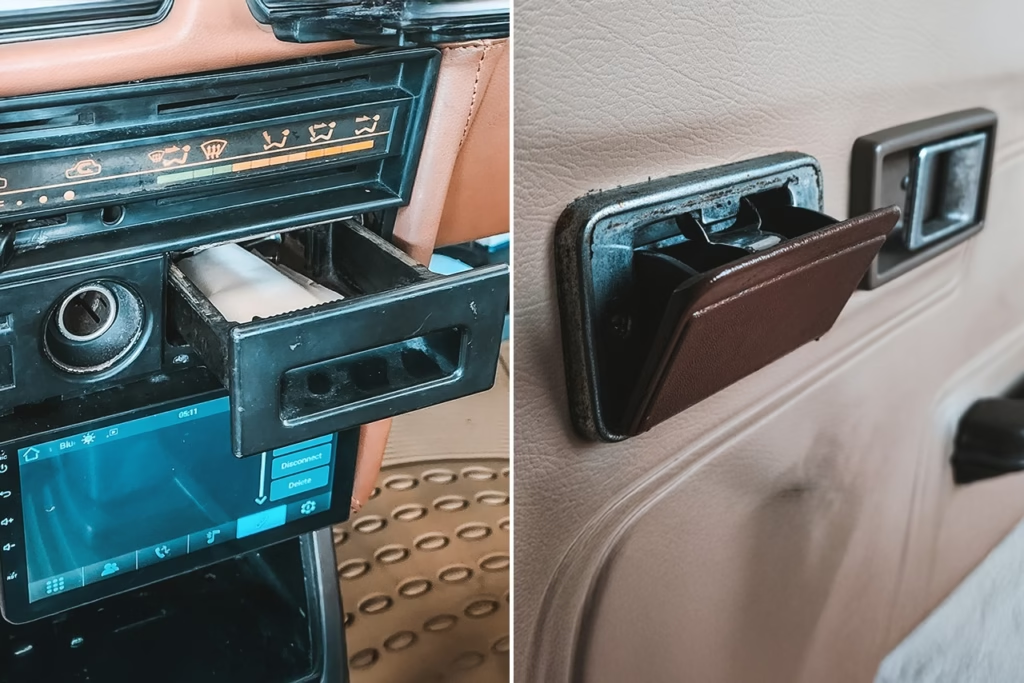
It isn’t an ‘80s or ‘90s car if it doesn’t have an ashtray in it.
Back then, smoking in the car was so normal that vehicles often had lighters and ashtrays everywhere–from the dashboard to the doors. As the years went on and habits changed, automakers quietly phased them out and by the 2000s they were mostly optional or gone altogether.
Today, the cigarette lighter is usually a spot to place your USB charger, proof of how different cars and culture have become since those days.
- The “Gooch Cooler”
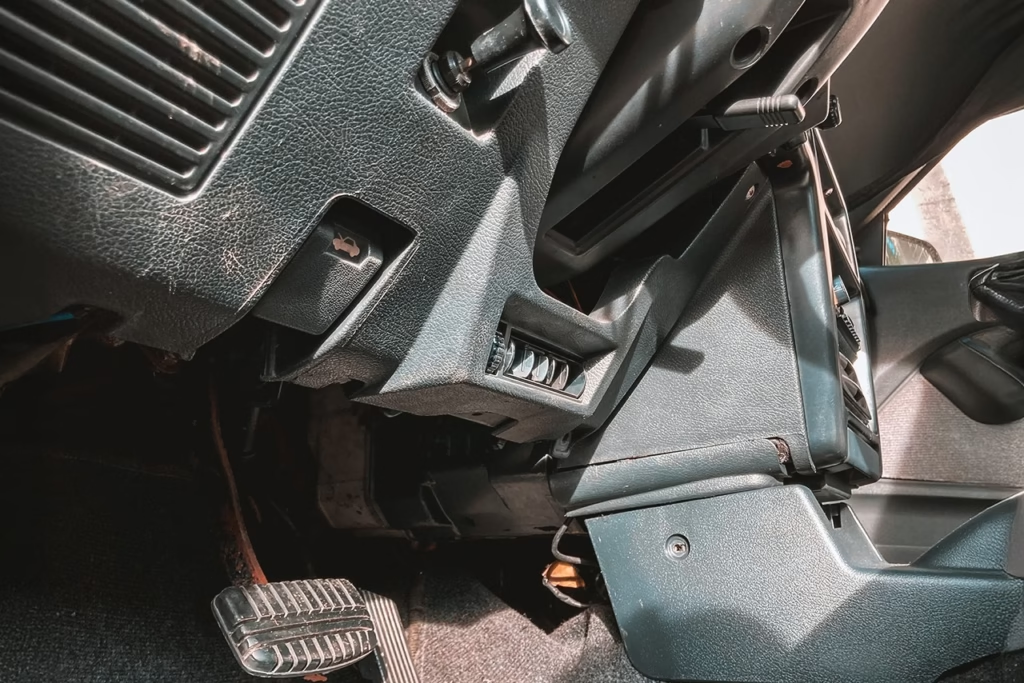
The “Turbo Gooch Cooler 9000”, “Ball cooler”, or “Crotch Vent”
Call it whatever you want, these lower-center A/C vents were a staple in older Toyotas like the Corolla “Big Body” AE101. Designed to cool your legs and lap area, they became legendary for sending a perfectly aimed blast of cold air right where it mattered on a hot Philippine afternoon. It was weird, specific, and incredibly effective.
Modern cars may have air-conditioned or heated seats, but nothing comes close to the raw power of this memorable feature.
- Removable Headunit Faces
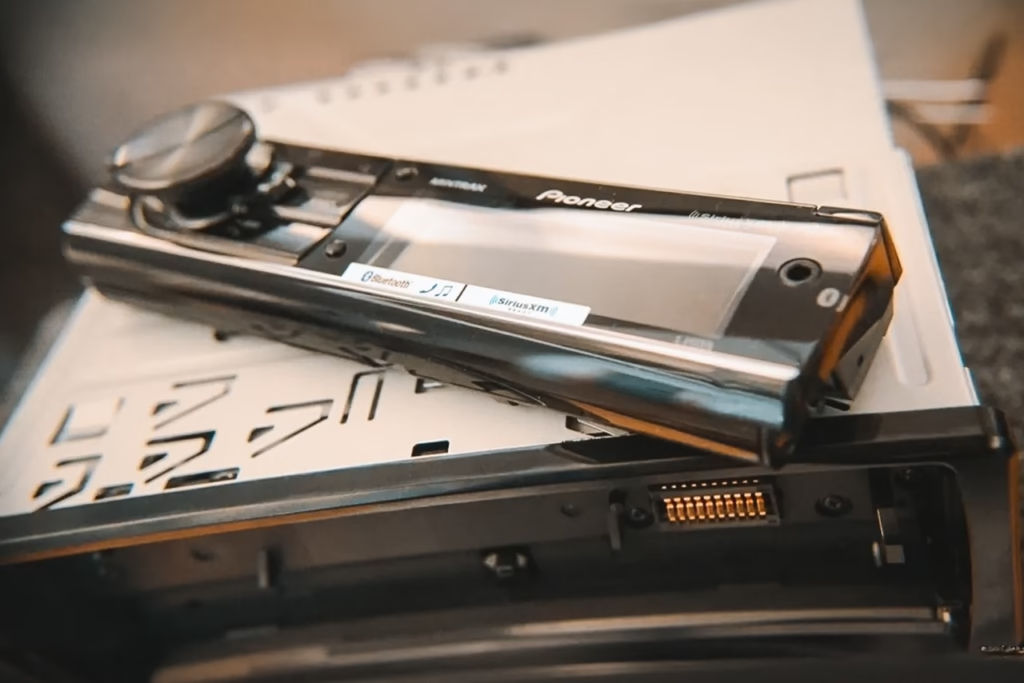
In the ‘90s, having your car stereo stolen was a massive problem, especially if you had invested in a premium Alpine, Kenwood, or Pioneer 1-DIN unit that had flashing graphics. Theft was so rampant that leaving an expensive head unit visible in your dashboard was practically asking for a broken window.
The solution? Remove the face of the head unit. Without the faceplate attached, the stereo looked useless and not worth stealing, which made it one of the simplest anti-theft ideas of the era.
If you lived through those years, you definitely remember the routine: taking off the faceplate, sliding it into its little plastic case, and carrying it around like some kind of high-tech wallet. Walk into the mall with it? Normal. Go to class with it in your pocket? Also normal. Forget it at home? Good luck changing stations.
Today’s stereos are integrated and much harder to steal, but they’ll never match the very specific charm of the removable faceplate era.
- Power Antennas

Before we had Spotify, Bluetooth, or even USBs filled with songs from Limewire or YouTube-to-MP3, we relied on good ol’ FM radio. And to get a decent signal, your car needed a power antenna.
These tall, skinny metal rods would rise automatically with a soft whirrrr the moment you turned the radio on. Simple, dramatic, and very ‘80s and ’90s. If you owned a Corolla or a Civic, you probably remember how easily they got bent, stuck halfway, or snapped after a car wash.
Nowadays, antennas are hidden in the roof or windshield, but none of them have the flair of a power antenna making its little grand entrance.
- Wood Interior Trims
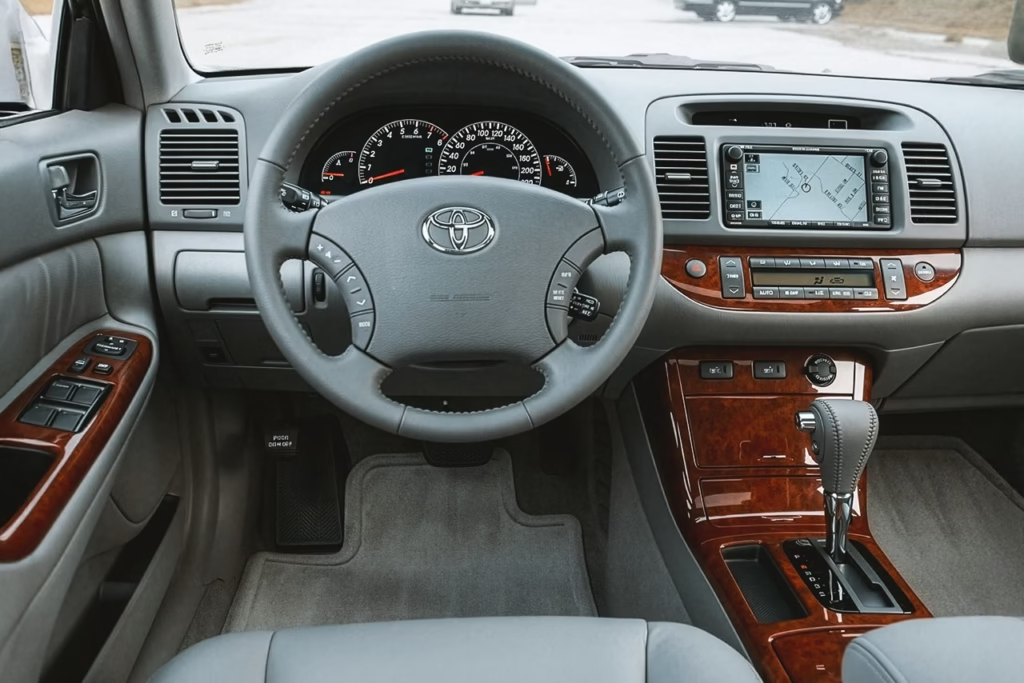
Wood trims still exist today, but mostly in high-end luxury cars where the panels are actually made from real timber. Back in the late ’90s and early 2000s though, manufacturers had a cheaper trick: if you wanted to make it look expensive, you just slapped fake wood all over the cabin.
And it’s not even the subtle kind, this was ultra-glossy plastic woodgrain. It dominated interiors of cars meant to chauffeur a successful tito, like the XV30 Camry and Corolla Altis of the same era.
It looked less like fine wood and more like the shiny, cheap laminate from an old office desk, often clashing terribly with the gray or beige interior.
It tried to feel premium, it usually didn’t, but that tacky, over-the-top finish is undeniably iconic.
- Fender Mirrors
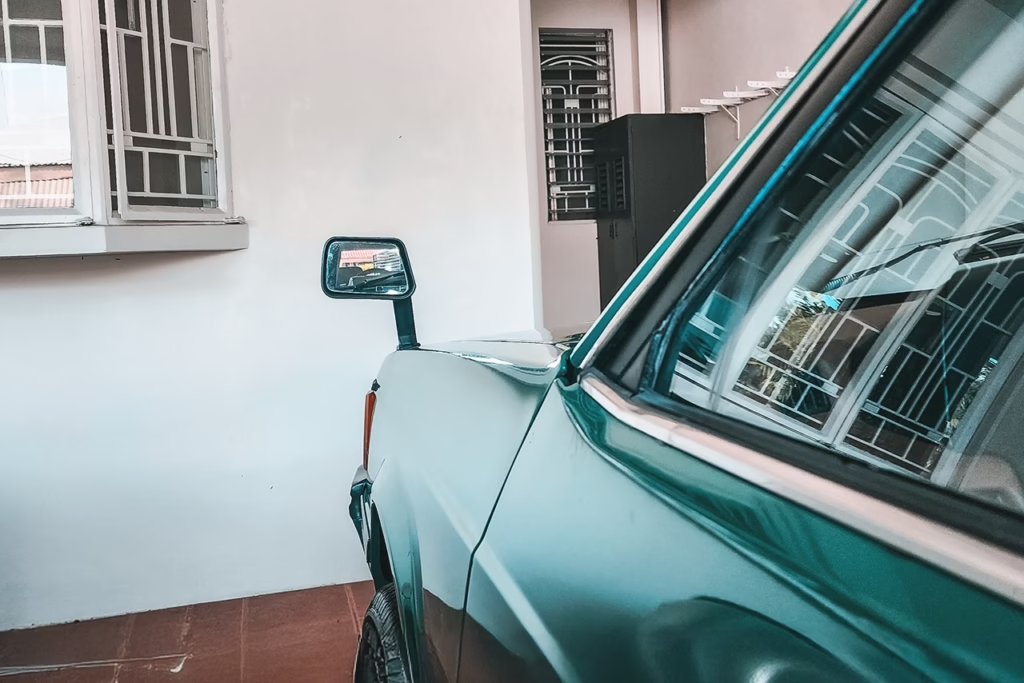
Anyone who grew up around old Corollas, Lancer Boxtypes, or Crowns has seen them: those fender-mounted mirrors that gave classic cars their distinct ‘70s or ‘80s look.
Rather than the mirrors being on the doors, they were mounted far forward on the fenders, near the hood line. From experience, they offer good visibility and since they’re in your forward vision, you don’t need to take your eyes off the road for you to use them.
They looked really cool, but they were a nightmare to adjust. Most fender mirrors weren’t powered so if the angle was off, you literally had to get out of the car and fix it by hand. Still not right? Yup – you’d step out again and adjust it some more.
Oddly enough, they’re not completely gone, Japanese taxis still use fender mirrors today, since their forward position supposedly gives drivers a wider, safer view of narrow city streets.
- Full Size Spares
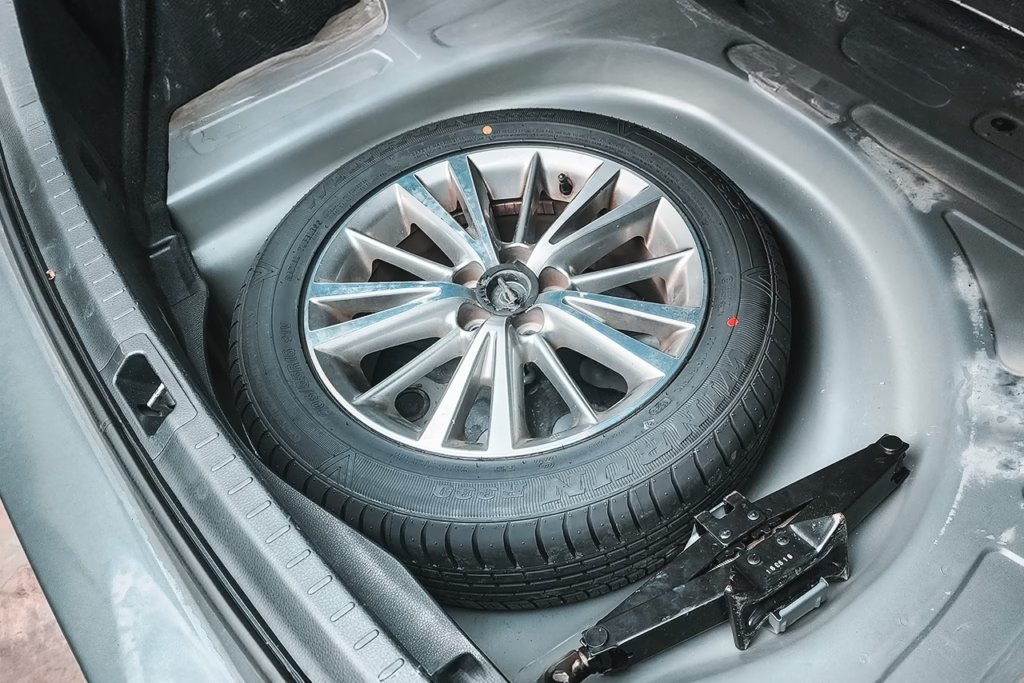
There was a time when cars came with a full-size spare tire — not a donut, not a space-saver, not a “good luck, bro” emergency wheel. A real, matching wheel you could actually drive on like nothing happened.
Older sedans, pickups, and SUVs proudly carried full spares in the trunk or under the chassis. If you got a flat, you didn’t limp home at 60 km/h with hazard lights on — you swapped in the spare and kept going like a champ. Road trip? Tuloy lang.
Today? Most new cars give you a tiny donut spare, a can of tire sealant, or worse… nothing at all. Automakers blame weight, fuel economy, and cargo space, but full-size spares were one of the most practical features ever fitted to a car.
It’s a small thing, but anyone who grew up with older rides knows a proper spare meant peace of mind, and fewer phone calls to your dad at midnight.
- Side Facing Bench Seats
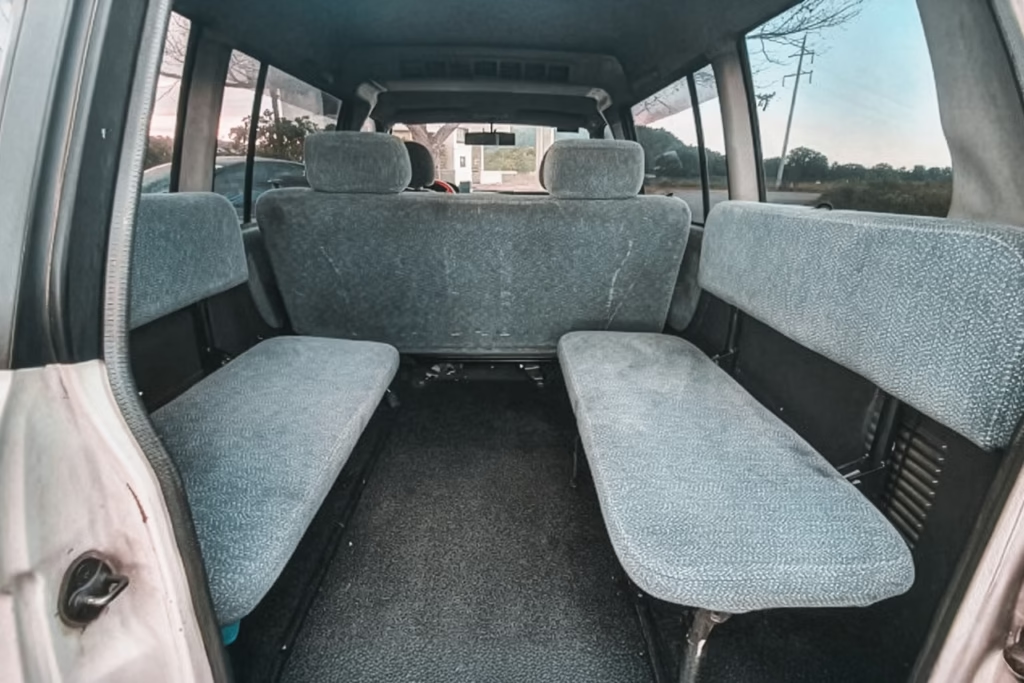
If you ever rode an AUV — or squeezed into a UV Express, you definitely remember the side-facing bench seats. Two long seats running along the sides, everyone packed shoulder-to-shoulder, knees almost touching, and staring directly at the person across from them.
Were they safe? Absolutely not.
Were they fun? Yes. Peak childhood chaos.
These seats turned every ride into a mini party: cousins laughing, bags everywhere, someone sliding during every turn, and at least one tito insisting, “Kasya pa yan, tabi-tabi lang.” They carried families, barkadas, groceries, half the neighborhood — whatever fit.
Eventually, stricter safety regulations and seatbelt requirements wiped them out. Today’s third rows are all forward-facing and carefully engineered, but none of them will ever match the unhinged, communal energy of the side-facing benches we grew up with.
- Manual Crank Windows
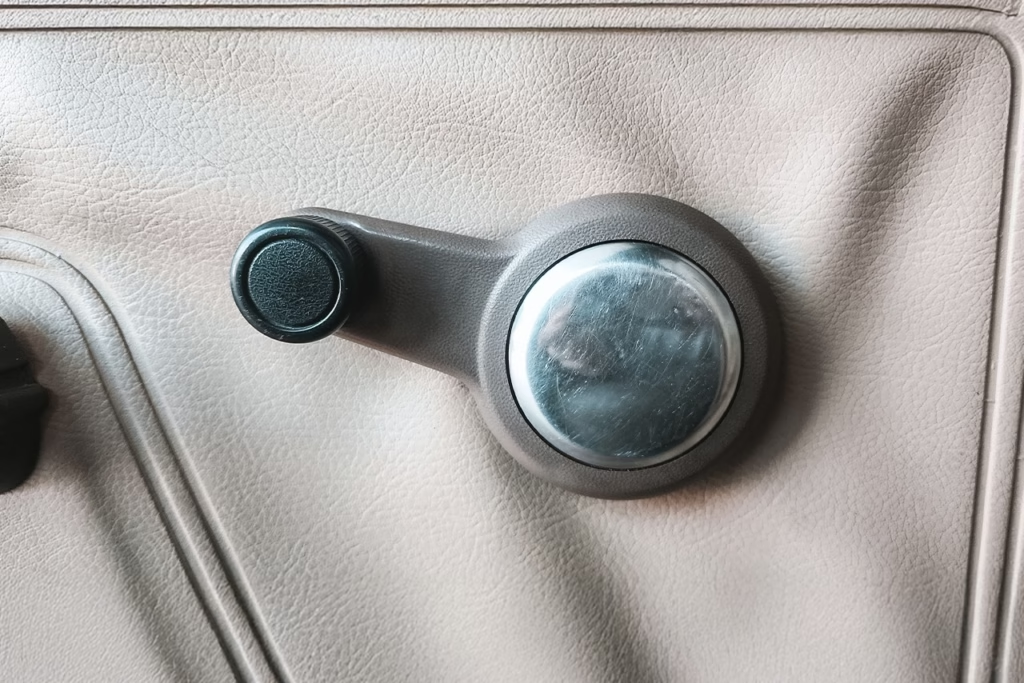
Before power windows became standard, cars came with the original full-body workout: manual crank windows. If you grew up riding in a lower trim Corolla, Lancer, Sentra, or FX, you probably remember leaning over to the other door just to roll someone else’s window down — because teamwork was the only way.
Nothing reminded you the car was old more than hearing that tik-tik-tik sound when the regulator was about to give up, or feeling the crank suddenly free-spin because the gears inside were worn out. And of course, every kid who sat in the back tried rolling the window nonstop until your parents yelled, “Huwag mo paglaruan yan, masisira!”
Sure, today you can lower a window with a single tap… but there’s something charming about physically winding it down like you were starting a generator. Manual windows weren’t fancy, but they were simple and reliable.
Sure, modern cars are smoother, quieter, and way more high-tech — but sometimes you can’t help but miss the strange little features that made old cars feel alive. They may be gone, but they’ll always live rent-free in our memories. So which one do you miss the most?