

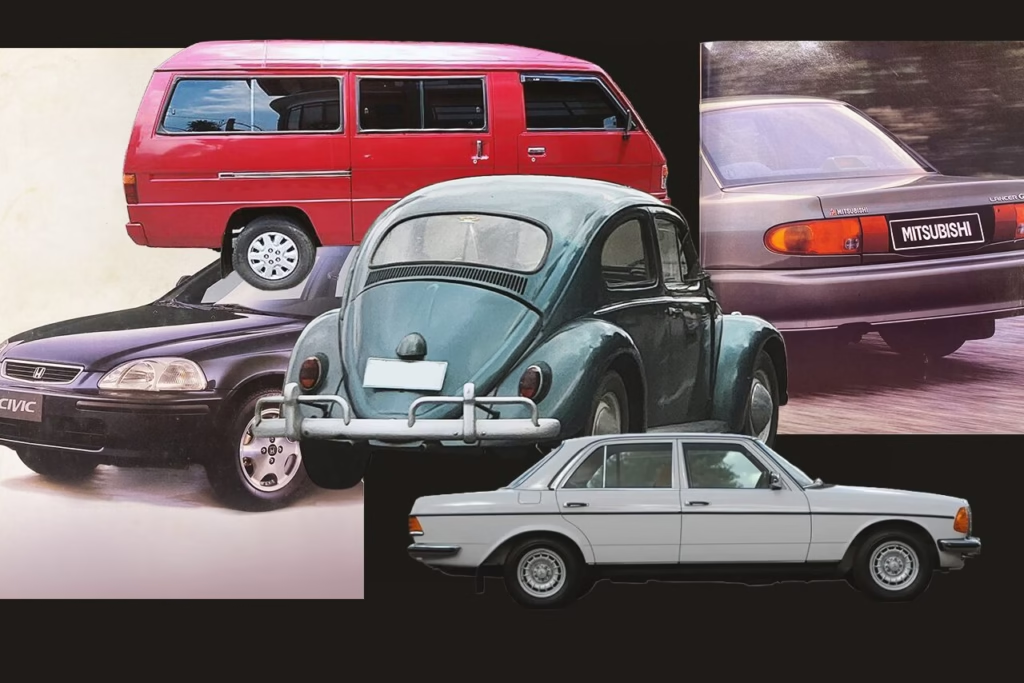
Filipinos don’t talk about cars the way the rest of the world does.
While enthusiasts from around the world casually throw around chassis codes and model years, we Filipinos tend to prefer something more visual, playful, and memorable. We name our cars based on how they look or what they remind us of, simply because they’re easier to remember, easier to say, and easier for everyone to understand.
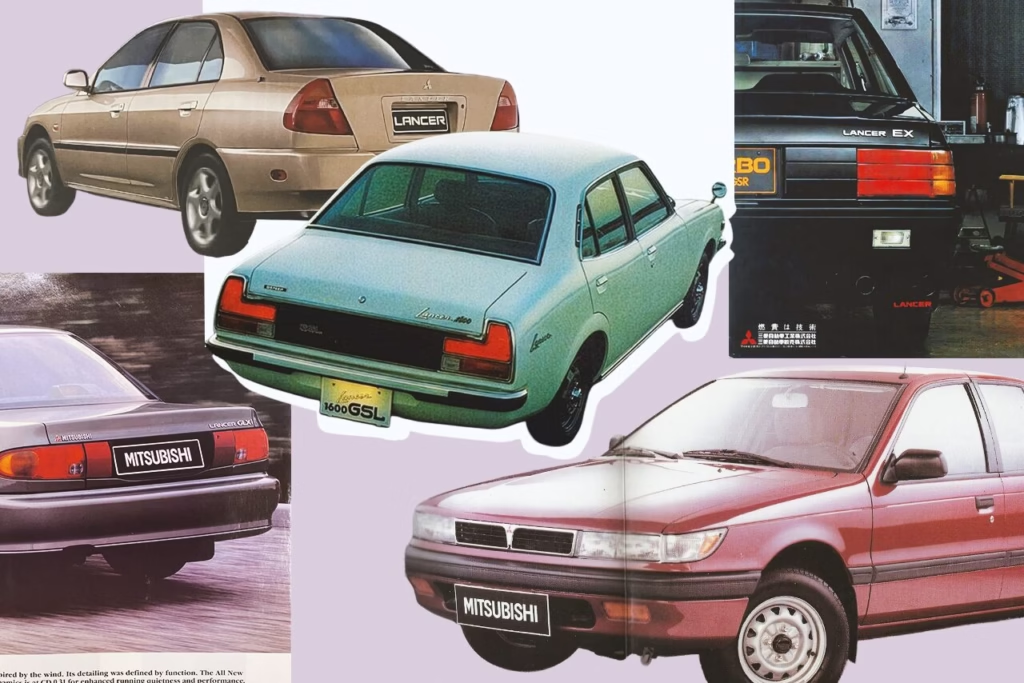
Mitsubishi Lancer – Defined by Its Taillights
https://www.automobile-catalog.com/car/1974/1905635/mitsubishi_lancer_1600_gsl.html
https://www.facebook.com/carbrochureph
Few cars in the Philippines have collected as many nicknames as the Mitsubishi Lancer.
Over decades, each generation earned a new label based on how it looked at the time:
- Bar-Type & L-Type
- Boxtype
- Itlog / Hotdog
- Pizza Pie
- Singkit
These names came straight from design details, especially the taillights. “Bar-Type” because the lights were bars. “L-Type” because they were L-shaped. “Boxtype” followed when the Lancer adopted a boxy silhouette and square taillights. Rounded taillights led to “Itlog” and “Hotdog”, while “Pizza Pie” was inspired by taillights that looked like slices of pizza. Slim, sharper headlights later earned the nickname “Singkit.”
No focus groups. No branding meetings. Just Filipinos looking at a car and collectively agreeing, “Yeah, that works.”
Toyota Corolla – Sized and Branded
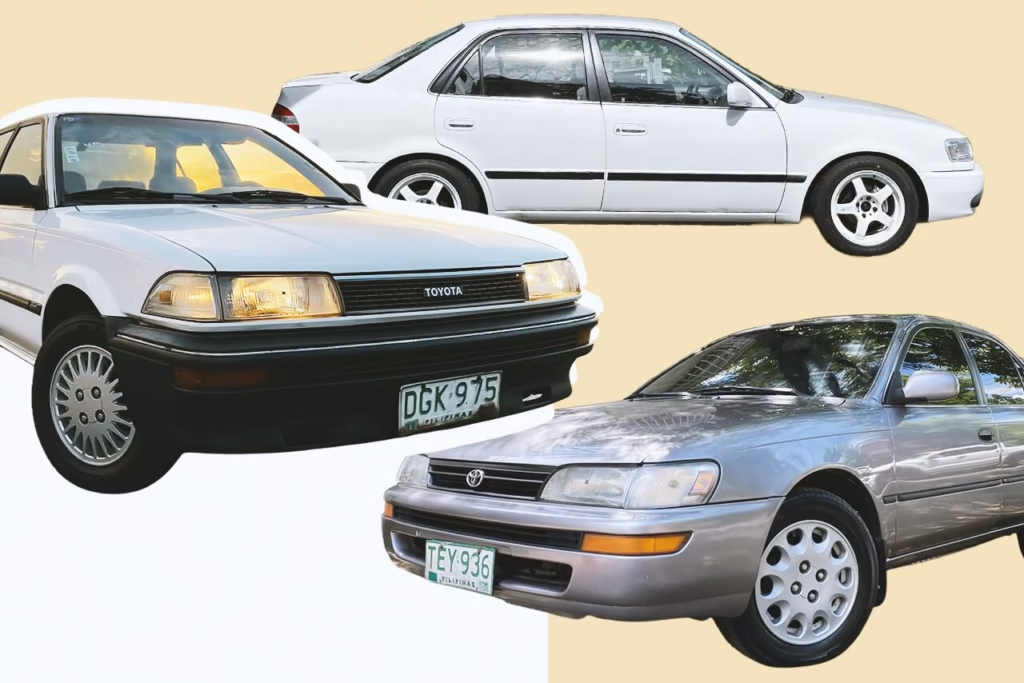
The Corolla’s nicknames are some of the most widely understood in the country:
- Small Body
- Big Body
- Love Life / Baby Altis
The “Small Body” and “Big Body” labels were purely descriptive. For example, the AE101 Corolla earned the “Big Body” nickname because it was noticeably larger and more rounded than its predecessor, hence the AE92 was nicknamed the “Small Body”.
The AE111 Corolla, meanwhile, became widely known as “Love Life.” The nickname came directly from Toyota Philippines’ marketing at the time, which repeatedly used the tagline “Love. Life.” While the model was promoted with several slogans, including “I Love This Car” and “I Love What You Do For Me”. It was “Love. Life.” that resonated most with the Filipino public and ultimately stuck (Andres, 2015).
The campaign also highlighted improvements in safety, such as standard airbags and ABS, subtly tying the idea of safety and care into the “love life” message. Over time, the name outlived the ads themselves and became part of everyday car language.
It was also called the “Baby Altis” because it was the first generation of the Corolla to introduce the “Altis” name.
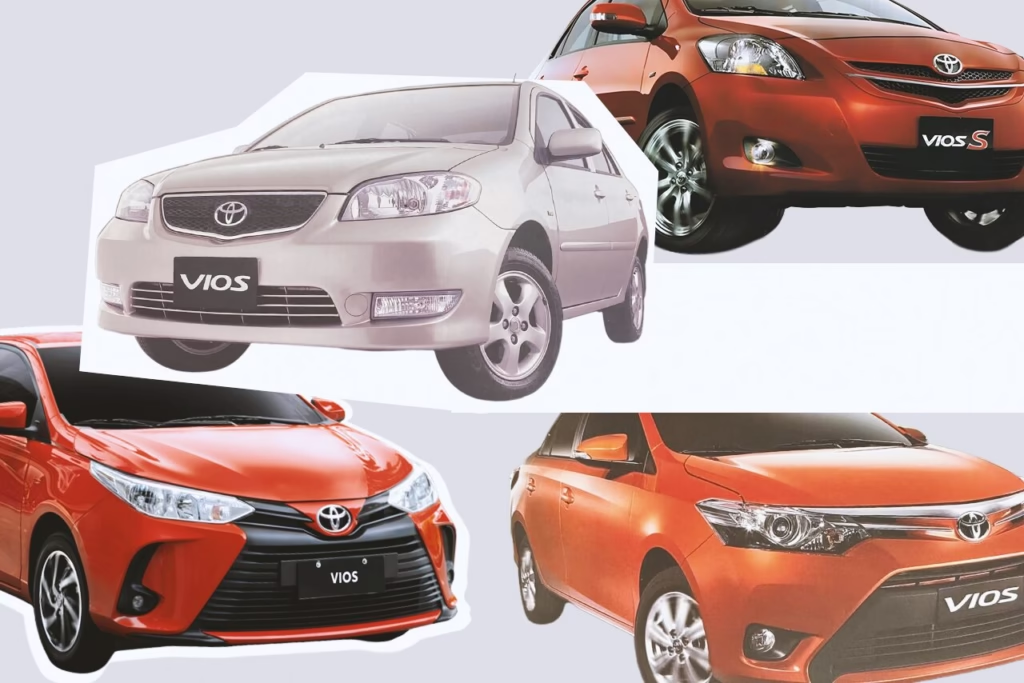
Toyota Vios – Straight Out of Pop Culture
https://toyota.com.ph/vios
https://www.facebook.com/carbrochureph
The Toyota Vios didn’t get its nicknames from body size or taillights, but from the shape of its grille, which gave each generation a distinct “face” (Andres, 2015). Over time, Filipinos began naming the Vios after familiar DC characters.
The first generation became known as Robin, followed by Batman for the second. The third generation earned the nickname Superman, while its first facelift was eventually called Joker.
Once the comparisons were made, they stuck. Saying “Vios Batman” or “Vios Joker” was enough for people to immediately picture the car’s look.
And now that the Ativ has entered the picture, it raises the question: what will Filipinos end up calling this one?
\
Honda Civic EK – Bigote & SiR Body
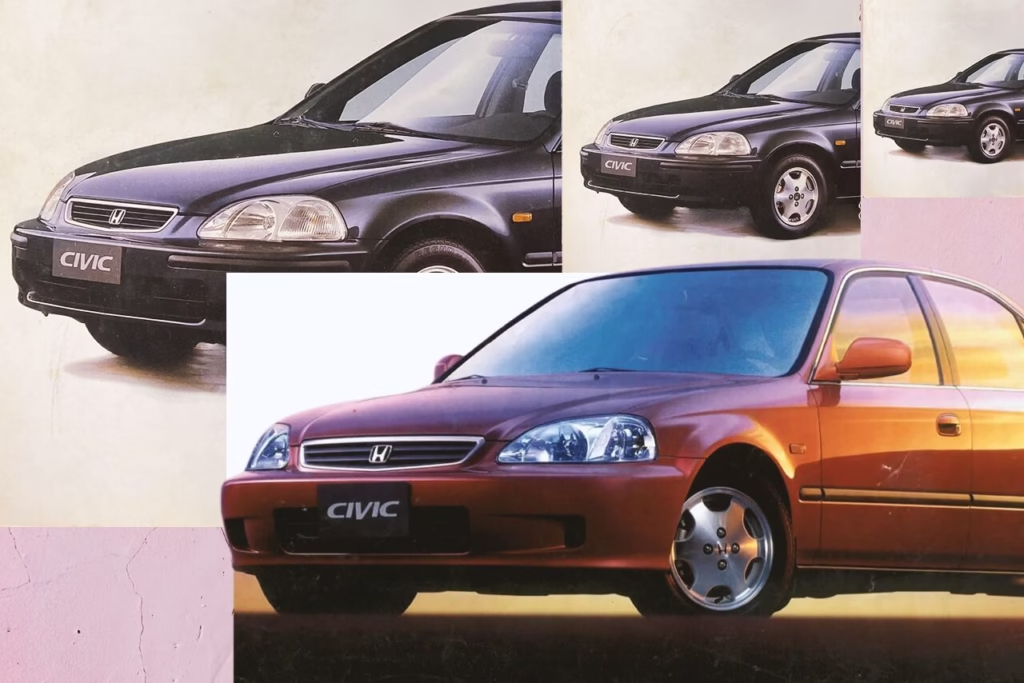
(Left)https://www.facebook.com/carbrochureph/posts/pfbid0Ypu32vGc6ct2beWt7UvSRTFfmhAM9B7NhNiZWLotiWN67bZoDJWbCEyZUJheWUpUl (Right)https://www.facebook.com/carbrochureph/posts/pfbid0hcoMMB8LexBPG8z5N7zQWn9xLhfLxkYmh1wgd1LRopRQafDRY55XA7yVGCnYLhvTl
The Honda Civic EK picked up its nicknames based on the pre-facelift and facelift models.
For the 1996-1998 pre-facelift model, the first nickname to stick was “Bigote.” It came from the black trims on the front bumper, which to many Filipinos, looked like a mustache. Once that comparison was made, it was impossible to unsee.
Later came the “SiR Body.” The 1999–2000 facelift introduced a cleaner look, and it was also the update that brought in the iconic SiR trim. Because this facelifted design was released along with the SiR, the look itself became associated with the trim name. As a result, the facelifted EK was simply called the “SiR Body”, even when the car wasn’t actually an SiR.
Over time, some owners decided to convert their Bigote Civics to wear the facelifted look, a reflection of how desirable the SiR Body design became.
\
Mitsubishi Galant – Rayban & Pating
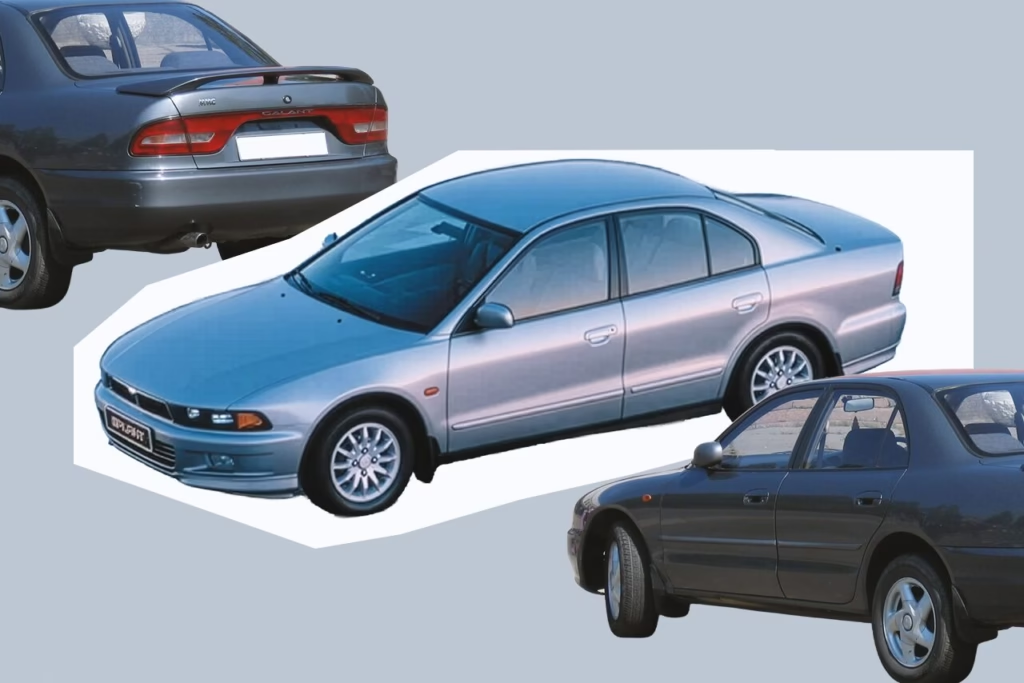
The Mitsubishi Galant earned its nicknames the same way its sibling, the Lancer: by looking like something else.
“Ray-Ban” specifically referred to the 7th-generation Galant, whose wide, horizontal taillights looked like a pair of sunglasses stretched across the rear. Once someone pointed it out, the comparison made perfect sense and the name followed.
Interestingly, the nickname wasn’t exclusive to the Galant. The Mazda Familia 323 was also called “Ray-Ban” for a similar taillight design.
Then there was “Pating.” The nickname came from how the Galant’s front fascia resembled the snout of a shark, giving it a sharper, more aggressive look.
Mitsubishi L300 Versa Van – A Reputation That Stuck

The Mitsubishi L300 Versa Van carries one of the most uncomfortable nicknames in local car culture.
Often referred to as the “Kidnapper Van,” the name didn’t come from design quirks or marketing, but from a period of widespread fear in the 1990s to early 2000s, when white vans, many of them L300s, were commonly associated with reports of missing persons, abductions, and criminal activity.
That image was further reinforced by Filipino action films of the same era, where L300-style vans frequently appeared in crime scenes as the go-to vehicle for villains, often used for getaways, abductions, or transporting henchmen. Repeated on screen, the van slowly became visual shorthand for something suspicious or threatening.
Whether based on confirmed cases, community warnings, or personal encounters, the fear was real enough that the image stuck. The L300’s boxy shape, sliding doors, and ubiquity made it an easy symbol during a time when information traveled mostly by word of mouth and news reports.
It’s a nickname rooted not in humor, but in collective memory, a reminder that car nicknames in the Philippines don’t always come from design or pop culture, but sometimes from the social climate of a specific era.
Volkswagen Beetle – Kuba
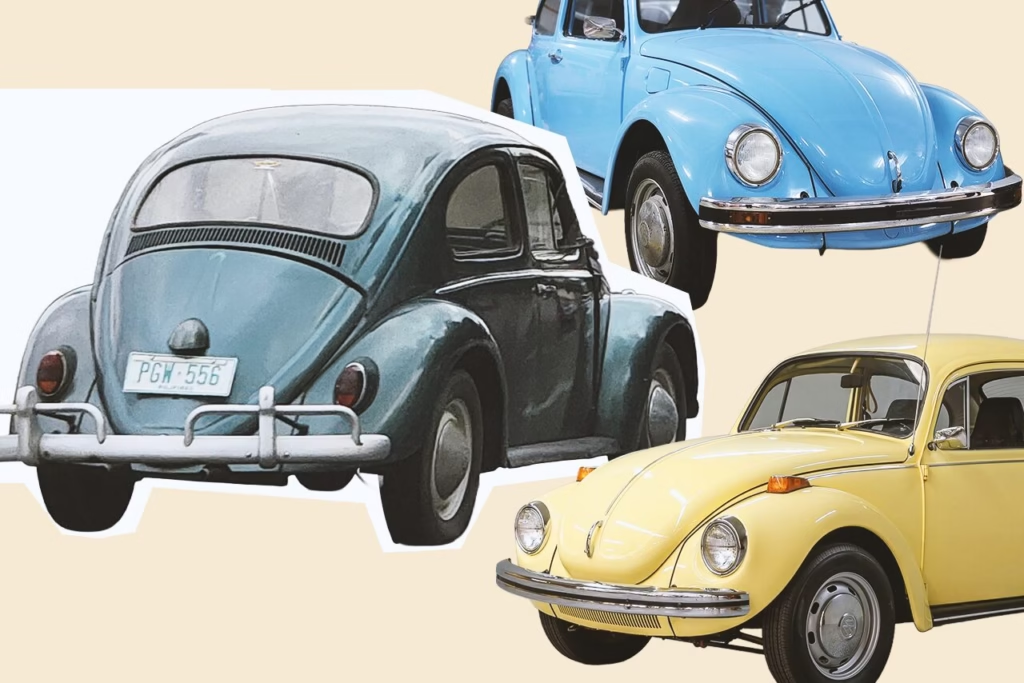
The Volkswagen Beetle may be known by many names around the world, but in the Philippines, it became simply known as the “Kuba.”
The nickname came from the Beetle’s unmistakable shape. Round, compact, and hunched, it was the kind of car you could identify instantly from a distance. No need to explain which generation or year, the silhouette alone was enough.
Mercedes Benz – Chedeng
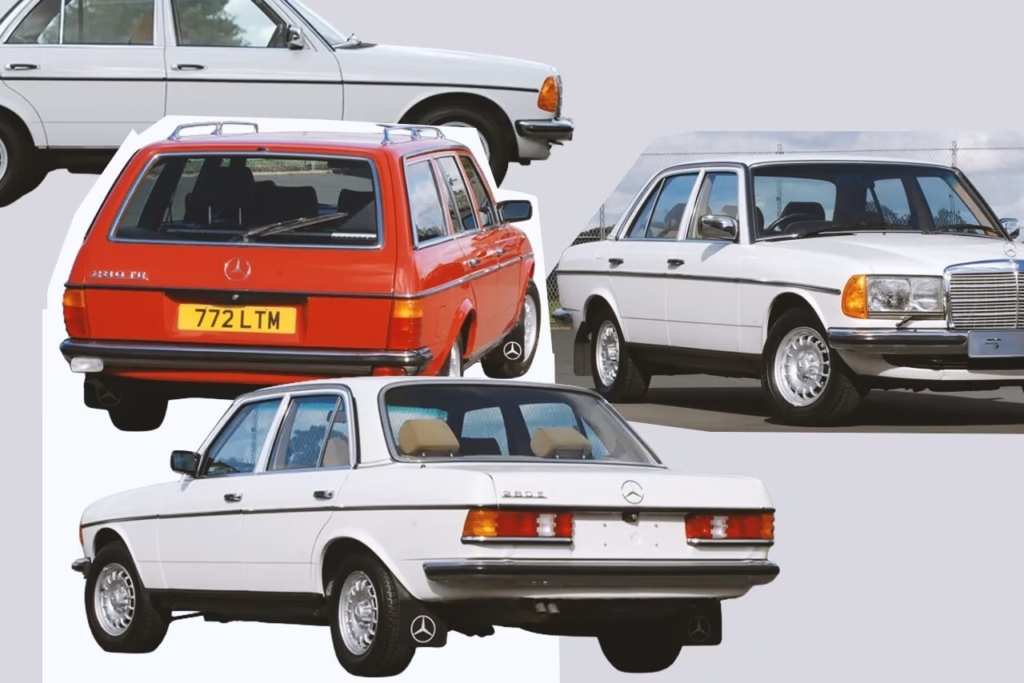
Not all Filipino car nicknames come from design. Some come from language itself.
“Chedeng” is a Filipino nickname derived from Mercedes, and over time, it became shorthand for the brand itself, particularly for older, classic models like the W123. Say “may dumating na Chedeng,” and everyone already knows what kind of car you’re talking about.
Why These Nicknames Stick
Taken together, these car nicknames reveal something simple but telling about how Filipinos relate to cars.
Some names come from shape and design: taillights that resemble something familiar, bumpers that resemble a mustache, silhouettes that are instantly recognizable from a distance. Others come from pop culture, advertising slogans, language, or even collective memory shaped by a specific era.
What they all share is accessibility. You don’t need to know model codes, production years, or trim levels to understand them. Say Lancer Itlog, Pizza Pie, Corolla Small Body and the image appears instantly.
In a country where cars are woven into everyday life: family trips, street stories, movies, and conversations, these nicknames became a shorthand anyone could use. They’re not official, not standardized, and sometimes not even polite, but they work.
And that’s why they last.
Sources:
Andres, A. (2015, October 21). Of mangoes and macho machines: The Toyota nicknames. AutoIndustriya. https://www.autoindustriya.com/features/of-mangoes-and-macho-machines-the-toyota-nicknames.html