

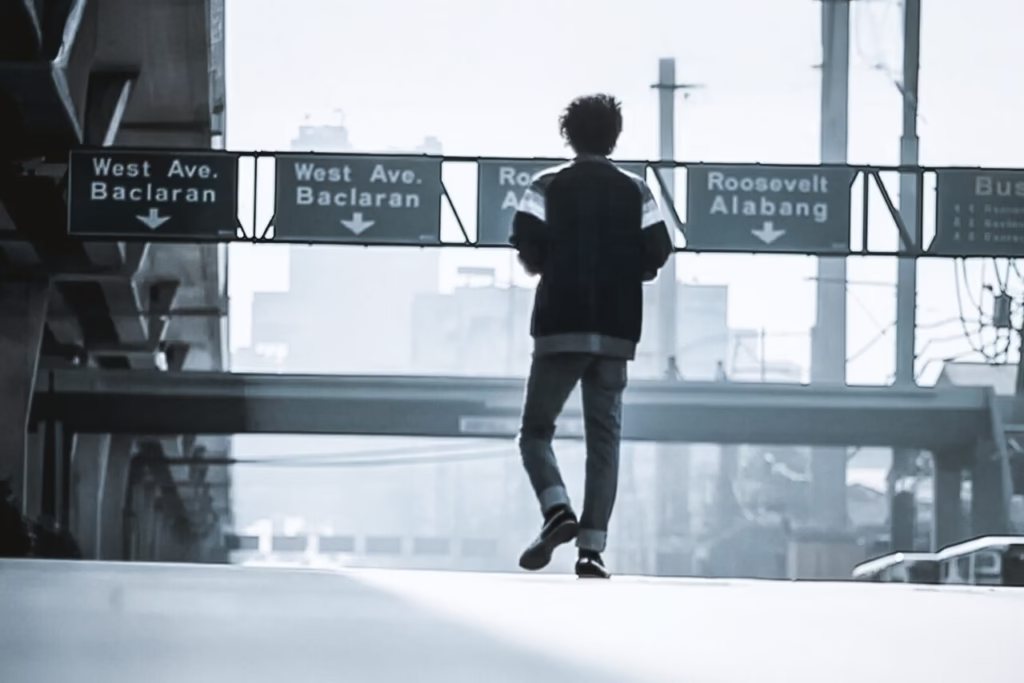
What comes to mind when we say “EDSA”?
The traffic? Naturally.
The historical marches of People Power 1 and 2? Absolutely.
Maybe even that unforgettable—and controversial—Diana Zubiri FHM photoshoot.EDSA is many things, but quiet has never been one of them. Until, briefly, it was.
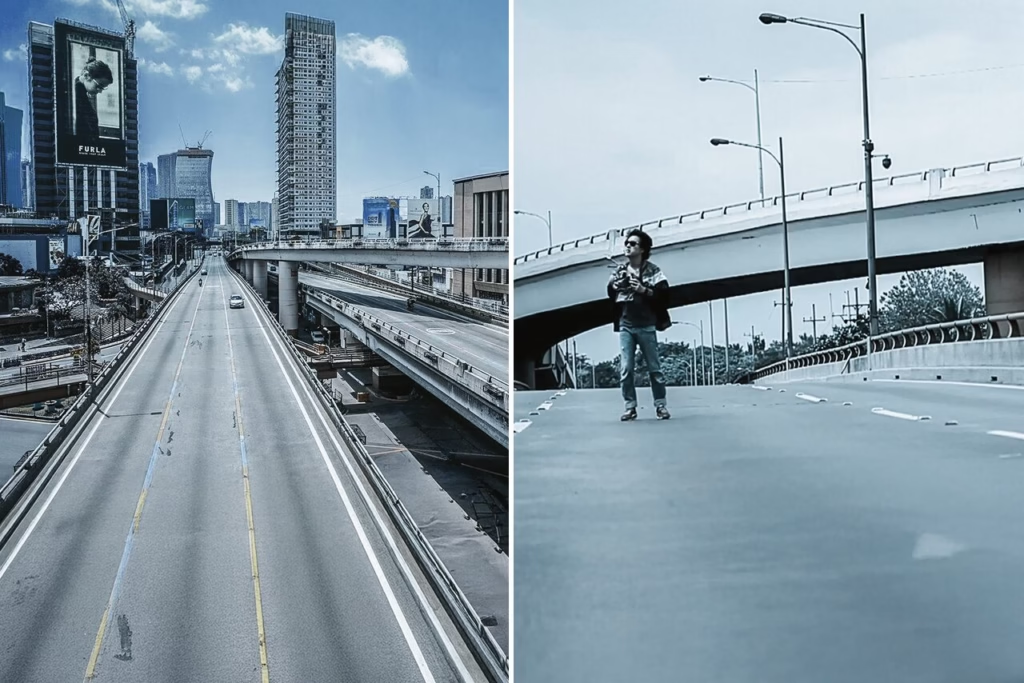
In the early days of the pandemic, our collective image of the busiest road in the Philippines shifted. Suddenly, the north-to-south sprint from Monumento to Baclaran took less than an hour. Cars were few, checkpoints were everywhere, and walking along flyovers and underpasses—once unthinkable—became oddly normal.
In 2020, EDSA turned into a 23.8-kilometer stretch of stillness running through six major cities—less highway, more open-air pause button. For a moment, highway 54 became a freeway, minus the frenzy.
But this wasn’t the first time we saw EDSA like this.
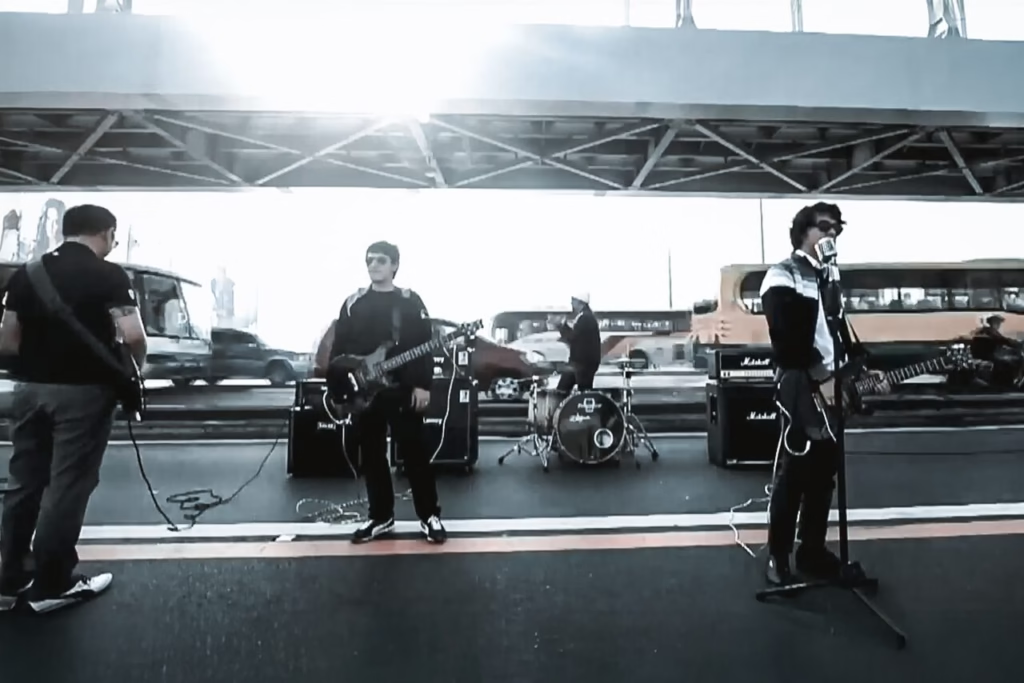
About fifteen years earlier, a music video showed us a version of the highway many assumed could only exist in fiction. “20/20,” from Pupil’s Limiters of the Infinity Pool, led by Ely Buendia with Dok Sergio, Wendell Garcia, and Yan Yuzon (later replaced by Jerome Velasco), captured an eerie, cinematic vision: the rock icon walking alone along an absolutely deserted EDSA.
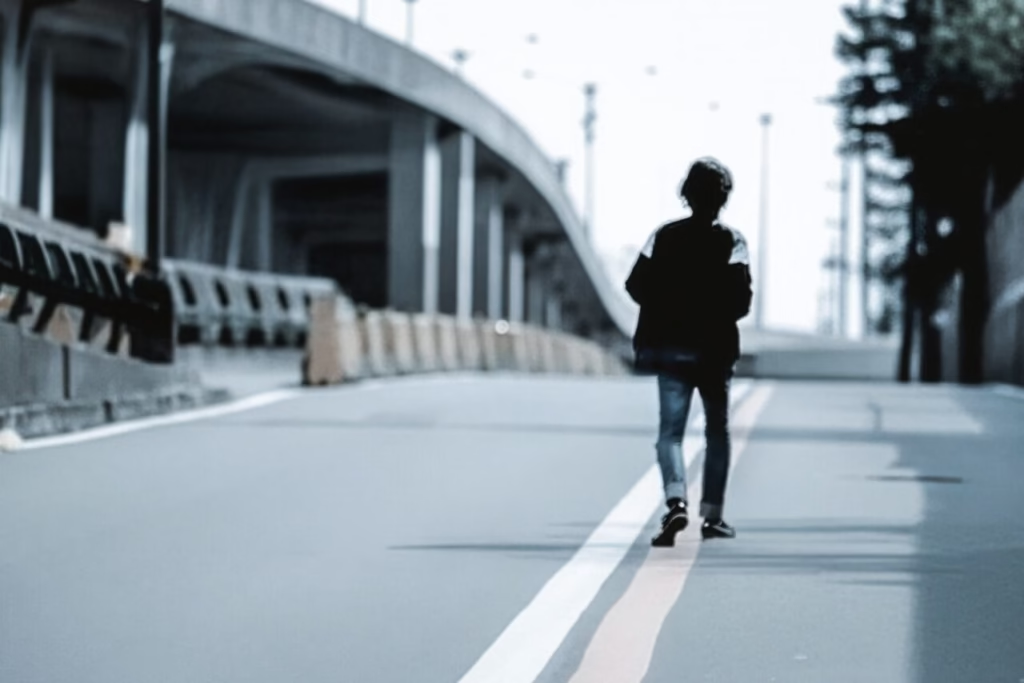
A Vision That Looked Impossible
When “20/20” dropped, it delivered a strange duality:
Awe, because EDSA had never looked that cinematic.
Confusion, because—logically speaking—how on earth did they clear it?
For Manila residents used to unending congestion, the imagery felt surreal. EDSA without cars is like the “Patok” jeepney without loud music—technically possible, but emotionally unbelievable.
For Pupil fans—many drawn to grit, angst and narrative-Filipino alternative rock—the empty highway felt like another planet. Something raw, something off, something hypnotic. And it worked: the song climbed charts and solidified its place in OPM lore.
The Mechanics of an Empty Highway
The illusion wasn’t accidental.
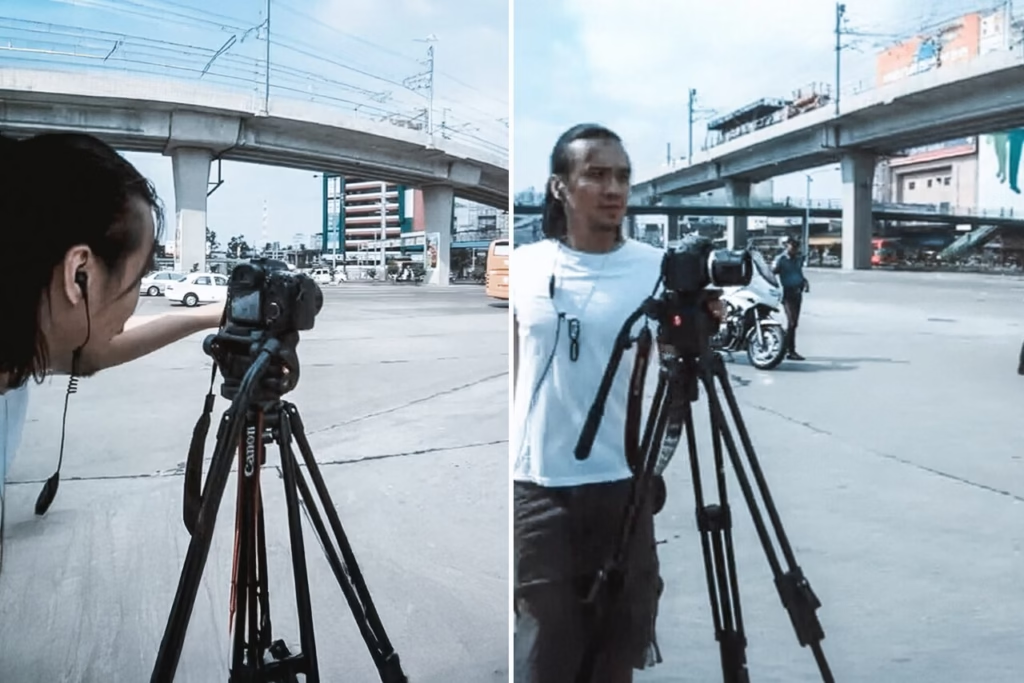
The shoot happened during Holy Week, the one brief period when Metro Manila collectively exhales. Offices close, malls go dark, nightlife pauses, and thousands leave the city for their provinces or observe the season at home. The city doesn’t shut down—but it softens.
Even then, filming on EDSA demanded precise coordination. The production was led by an all-star crew from the industry, headed by director Jason Tan, producers Erwin Romulo, Day Cabuhat, Diane Ventura, Lyles Sacris, Mads Adrias, with Mons Romulo and RockEd Philippines handling permits on location shooting.
Them working alongside the MMDA, the PNP, and likely other agencies, this feels like a sure walk in the park production shoot.
Yet closing portions of the metro’s main artery—even temporarily—is a logistical and political gamble.
Was Ely Buendia’s influence a factor? Possibly.
But the real achievement was timing, planning, and a rare willingness to take the risk.
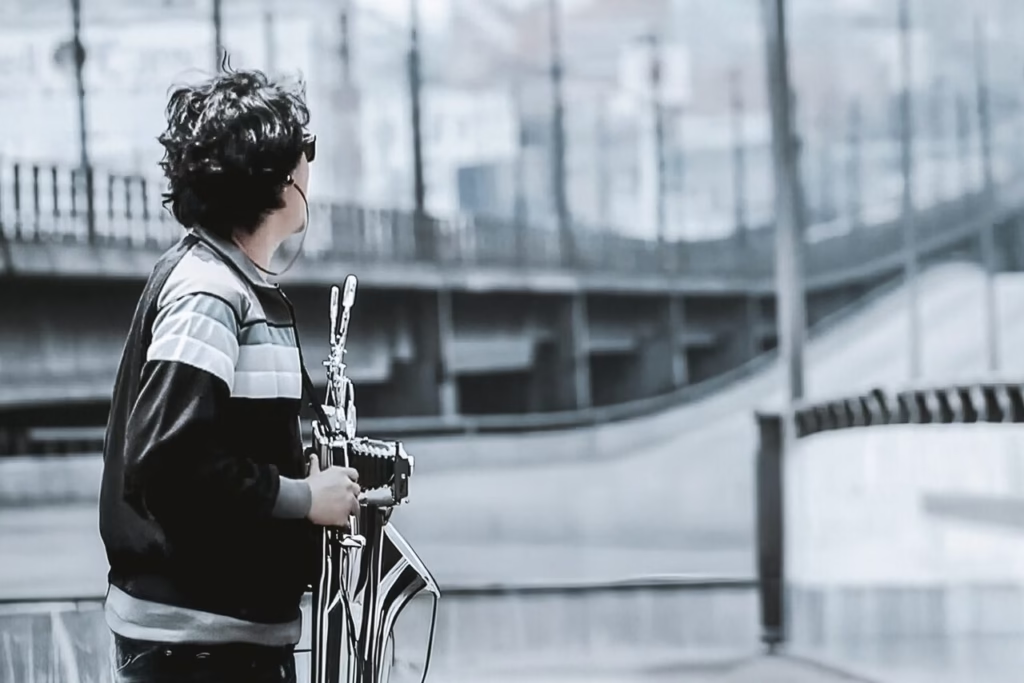
A Rare Masterpiece of Filipino Creativity
“20/20” quickly became more than just a release.
It is highly requested, a regular fixture through local music channels, earned repeat airplay, and eventually, the song won major accolades from the category exactly where everyone expected it to win:
MYX Music Award 2012 – Favorite Music Video
25th Awit Awards – Music Video of the Year
On the other hand, listeners played it on MP3 players, iPods, CD players and stereos of their cars while navigating the very road that the video mythologized—now back to its familiar, congested self.
Shooting on EDSA wasn’t just a production win; it was a cultural flex.
Prophecy, in Retrospect
For years, “20/20” remained a curiosity, a piece of fiction that seemed impossible to replicate—until it wasn’t.
Suddenly, we didn’t need a rockstar or a director to imagine an empty EDSA. It just… happened. No crew. No cameras. No crafted narrative. Just a once-bustling city pressed into silence by a pandemic.
The eerie visual from “20/20” transformed into daily reality.
The question changed from “How did they film this?” to
“Why does this look exactly like what we’re living through?”
And those who recognized revisited the song, drawing connections between its haunting visuals and the global crisis. Lyrics like “I wish that I could see the world through your eyes” suddenly took on new meaning. Some joked the video predicted the future; others believed the pandemic gave the song a renewed, almost spiritual resonance.
As for Ely Buendia, some of his works have long invited layered interpretations, and “20/20” simply joined that tradition.
Still, art didn’t predict the future—it prepared us to recognize it.
Full Circle on EDSA
Just as in the music video, the stillness didn’t last forever.
Traffic gradually returned. Private vehicles trickled back onto the asphalt and buses reclaimed the road, though in a different lane, but the familiar rhythm of Metro Manila resumed—flawed, chaotic, but undeniably alive.
The stillness we experienced for months dissolved.
EDSA resumed its default setting: loud, crowded, relentlessly alive.
Maybe that’s why the “20/20” video remains a mystery.
Not because it imagined the impossible—but because it captured a version of the city we didn’t know we’d one day understand.