

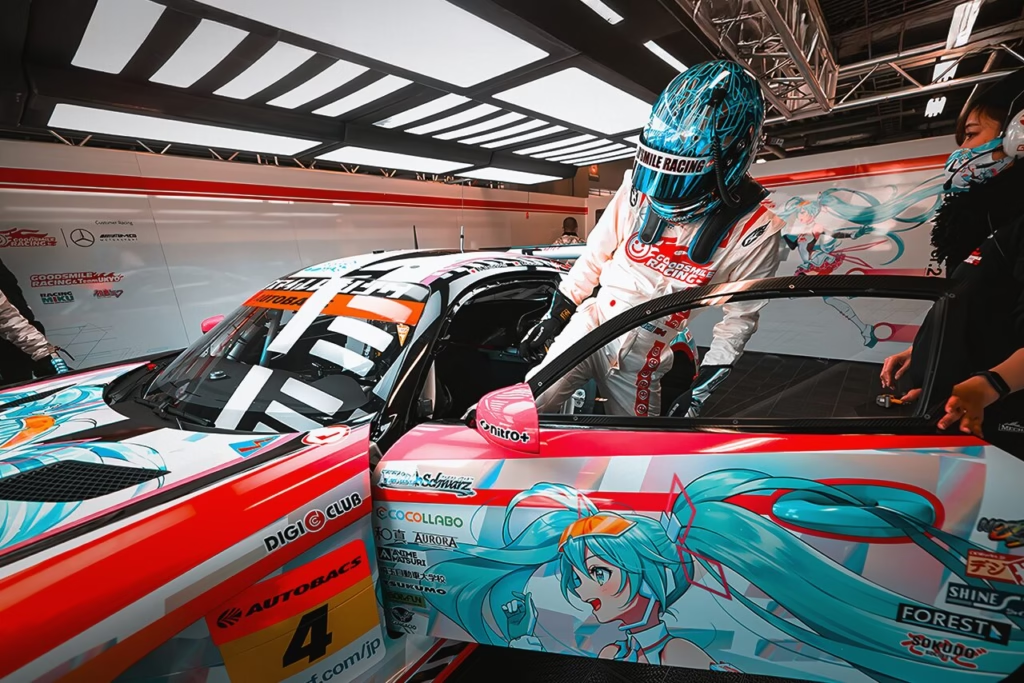
- More Than Just “Painful”: While Itasha literally translates to “painful car”—referencing the “cringe” felt by the public and the “pain” to the owner’s wallet—it has evolved into a high-level art form. It’s a subculture where cars become personal canvases, blending automotive passion with unapologetic fandom.
- From Street to Circuit: The movement spans every machine imaginable—from local daily drivers and LRT trains to the “Ita-Helis” of the Japanese Self-Defense Force. Professional teams like Good Smile Racing have even taken the aesthetic to the top of the podium, proving these vibrant liveries can belong on championship-winning race cars.
- Local Mastery: The Philippine scene is setting a high bar with builds like Edrell Dy’s Project Bruce Evo, Albert’s BMW, and Endless Discovery’s Nezuko Civic. These builds prove that whether it’s for the track or the daily commute, an Itasha is a serious, well-executed machine that celebrates the owner’s identity.
They say “your car is an extension of your personality.” For the average person, that might mean choosing a 4×4 to signal one’s adventurous spirit or a luxury sedan to show how successful someone is and just leave it at that. But for the car community, the sky’s the limit.
Some express it through stance and fitment, track builds, or period-correct restorations. And then there are those who take it one step further—turning their cars into rolling declarations of what they love, who they are, and what fandom they belong to without any shame. This is the world of itasha (痛車), a subculture where cars become more than just a machine; they become a canvas for some of the wildest modifications and most vibrant art in the scene.
Whether it makes you cringe or marks you as a “man of culture”, an itasha livery is impossible to ignore. These cars don’t aim to please everyone and that’s exactly the point.
The Meaning of Itasha
Itasha(痛車) literally translates to “painful car”, and it’s pretty clear why. Picture this: you’re an average Japanese person on the way home from a long shift. You’re tired and walking to the train station or your “normal” car, and suddenly—you see it. A car filled with decals of someone’s waifu. It’s enough to make any average person cringe and ask if they have any kind of shame.
But the driver? They’re having the time of their life. While the public might see an eyesore, the owner sees a badge of honor and pride.
Interestingly, the name itself is a brilliant bit of wordplay. In Japan, the term for an Italian car is “Itaria-sha(イタリア車)” or “Itasha(イタ車)” for short. People later began swapping the Katakana to the Kanji “Ita (痛)” meaning pain. It was a self-deprecating way to acknowledge that these builds were “painful” in two ways: they’re an eyesore to the public, and painful to the owner’s wallet. After all, commissioning a high-quality full-body wrap itself can cost as much as the car itself.
More Than Just Stickers
Within the community, there is a respected spectrum of styles. You’ll see everything from clean builds with subtle, minimalistic accents to full-body liveries that leave no panel untouched.
To see these designs in their natural habitat, you’ll often find them in Akihabara, particularly in the Akihabara UDX parking lot. Its underground levels serve as a gallery for not just Itashas, but also Japan’s most elite builds. Then there’s Odaiba Itasha Tengoku or Itasha Heaven, one of the largest outdoor gatherings in the world. Seeing hundreds of these cars lined up proves that this isn’t just a niche hobby, it’s a full-scale movement.
Once you roam around in events like these, you’ll find cars representing all kinds of fandoms, from anime series, to gacha games, and Vtubers.
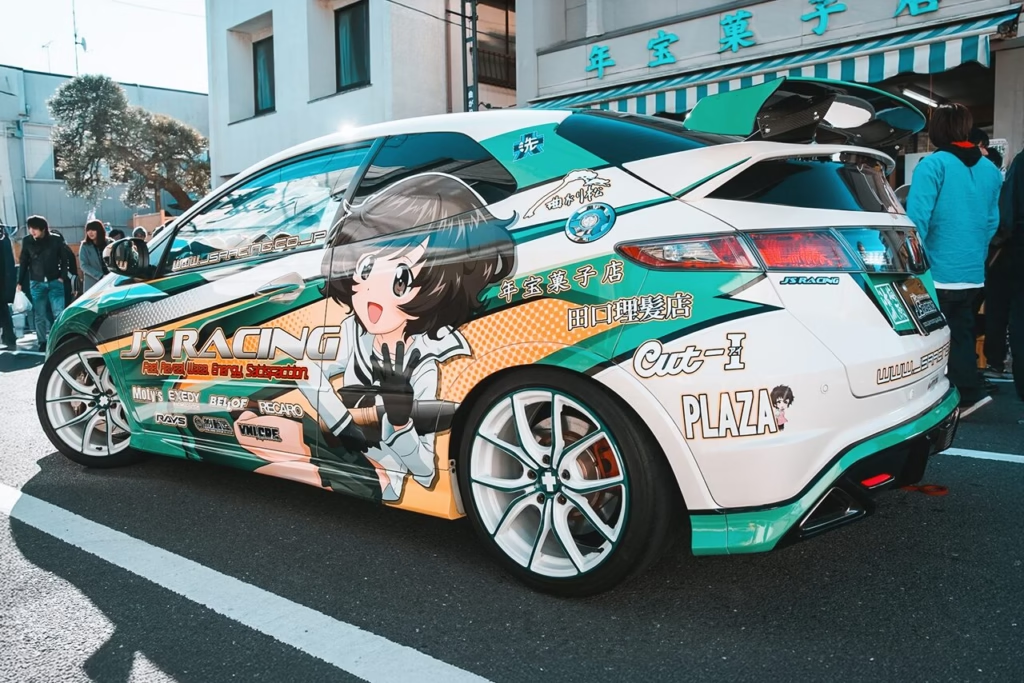
Photo Source: https://x.com/ken_yukari66/status/1665927626622636032/photo/1
Some draw from anime titles like Love Live!, Bocchi the Rock!, and the Fate series—like this Civic Type R Euro owned by @ken_yukari66, featuring Yukari Akiyama from the Anime Girls Und Panzer.
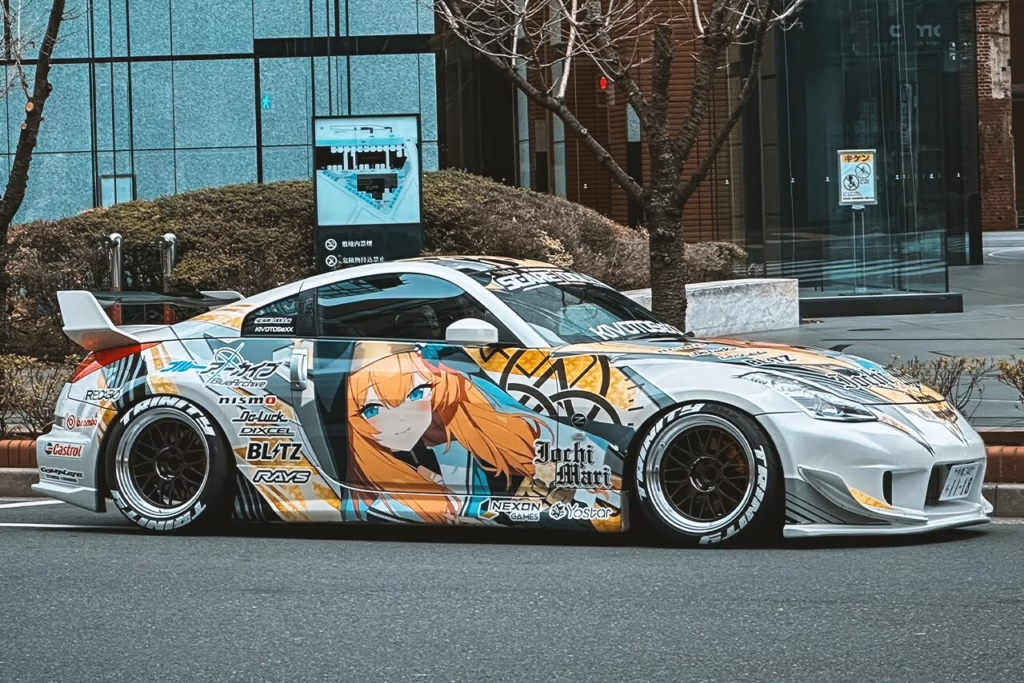
Photo Source: https://x.com/BR_SUMMER128/status/2010117907708293482/photo/1
Gacha games have also become increasingly popular, with owners showcasing their favorite characters. One standout example comes from my personal favorite, Blue Archive—a Nissan 350Z owned by @br_summer128, featuring Iochi Mari.
Good Smile Racing
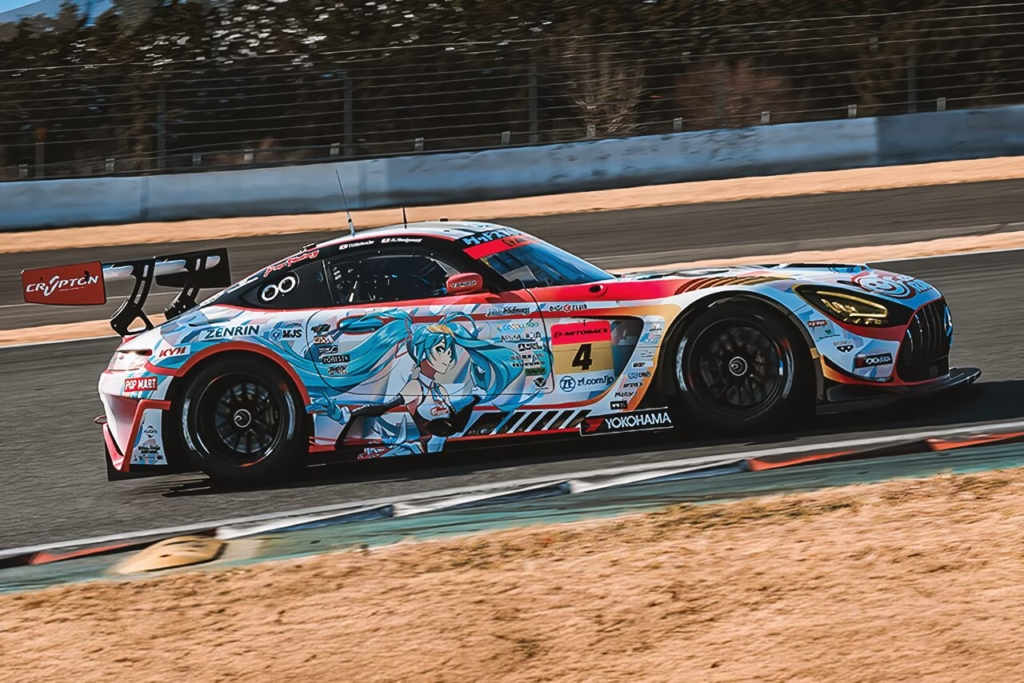
Photo Source: https://www.goodsmileracing.com/en/gt-gallery_21_timetrialchallenge/nggallery/page/2
Some cars aren’t just for show, and the perfect example of that is Good Smile Racing. What began as a Hatsune Miku livery on a BMW Z4 competing in the GT300 class of Japan’s Super GT quickly evolved into a multi-championship-winning team. The team has since moved on from the Z4 and now fields a Mercedes-AMG GT3.
The “Ita” Family
The Itasha spirit has a way of expanding, claiming almost any machine that moves and turning it into a tribute. This “ita-fication” has created a family of specialized sub-genres.
Itansha (痛単車)
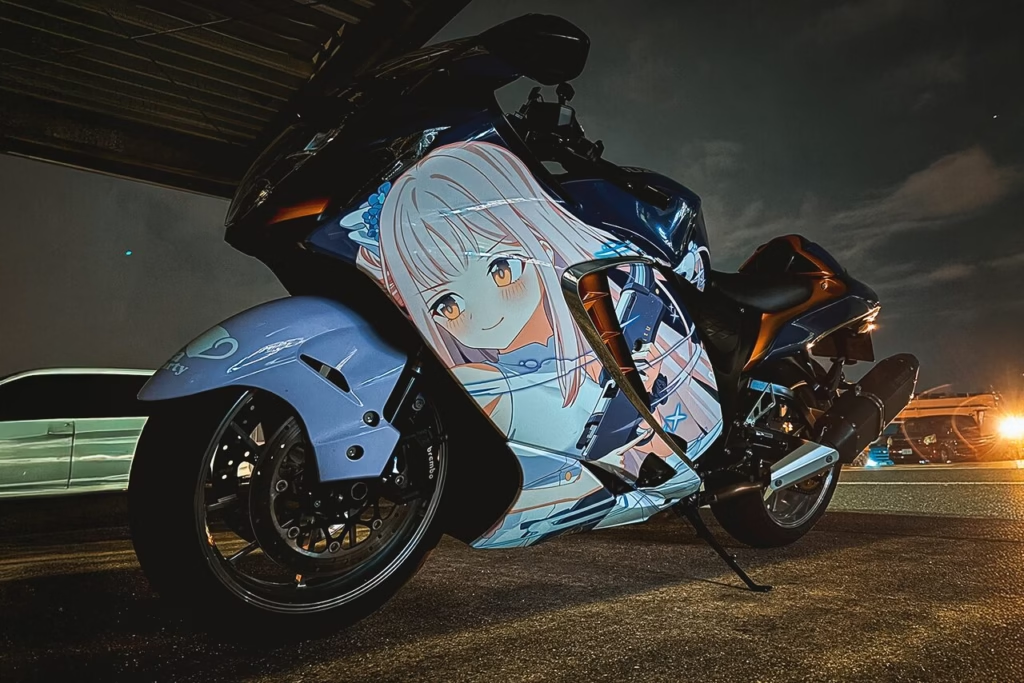
Photo Source: https://x.com/negikinoko0326/status/1955597964023574788?s=20
Also known as “Painful Motorcycles”, these are a true test for a designer as bikes lack the space and flat surface of a car. They are incredibly difficult to design where your “canvas” is usually interrupted by sharp angles or vents. This one here’s a Suzuki GSX1300R with a livery of Misono Mika from Blue Archive by @negikinoko0326.
Itachari (痛チャリ)
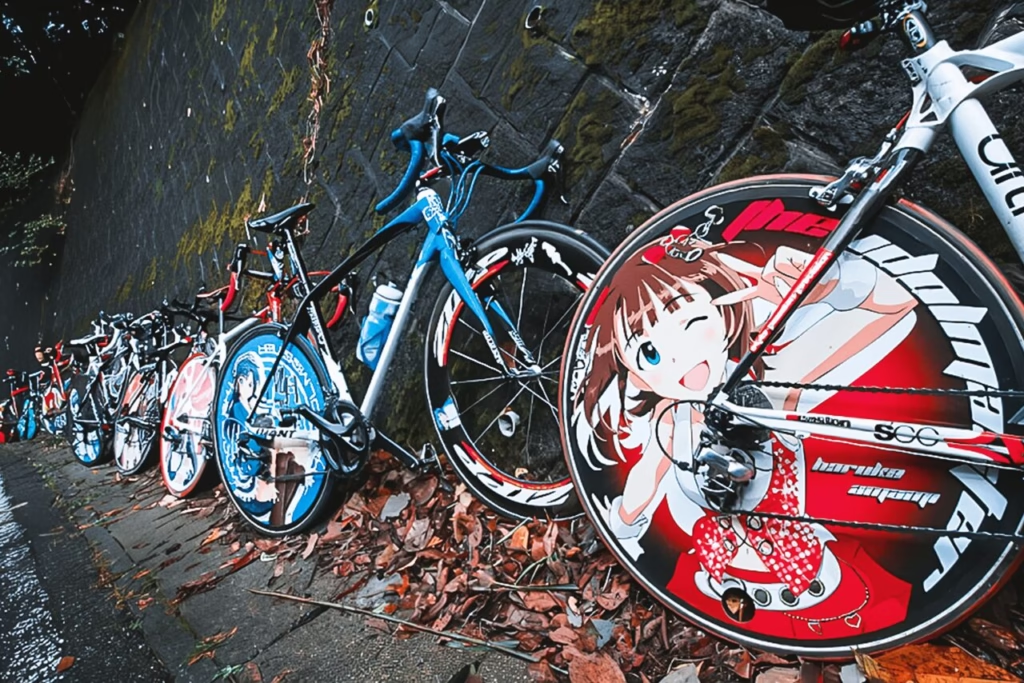
Photo Source: https://dbrcracing.wordpress.com/itachari/
Don’t have a car or a motorcycle? Like most of Japan, bicycles are the primary mode of transportation for students and commuters alike, so it’s only natural for the subculture to claim them too. Since bicycles have almost no room for art, owners usually install plastic covers on the wheels to create a canvas.
The “Ita-Heli”
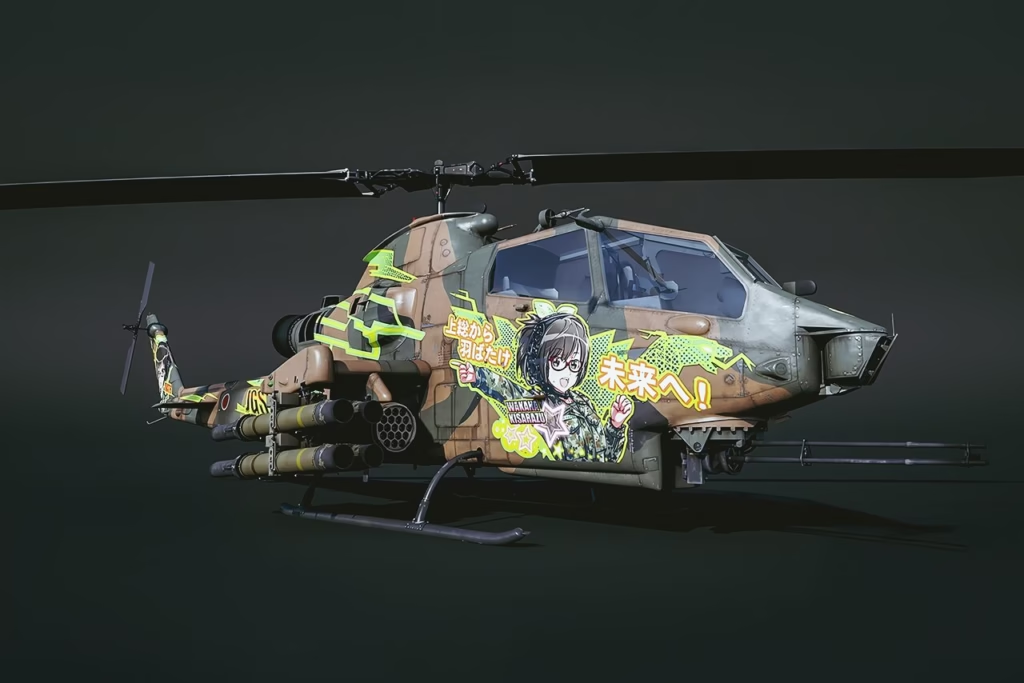
Photo Source: https://warthunder.com/en/news/6223-shop-the-japanese-cobra-available-for-purchase-en
Even the Japan Ground Self-Defense Force (JGSDF) embraced the subculture. I remember first discovering this while scrolling through the Japanese tech tree in War Thunder— a vehicle combat game known for its realistic tanks and planes. Seeing this AH-1S Cobra, My first thought was “Nah, no way this is real.” But it is.

Photo Source: https://www.reddit.com/r/Itasha/comments/18aln8s/four_sisters_of_the_fourth_antitank_helicopter/
To celebrate the 20th anniversary of the 4th Anti-Tank Helicopter Unit at Camp Kisarazu, the self-defense force decided to give it a makeover. They didn’t just stop at one helicopter; they eventually unveiled four mascots known as the Kisarazu Sisters: Akane, Aoi, Wakana, and Yuzu. These moe-style mascots turned lethal weapons of war into massive PR successes, proving that no machine—no matter how serious—is off-limits for a man of culture.
The “Ita-Train”
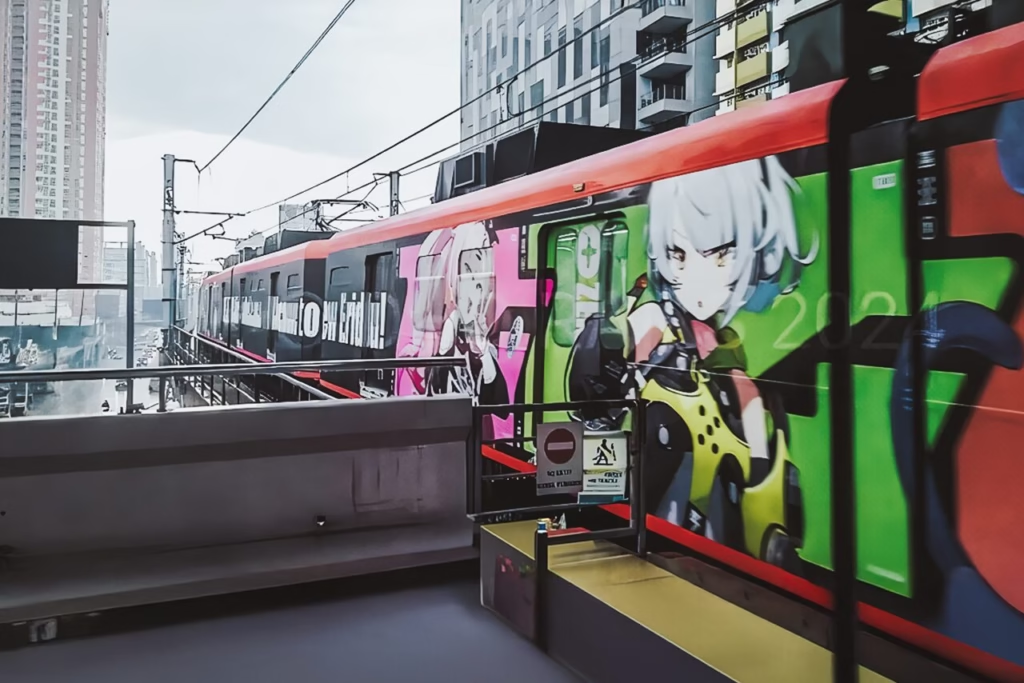
Photo Source: https://www.reddit.com/r/gachagaming/comments/1e0dyl3/zenless_zone_zero_in_the_philippines_lrt_station/
Around July 2024, commuters in Manila were treated to a sight: to mark the global launch of Zenless Zone Zero (ZZZ), HoYoverse collabed with LRT-1 and wrapped the train with a ZZZ livery.
As a fan of the game, this was such an unbelievable sight. Seeing characters from the game like Billy Kid, Ellen Joe, and Anby Demara plastered across the sides of the train felt surreal in the best way possible. It turned the mundane commute in LRT-1 into a journey into New Eridu.
This wasn’t a one-off either, Around September 2024, the rails were taken over again this time by Genshin Impact’s release of the Natlan region.
Local Itashas
Edrell Dy and Project Bruce
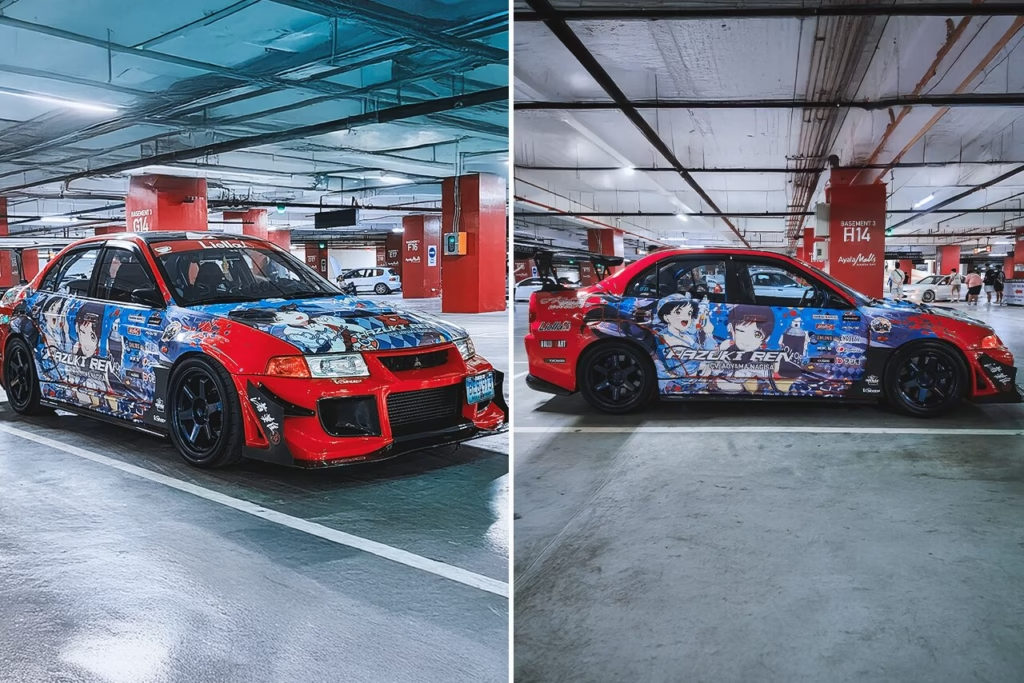
In the Philippines, the gold standard is set by Edrell Dy. As the owner of Onegai Onii-chan Japanese Hobby Shop, Edrell’s Mitsubishi Lancer Evo, nicknamed Bruce, is the realization of a dream to bring a piece of the UDX Akihabara parking lot to Manila.
Edrell definitely didn’t build a garage queen. Inspired by World Time Attack and Attack Tsukuba, Bruce features a Varis ASSO kit and a massive 1700mm Voltex Type-5 wing. It sits on Rays TE37 Forged Magnesium wheels along with blue Endless brake calipers.
When the time came for the design, Edrell chose Hazuki Ren from Love Live! Superstar!!. The wrap was done by Decal Republic. The creative challenge was matching Hazuki’s blue aesthetic with the Evo’s red paint. By collaborating with a graphic designer who shares the same passion for anime, they tied the colors together perfectly. The car is also wrapped in PPF (Paint Protection Film), adding a layer of protection and making the colors pop more.
While most would treat a build of this caliber as a “Sunday car”, Edrell treats the Evo as his daily driver. For him, the value of the car is found in the driver’s seat, he doesn’t build cars for the next owner, he builds them for himself. As he puts it “I’m gonna use these cars everyday…I don’t want to be that guy who preserves the car for the next owner.”
Harikitte Ikou!: Albert’s BMW E36 328i

Photo by Albert Drive Therapy: https://www.facebook.com/share/p/1SDbf2WtMZ/
Albert represents the “Drive Therapy” philosophy—the belief that the best way to clear your head is behind the wheel. While many know Albert for the legendary 4G63T-swapped Lancer Boxtype and his skill behind the wheel in the Bimmermonkey’s BMW E46 330ci race car, his E36 328i is something that would make any local Uma Musume fans look twice.
The theme is centered around Kitasan Black from Uma Musume: Pretty Derby, with Decal Republic also behind the livery that bears the Bimmermonkey name. It’s a perfect match for a car that sees both the track and daily commutes; the design fully embraces the character’s signature catchphrase—”Harikitte Ikou! (Let’s get pumped up!).”
Endless Discovery’s Nezuko Kamado Civic
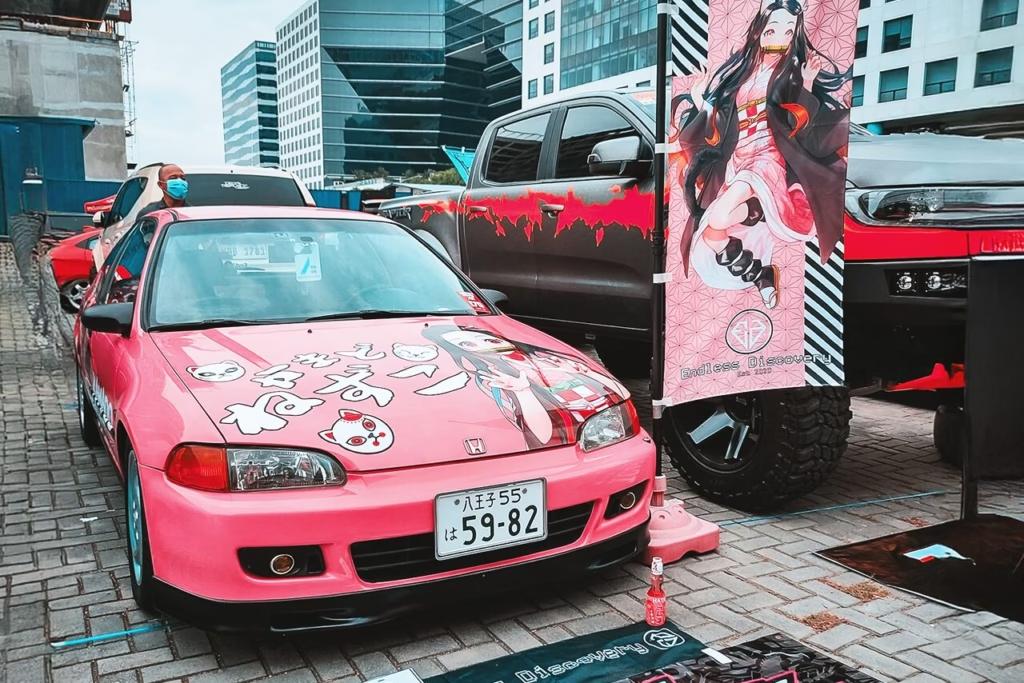
Photo By Endless Discovery: https://www.facebook.com/share/p/1GF3Jc1L1y/
This pink EG Civic hatchback serves as a rolling showcase for Endless Discovery, a photographer, and a Facebook page that specializes in customized Nobori Flags. Featuring Nezuko Kamado from the popular anime series Demon Slayer, the pink paint complements Nezuko’s color palette, with a livery that was also done by Decal Republic. Whenever Endless Discovery is at a meet, you can bet this Civic is going to be there.
A Badge of Pride
At the end of the day, itashas aren’t about following trends or seeking universal approval, it’s a deeply personal way of saying “This is who I am.” It is the ultimate crossover of two worlds that share one common reality: they are both incredibly expensive hobbies. Whether you’re chasing car parts or limited-edition merch, the “pain” in Itasha is a nod to the dedication—and the budget—required to bring these visions to life.
From the championship-winning GT300 cars of Good Smile Racing to the daily-driven builds on our own streets, these cars are rolling canvases that break the mold of traditional car culture. Itasha owners know their cars might be “painful” to the public eye, but for those behind the wheel, it’s a small price to pay for the joy of turning every drive into a celebration of what they love. So, the next time you see a car covered in anime decals, look past the stickers and see the passion (and the wallet-drain) behind it. Because in this scene, being “painful” is the highest form of respect.