

- The Philippines once had a far more experimental car market, briefly hosting American, European, Australian, and early Japanese brands before today’s more predictable showroom lineups took hold.
- Some brands, like Opel, Holden, Vauxhall, and Datsun, were locally assembled, while others including Alfa Romeo, Renault, SsangYong, Lincoln, and the Toyota Prius were officially sold or imported in limited numbers, often struggling with cost, timing, or market fit.
- Together, these cars reflect a forgotten chapter in Philippine automotive history, when global manufacturers tested ideas here that didn’t always leave a lasting mark, but made our roads far more interesting than we remember.
If you walk into a dealership today, the choices feel so familiar and predictable. Our roads nowadays are dominated by the “Big Three” (Mitsubishi, Toyota, and Nissan) Japanese giants, tech-heavy Korean cars, and the recent rise of Chinese vehicles. We’ve become so accustomed to this market that it’s hard to imagine a time when our roads looked entirely different.
However, before cars like the Toyota Vios and the Mitsubishi Mirage became the “pambansang kotse” of this archipelago, the Philippines was a fascinating experimental playground for the global automotive industry. This was an era, stretching from the post-war boom of the ‘60s all the way to the late ‘90s where the streets of Manila felt more like a melting pot of car culture.
From German icons assembled in the heart of Manila to American land-yachts that could barely fit in a Makati parking slot, here are some brands and models that once graced our local roads but have since faded into automotive folklore.
GM-Yutivo
To really understand how diverse our roads were, you have to look at the “Department Store” of cars, Yutivo Sons Hardware Co. Essentially the first General Motors(GM) Completely Knocked Down (CKD) assembly plant in the Far East.

Operated in their plant in Paco, Manila, Yutivo essentially built and distributed a bunch of American brands like Buick, Pontiac, Opel, Holden, and Chevrolet. Yutivo’s jewel was the first-gen Chevrolet Camaro. The Philippines was one of the very few places outside the United States where the Camaro was officially assembled between 1967 and 1969.
The European & Australian Cousins
While Chevrolet was the American hero, Yutivo used its plant to assemble GM’s other international brands, creating a very diverse lineup that competed directly with the rising Japanese brands.
Opel
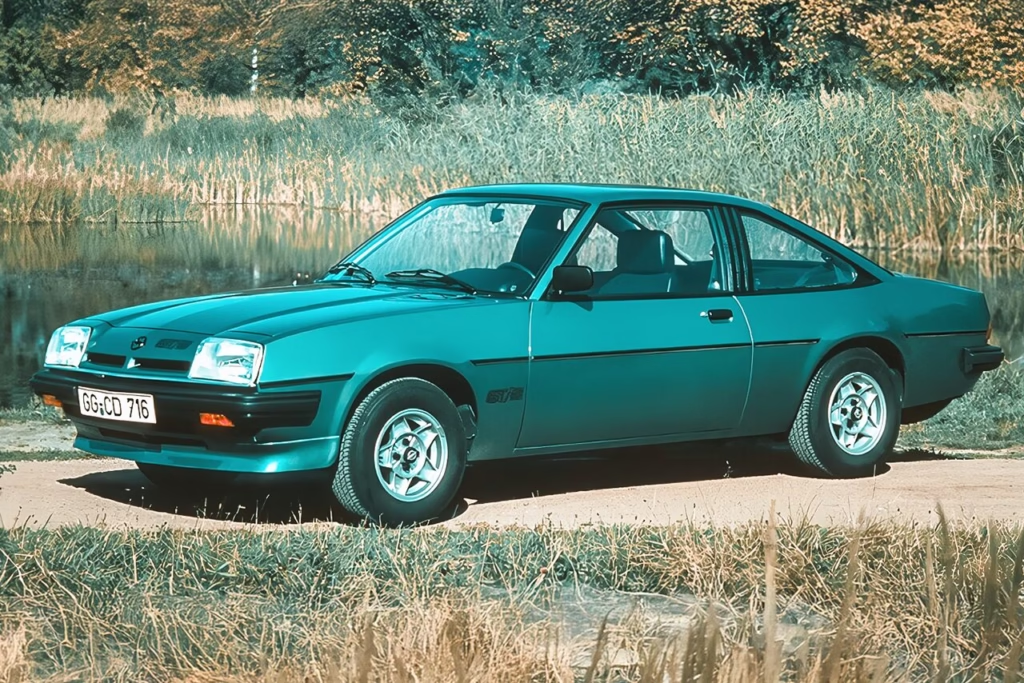
Opel was Yutivo Corporation’s successful passenger car line. In the ‘60s and ‘70s, the Opel Rekord and Kadett were the default choices for the Filipino professional. Of course we also couldn’t forget about the Manta, which was Opel’s answer to the Ford Capri, and for many Filipinos in the ‘70s, it was the ultimate “halo” car.
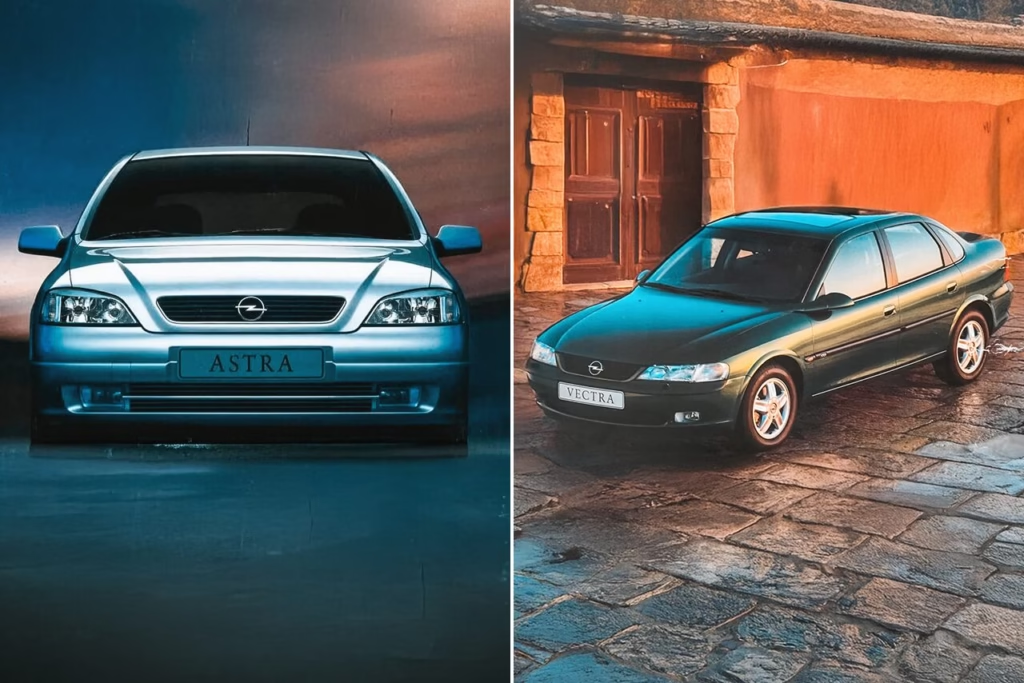
Yutivo eventually sold its assembly operations and the Paco plant to General Motors By the ‘80s, political instability and a severe economic crisis plagued the country, Opel was pulled out. While the brand returned in the ‘90s with the cars like the Astra, Vectra, and Tigra, it eventually vanished for good in the mid-2000s as GM focused more on the Chevrolet brand.

Holden
If you told most modern Filipino car enthusiasts that the Philippines sold left-hand drive Holdens at some point, they’d probably think you were joking. It’s true though!
In the ‘70s, we got the Holden Torana or 1900. While the Australians could get theirs in three engine options: the 1.9-liter Opel engine, an inline-6, or even a V8, GM only offered the Torana to us with a 1.9-liter Opel engine. This was pretty much a sensible option for Yutivo as it was shared with the Vauxhall Viva and Opel Rekords they were already assembling in Paco. These were also available in both 2-door and 4-door variants.
Vauxhall
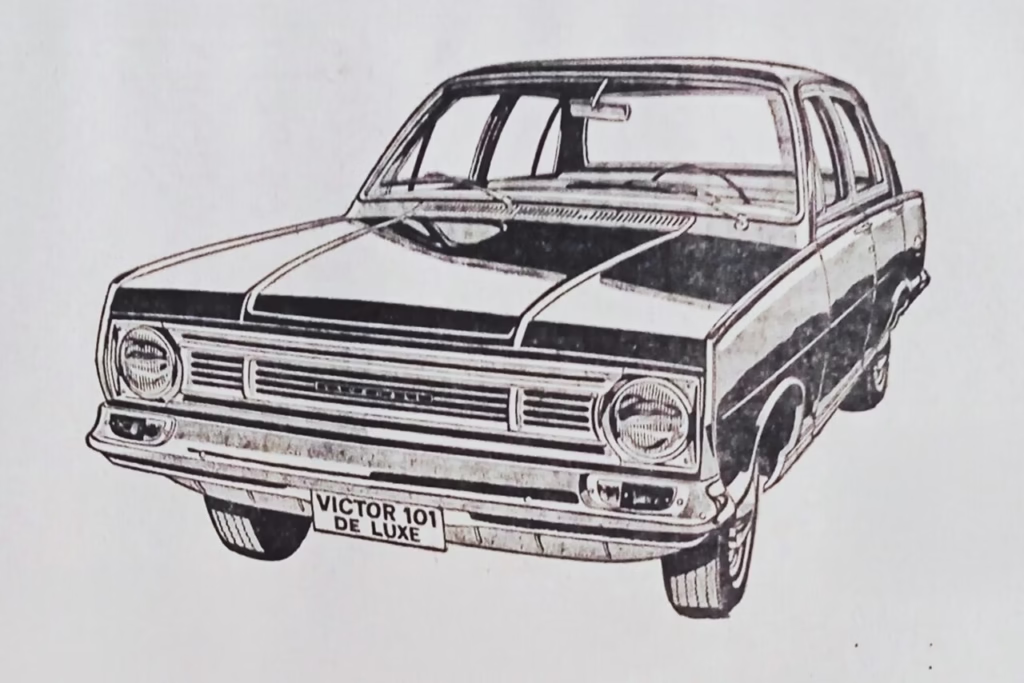
If Opel was German and Holden was Australian, Vauxhall was Yutivo’s British flair. While it was arguably the most “understated” brand in the Paco plant, it produced some of the most beautiful cars on Manila’s roads in the 1960s such as the Viva and the Victor.
One of the stories of that era involves a “Sales Blitz” in 1968, led by the top dealer, Northern Motors, Inc. (NMI). They aggressively slashed prices on the boxy Vauxhall Victor FC series to clear the warehouse. The reason? They were making room for the arrival of a style icon: the Vauxhall Victor FD.
The Victor FD was a massive departure from the old British “boring” look. It adopted the “Coke-bottle styling”, a look inspired by the Chevrolet Camaro and 4th gen Impala. With its sleek curves and signature four round headlamps, the Victor FD was a true sign of modern 1960s luxury.
Datsun
Before Nissan was a household name, it was Datsun, the brand that arguably taught the Filipino driver to love Japanese cars. While the American brands were big and thirsty, Datsun arrived in the 1960s with a simple promise: it won’t break, and it won’t drain your wallet.
Unlike the Yutivo brands, Datsuns were the territory of Universal Motors Corporation(UMC). They started local assembly in the late ’60s at their plant in Pasong Tamo, Makati.
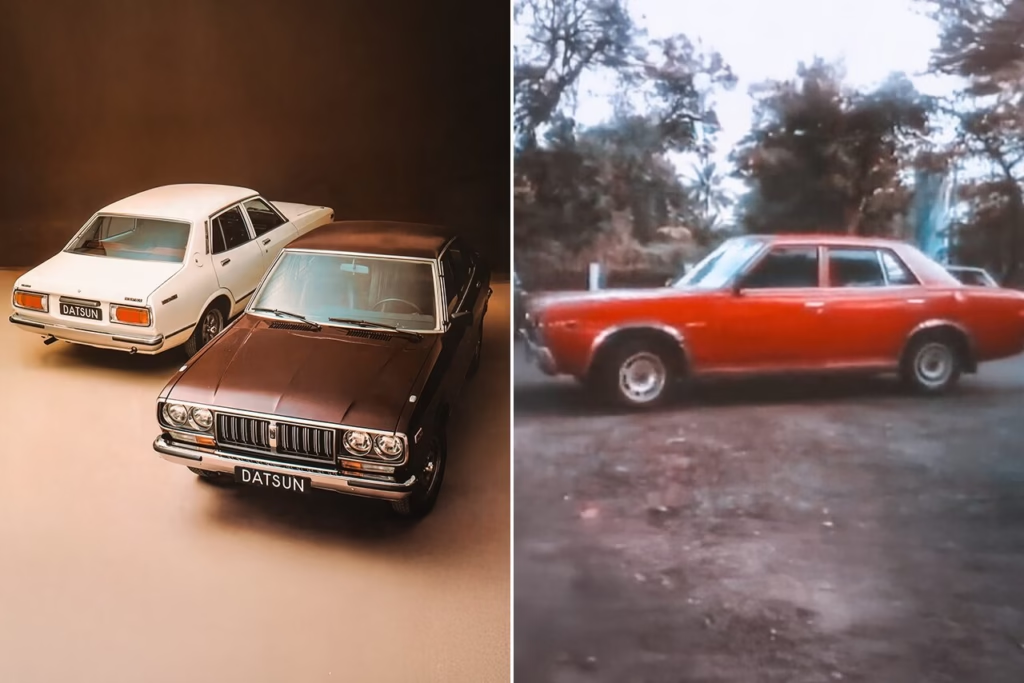
Models like the Datsun 180B Bluebird and the Cedric 200C carved out a unique space for the brand, offering an “executive” feel for Filipino professionals who wanted a luxury feel. Meanwhile, the Datsun 1600 Pickup became a local legend for being one of the first trucks to blend rugged utility with car-like comfort.
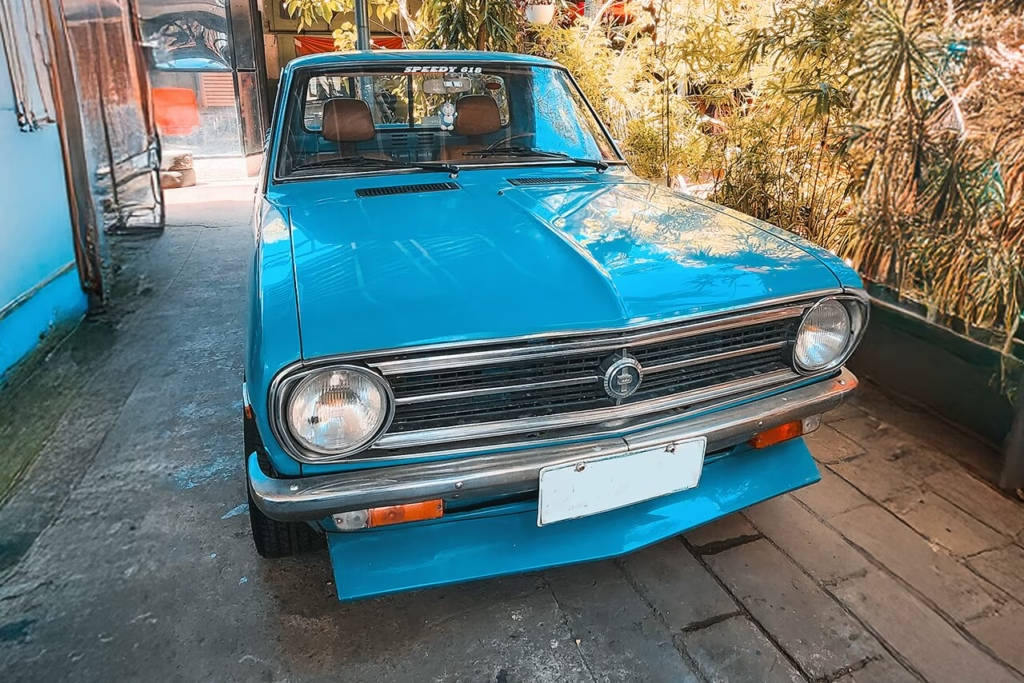
Now, the Datsun Sunny Ute, This tiny “Ute” became a staple of Philippine small businesses and provinces. It was a lifestyle vehicle before that term even existed; it proved you didn’t need a massive, smoke-belching truck to move heavy loads. It’s a testament to their build quality that you still see these vintage 1200 Pickups today, often lovingly restored, still hauling crates and turning heads.
By the early ’80s, the “Datsun” name was retired globally in favor of Nissan. For a few years, Filipino showrooms were a confusing mix of both badges, but the transition was soon cemented by the arrival of the Nissan Sentra, which took over the Sunny’s mantle as the new king of the Philippine road.
SSangYong
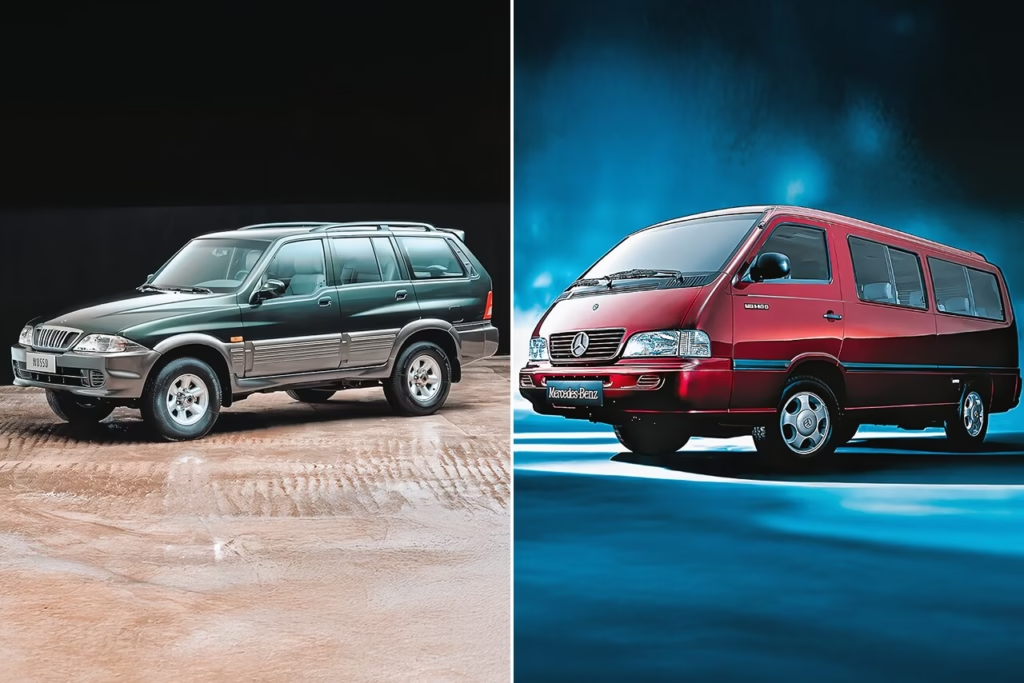
In the 1990s, SsangYong entered the Philippines with a marketing hook that was impossible to ignore: German DNA at a Korean price. Through a technical partnership with Mercedes-Benz, SsangYong models like the Musso SUV and the MB100 van were equipped with licensed Mercedes engines and transmissions. Eventually, the brand did begin selling under its own SsangYong name with models like the Actyon.
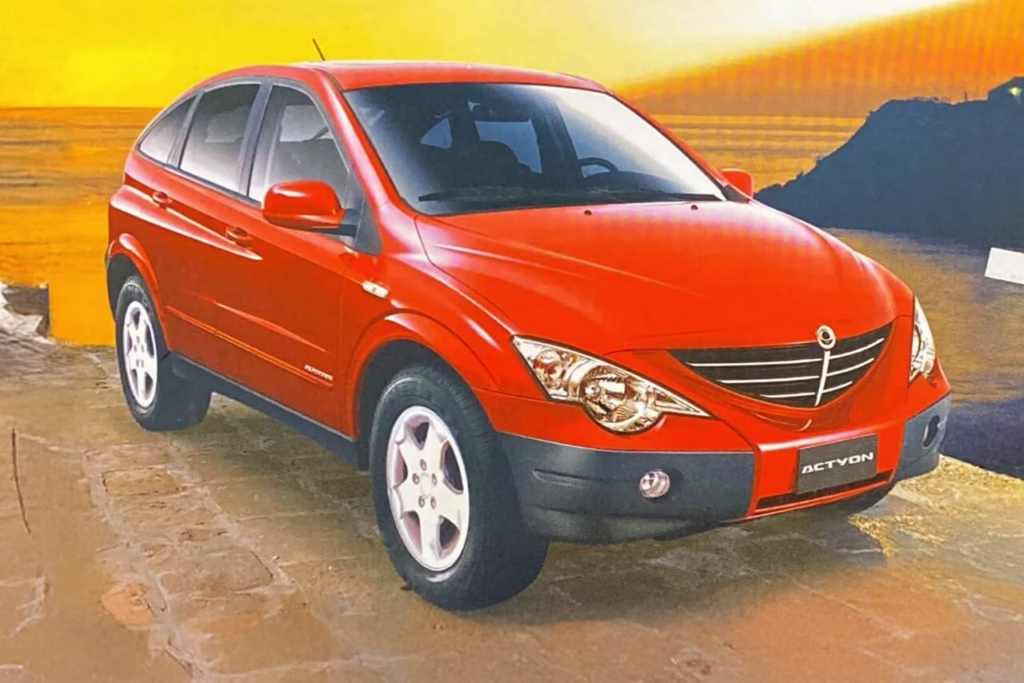
By the early 2010s, SsangYong had effectively vanished from the Philippine market, leaving existing owners to hunt for parts in a “ghost brand” vacuum.
This changed in 2016 when the brand made a high-profile comeback under new management and today, the brand is undergoing its biggest transformation yet, rebranding as KG Mobility.
Renault
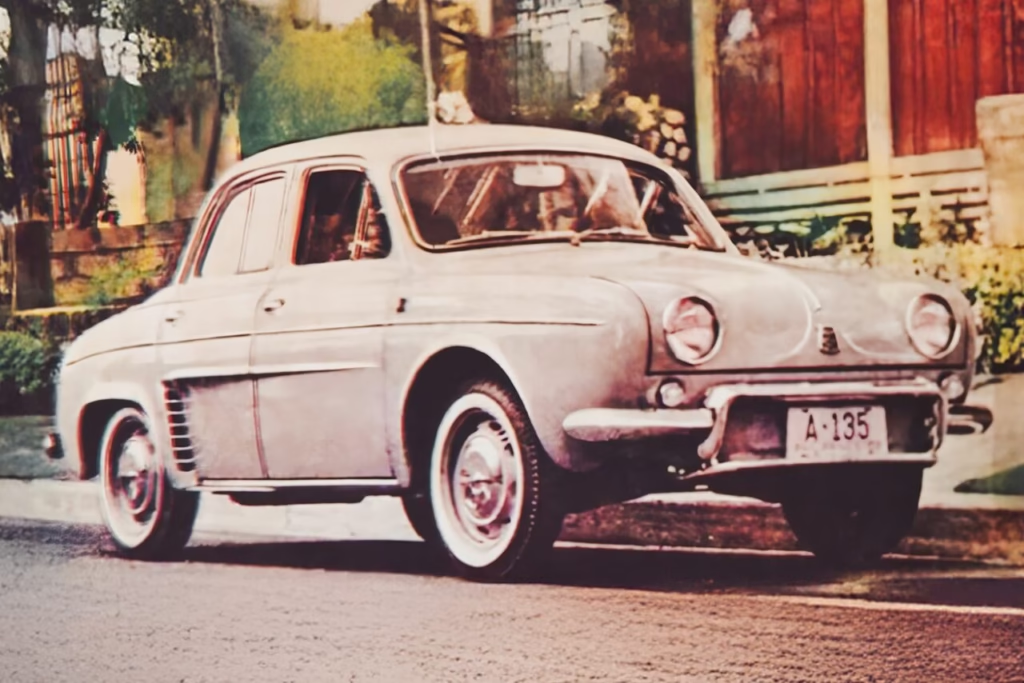
Renault’s history in the Philippines is a series of ‘starts and stops’ led by some of the country’s oldest businesses. In the 1960s, the tobacco giant Tabacalera introduced the brand with rear-engined classics like the Renault 8. By the ’70s and ‘80s, Tropical Distributors took the wheel, offering the Renault 16 and the R20.
By the late ‘90s, a dealership imported several models, these cars were deemed far too expensive for the average buyer and vanished.
Alfa Romeo
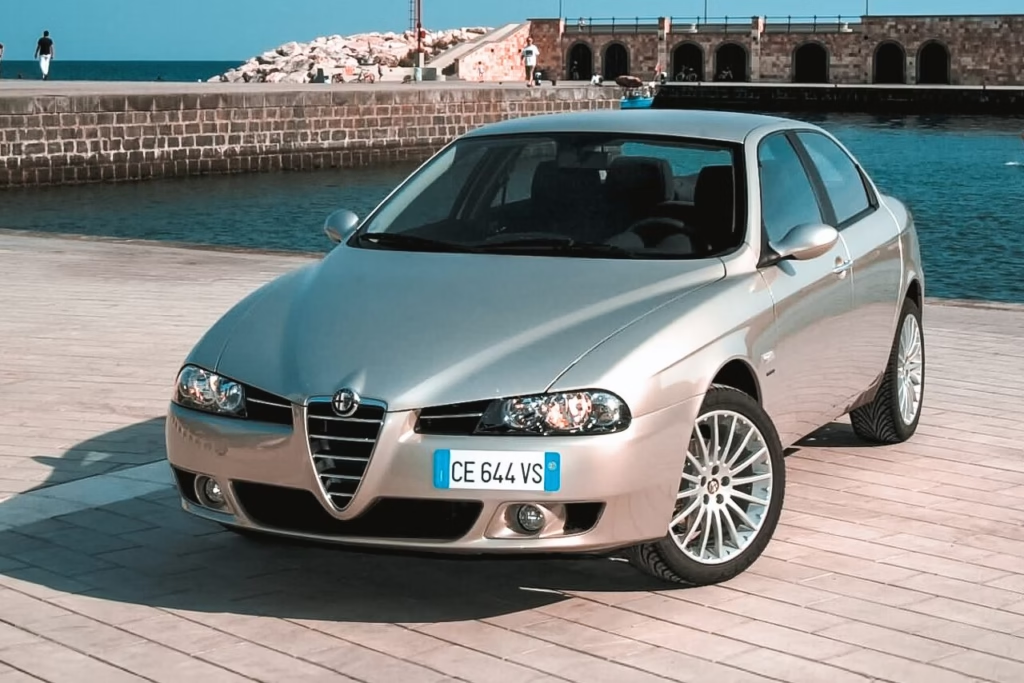
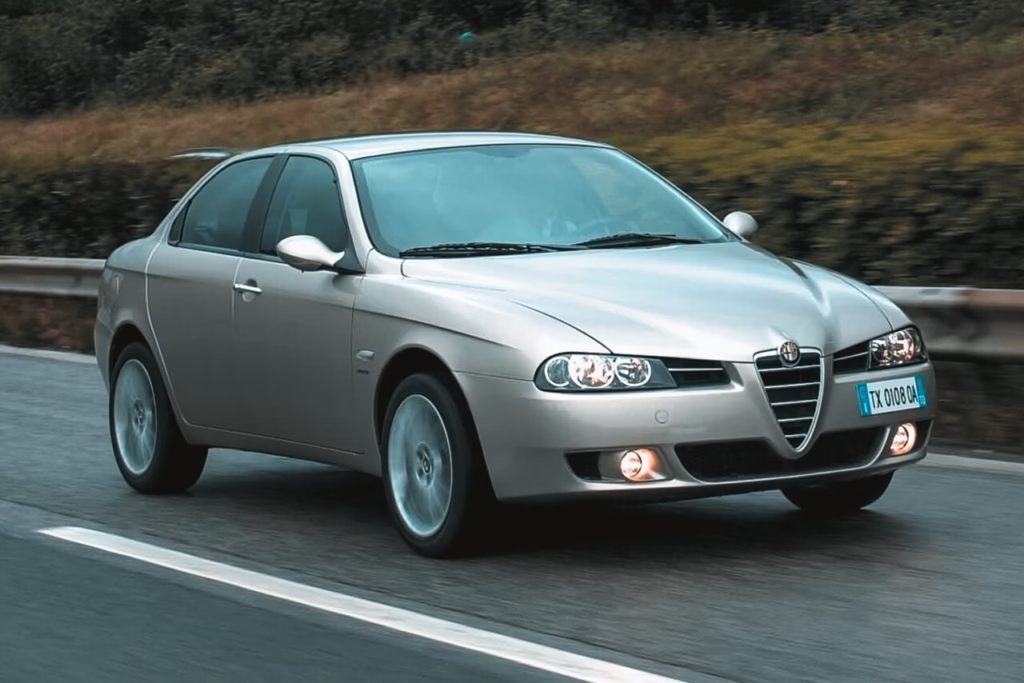
In the late 1990s, Alfa Romeo was officially handled by Auto Prominence Corporation. This was the “Golden Era” for the brand locally, as they brought in cars like the 156. It was considered the most beautiful sedan in the world at the time.
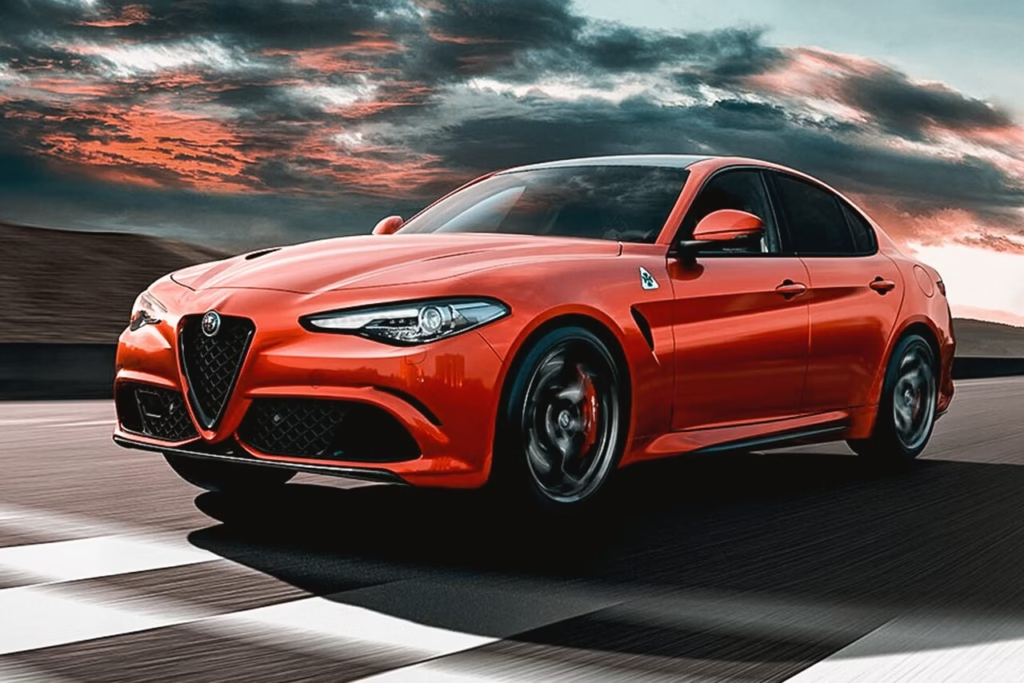
Later on, Auto Prominence folded, and Alfa Romeo vanished from the local market for nearly two decades. Alfa Romeo finally returned in 2018 under Petromax Enterprise, bringing in cars like the Giulia, 4C, and the Stelvio.
Lincoln
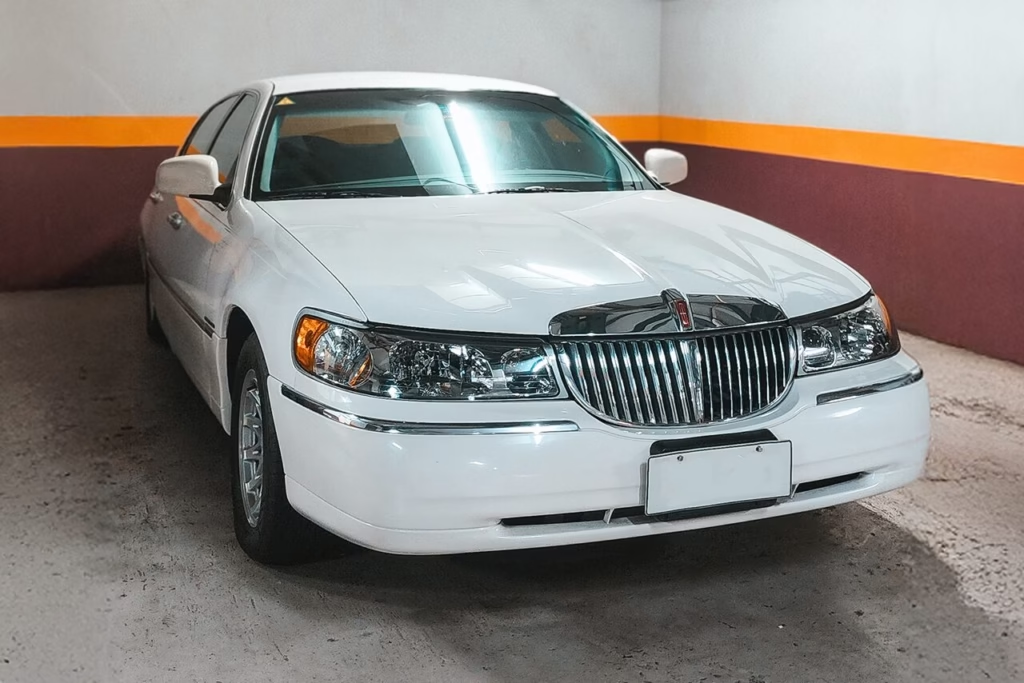
When Ford Motor Company Philippines returned in 1997, they didn’t just bring the Expedition and the F-150, they also brought in the Lincoln Town Car.
This sedan was a literal land-yacht, measuring about 5.4 meters long. Under the hood was the 4.6-liter Modular V8 and also featured rear air suspension. It was the last of its kind, a body-on-frame behemoth that prioritized “couch-like” comfort over handling.
Despite its “Presidential” appeal, the Town Car never truly became a hit in the local market because it was expensive for what it was. Filipinos flocked over to the Ford Expedition and other luxury cars, which were cheaper and had more presence, effectively killing the Town Car’s chances in making a dent in the luxury market.
Toyota Prius
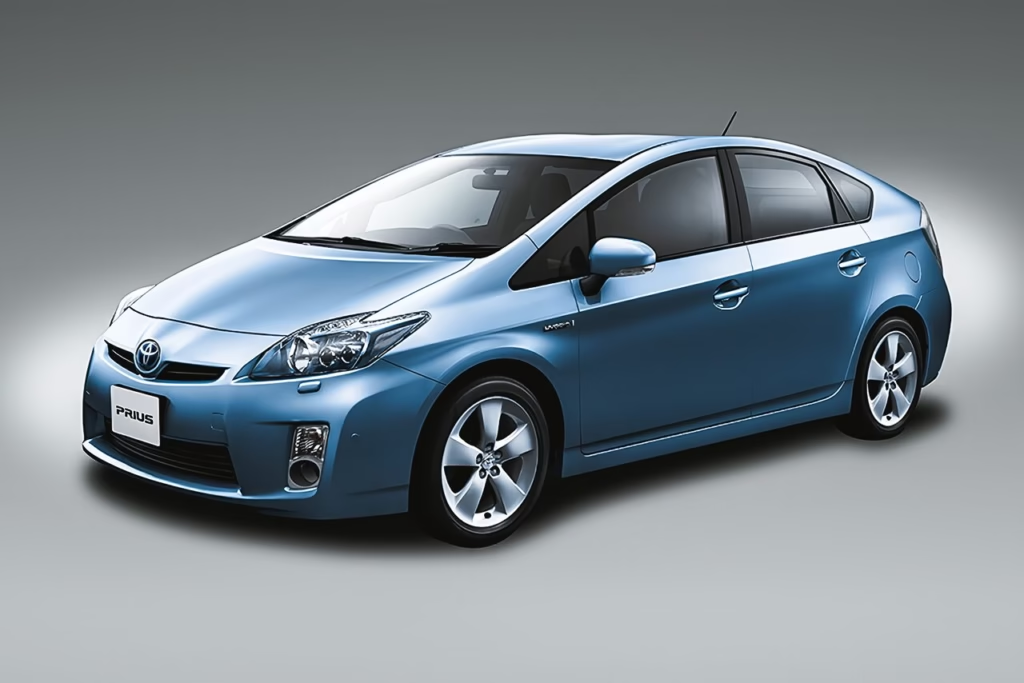
I remember back around 2009 or 2010, I was in the first grade, and we were having our Corolla serviced. While waiting, I decided to take a stroll around the showroom and started looking at the official Toyota price list of that time and noticed that the Prius was being offered in the Philippines. Little did I know that it was actually around the time when Toyota officially launched the Hybrid in the country.
This was the third-generation model, and the most shocking thing about the price list wasn’t the car being a hybrid, but the price. Around that time, a top-of-the-line Corolla Altis was around 1.1 Million Pesos, while the Prius was listed at around 2.2 Million Pesos.
And this was a time when there were no tax incentives for hybrids, you were essentially paying for two Corollas, or you could purchase a 3.5L V6 Camry for 2 Million Pesos, which was the absolute pinnacle of Toyota luxury back then.
Because of cost concerns, the lack of tax incentives and the popularity of hybrids during that time, the Prius wasn’t a popular choice among Filipinos. But looking back, the Prius paved the way for the hybrid era we’re living in today.
When The Philippines Was an Automotive Playground
Looking back, it’s easy to forget just how experimental our roads once were. Long before today’s predictable showroom lineups, the Philippines briefly played host to a global mix of automotive ideas, some of which quietly worked, some that didn’t, and others that disappeared before we even realized they were gone.