

In those days, car accessories said as much about the owner as the car itself — they were one of the most immediate ways to make your car an extension of your personality.
Long before online shopping platforms like Shopee and Lazada simplified every transaction, Filipinos flocked to places like Concorde, Blade, and popular auto parts districts like Banawe and Evangelista to browse for every kind of car part. From maintenance parts, audio upgrades to fresheners, stickers, steering wheel covers, and every accessory you could imagine.
If you’ve ever walked into a car accessory store like Concorde today, you might notice the automotive equivalent of archaeological finds: items with sun-faded labels, boxes covered with dust, and plastic packaging that had yellowed with time.
Sometimes I find myself staying for hours, trying to find rare items among the other offerings. These “survivors of that era” are the little add-ons that used to be everywhere, cheap, and plentiful. Today, they’re either hard to find or surprisingly expensive because no one makes them anymore.
Some accessories have disappeared from stores, some evolved, and some you can still find through collectors or tucked away on back shelves if you know where to look.
These were the accessories that defined Filipino car culture in the ’80s, ’90s, and early 2000s, the items our titos and titas proudly installed, the ones we grew up seeing on family road trips, and the ones that instantly transported us back to simpler cars and simpler times.
Here are the forgotten classics every Filipino car kid will remember.
- Third Brake Lights (Hella/Bosch)
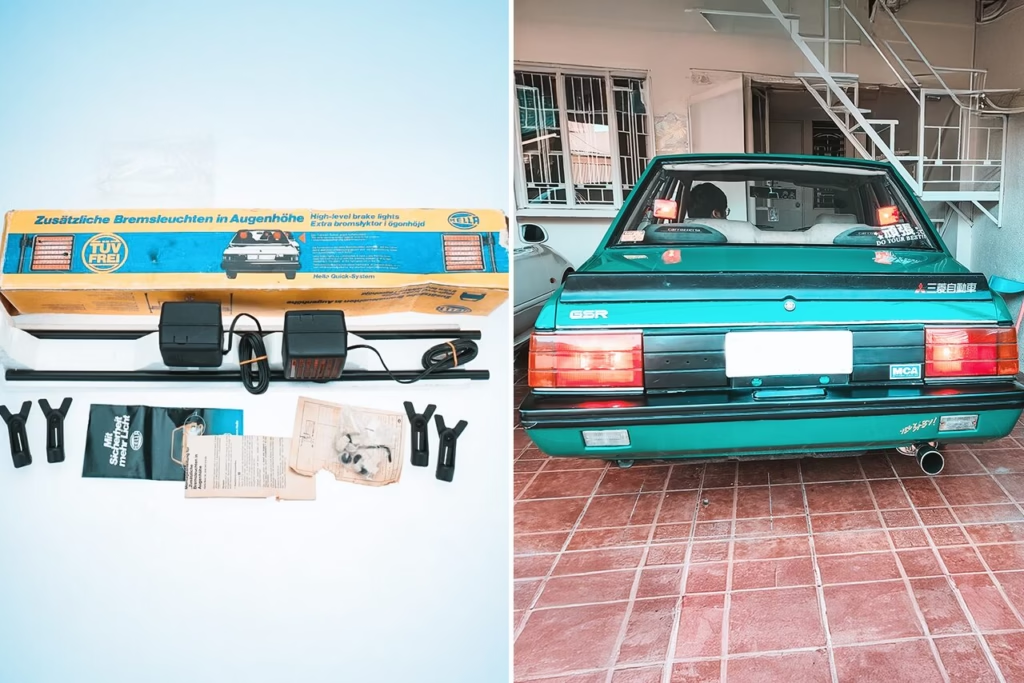
Photo Taken From: (Left) https://www.classiccult.com/hella-3rd-brake-lights-1979-1980-nos.html
Back when third brake lights weren’t yet mandatory, having one of these was the upgrade to make your ’70s to ’90s ride stand out. The Bosch Auffahr-Warner, along with its equally famous cousins from Hella and BG are mounted by the rear windshield, instantly giving any car that “Euro” or rally-inspired sophistication.
In the 2000s to early 2010s, you could walk into a shop like Concorde and see stacks of them on display, usually priced between ₱800 and ₱1,500. They were common, affordable, and everywhere.
Then, like many accessories of that era, production stopped… and overnight they turned into collector items. Today, a clean used unit from Bosch, Hella, or BG typically sells for ₱5,000 to ₱8,000, while pristine NOS (new old stock) ones still in their original box can fetch ₱10,000 to ₱15,000.
- Gooseneck Equalizers
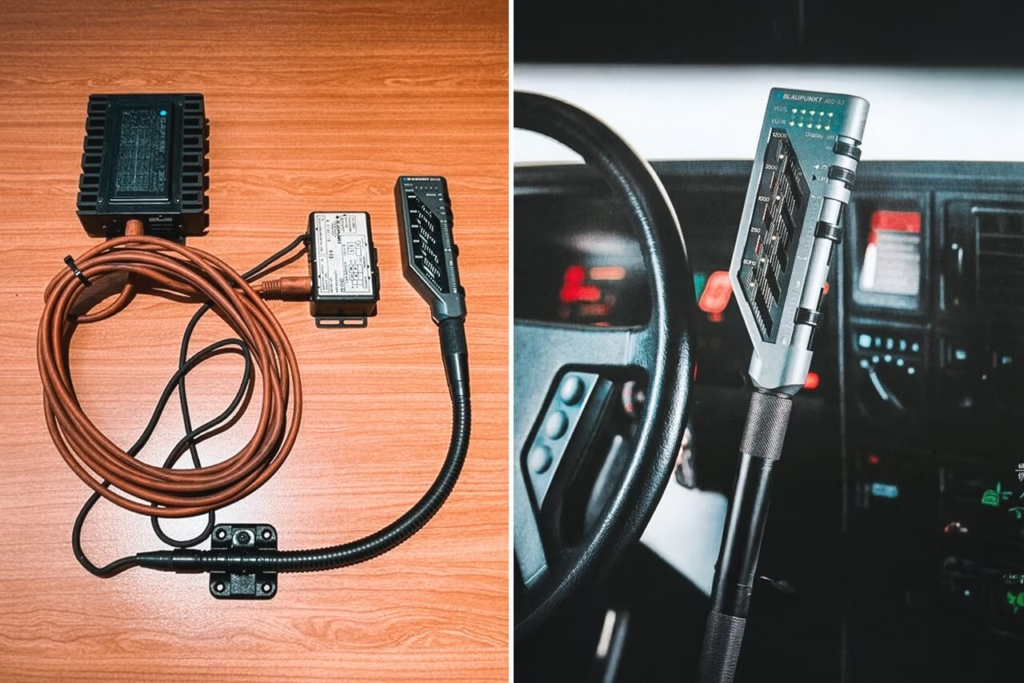
Photo Taken From: https://www.veilingagenda.nl/kavels/accessoire-equalizer-blaupunkt-zwanenhals-gooseneck-beq-s2-amplifier-bqa-107-1984-90-bmw-porsche-vw-blaupunkt/
For music lovers of the ’80s and ’90s, the gooseneck equalizer wasn’t just an accessory; it was a badge that told everyone you cared about your sound. A model like the Blaupunkt BEQ-S2, with its flexible neck mount and rows of sliders, gave drivers full manual control over bass, mids, and treble long before digital sound processing became standard.
A proper old-school setup often meant pairing the gooseneck EQ with a vintage cassette deck like the Pioneer KP-500, then running the signal to aftermarket 6×9 speakers like the Pioneer TS-X8 or the classic JBL T545s. Owners would spend minutes, sometimes longer adjusting each slider until you got the right mix.
And at night?
The tiny illuminated sliders cast a soft glow across the dashboard, making the interior feel like a miniature DJ booth. That unmistakable flicker of lights while music pulsed through the cabin is a core memory for many tito/tita drivers who lived through the golden age of analog car audio.
Today, with built-in DSP, Bluetooth, and touchscreens doing all the work, gooseneck equalizers have become rare retro collectibles. But for those who remember them, nothing beats the ritual of tuning your sound by hand.
- Gooseneck Light, Map Light, or Navigator Light
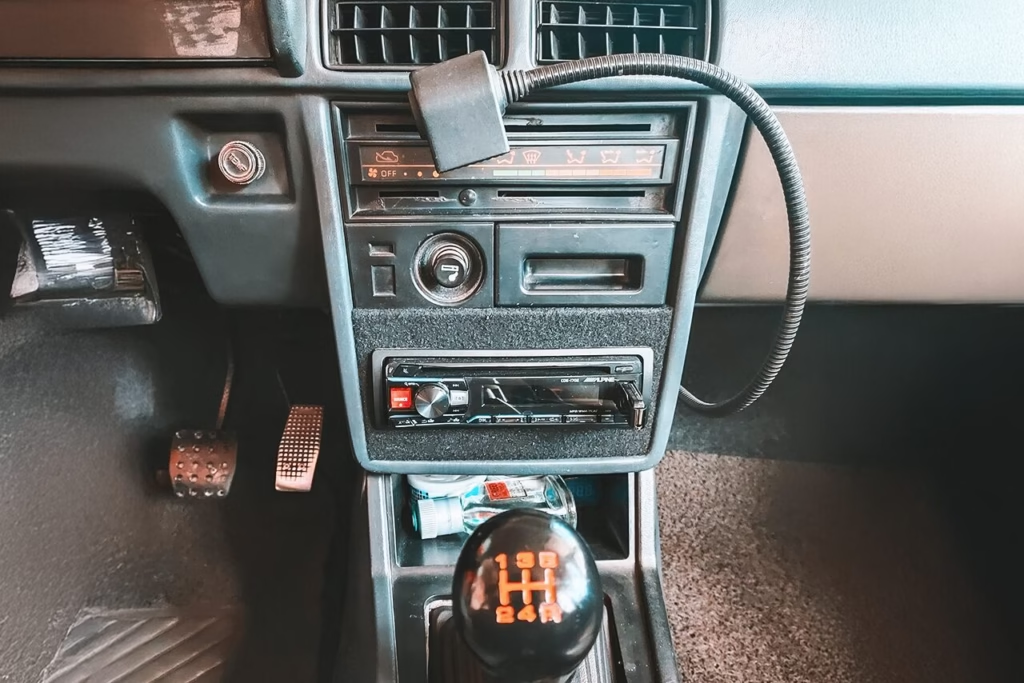
If the gooseneck equalizer made your dashboard look like a mini recording studio, the gooseneck light made it feel like a rally car.
Originally, these flexible lamps were real rally equipment, known internationally as map lights or navigator lights. Brands like Hella designed them for co-drivers in the ‘70s and ‘80s rally cars so they could read pace notes and maps during nighttime stages without blinding and distracting the driver. They were either plugged into a 12V socket or were hardwired onto the dash.
Of course, when these lights made it into Philippine accessory shops, most owners didn’t have pace notes, just loose change, toll receipts, and whatever fell under the seat. But they still looked cool, adding a dash of genuine rally-style sophistication to the family sedan.
- Old-School Floor Mats
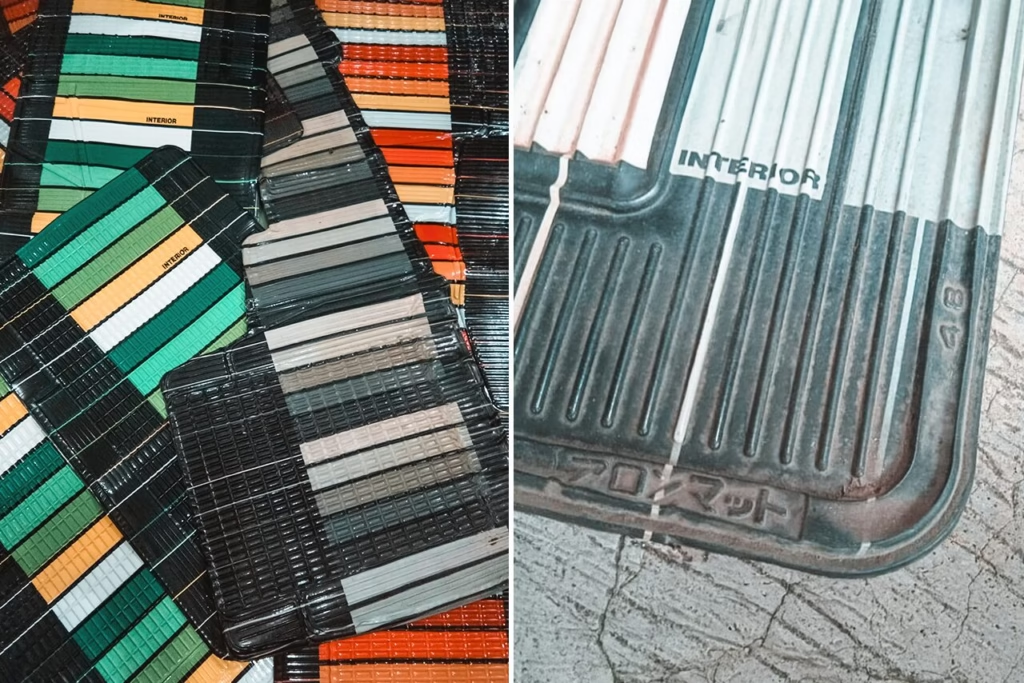
If you’ve ever ridden in a Lancer Boxtype, a Corolla DX, a LiteAce, or a family L300, chances are you’ve seen these old-school plastic floor mats: brightly striped, glossy, and unmistakably retro. Sold in sets at Banawe, Evangelista, and even supermarkets, these mats became a staple on many older cars, especially those kept running well into the 2000s.
Digging a little deeper, many of these mats appear to have originated from a Japanese brand called アロンマット (Aron Mat), which explains the distinct ribbed plastic design and the color patterns that looked straight out of an ’80s catalog. Whether they were imported directly or copied locally, they became part of the Filipino car interior aesthetic for decades.
They came in loud, high-contrast color combinations such as greens, yellows, reds, and blacks, with each strip made from raised plastic slats woven together. They simply gave an old interior a bit more character.
You won’t find these in modern cars today, if at all. You’re even luckier if you manage to find a set for your own car.
- Going Steady Car Air Freshener
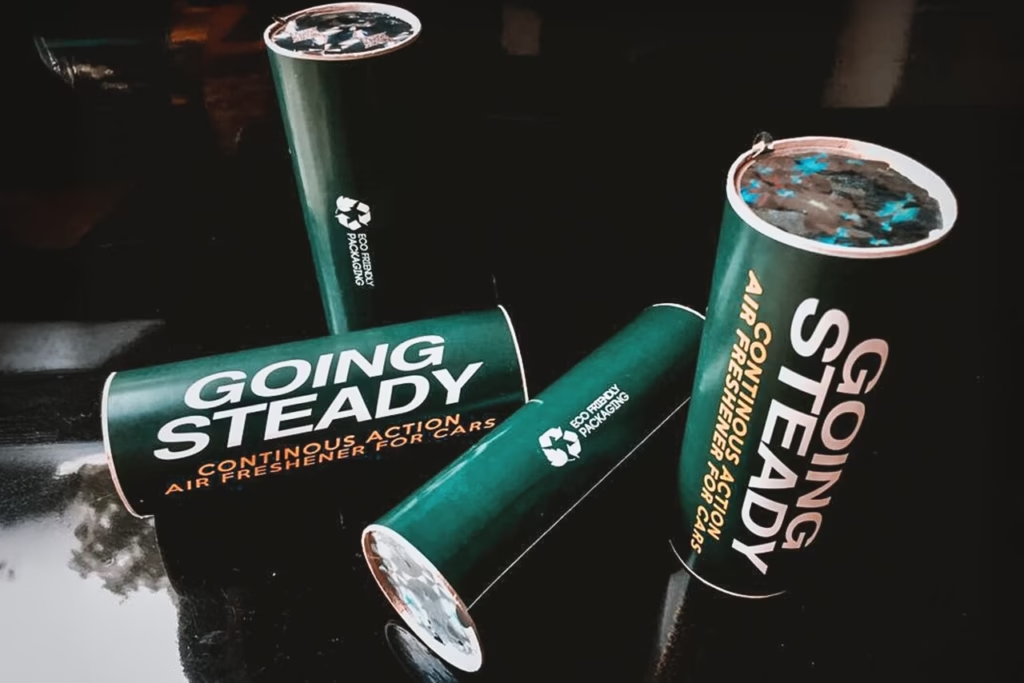
Ah, the smell of the ’80s.
Before Air Spencer and all the modern dashboard scents that followed, one of the most popular air fresheners in Filipino cars was the Going Steady can, with “GOING STEADY Continues Action Air Freshener” written on the side. It came in a green, soda-can-sized cylinder.
It’s no longer available today, but a Facebook page called “Willy’s & Co. Classic to Vintage Collectibles” recently recreated them for people completing the full ’80s dashboard look. One look at that familiar green can is enough to take you back to the days of analog dashboards and simple car accessories that didn’t try to be fancy.
- Headrests with Screens
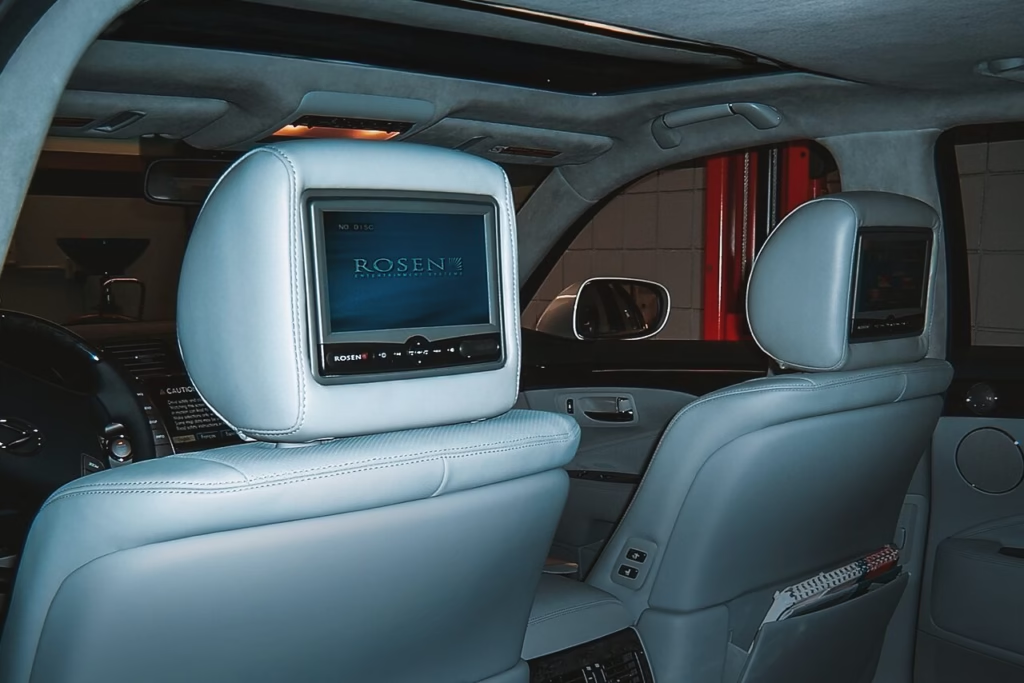
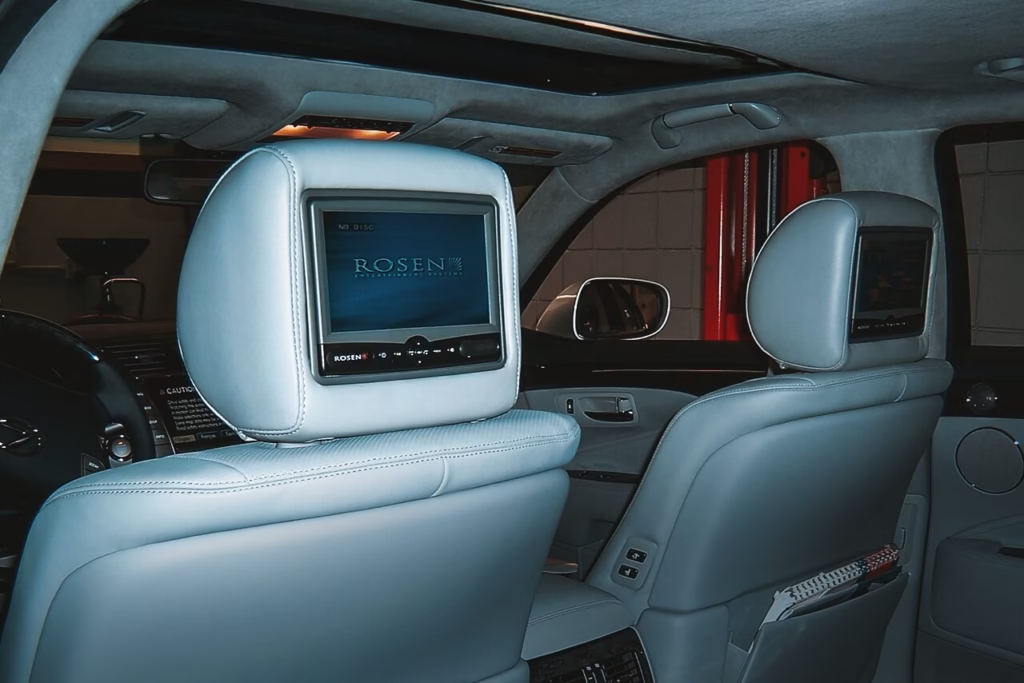
In the 2000s to early 2010s, nothing made a family car feel “high-tech” quite like a rear entertainment system. Whether it was a pair of aftermarket headrest screens installed in Banawe or Evangelista, or a factory fold-down DVD player like the one found in the first-gen Isuzu MU-X, these setups were peak Filipino road-trip luxury.
They weren’t smart displays, they only played whatever you had on a USB stick or whatever DVD you loaded into the head unit. And let’s be honest: most of those discs were pirated DVDs bought from Quiapo or Greenhills. Kids grew up watching Shrek, Harry Potter, Cars, or whatever pirated DVD was in the glovebox while going to school.
Rear-seat entertainment systems like this still exist today, but the tech has evolved. Modern ones can stream Netflix, YouTube, or whatever app you want. The old DVD-based screens, though? Those belong to a very specific era.
For anyone who experienced this, those road-trip movie marathons are core memories.
- iPod Dock
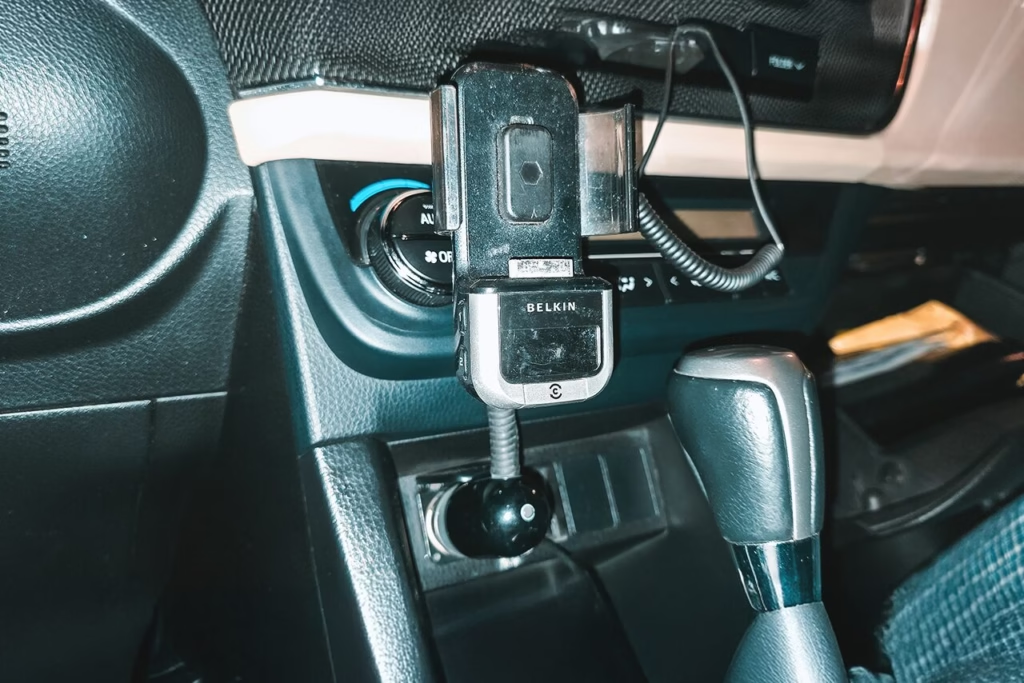
Before Spotify and Bluetooth conquered the world, most car owners relied on FM transmitters, AUX cords, cassette adapters, and bulky 30-pin iPod docks to get music into a car stereo that usually had nothing more than a basic CD player.
And those iPod docks?
They weren’t really audio devices at all, they were basically the early ancestors of today’s car chargers and smartphone mounts. You’d clip your iPod into a plastic cradle, plug the charger into the cigarette lighter (now the 12V socket), and pair it with whatever method your car stereo allowed: an AUX jack, a cassette adapter, or an FM transmitter.
Some higher-end docks, like those from Belkin combined everything in one unit, they charged your iPod, held it in place, and even transmitted your music over a chosen FM frequency, giving you a full hands-free setup long before Bluetooth became mainstream.
The Static? Normal.
Interference? Expected.
But hearing your playlist blast through the speakers? Peak happiness.
- Calvin Peeing stickers & ING Life Handprint sticker
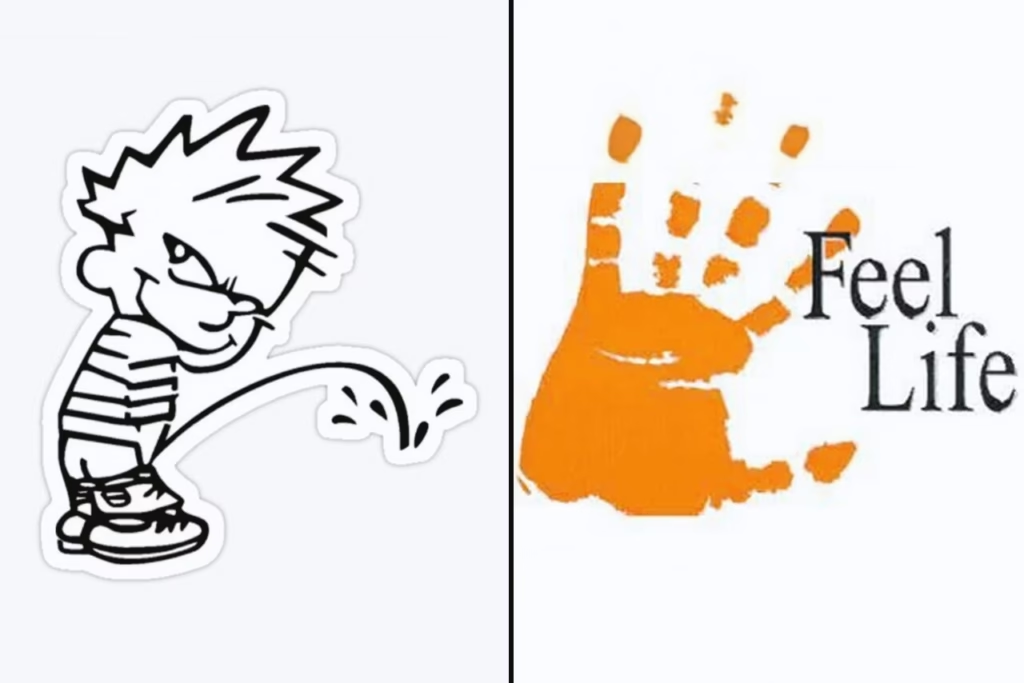
If there were two stickers that you’d always see in every car in the early 2000s, it’d be these two.
First, there was the mischievous Calvin sticker from Calvin and Hobbes. Often found “peeing” on the logo of a rival car brand or a fuel type like Diesel. You’d often spot it on the gas lid or plastered on someone’s rear windshield. What most people didn’t know at the time was that Calvin’s creator, Bill Watterson, never approved any of it. He refused all merchandising for the comic, so every peeing-Calvin decal was an unlicensed bootleg. The design itself is believed to have been loosely traced from a 1988 strip where Calvin fills a water balloon, then altered by bootleg artists into the now-famous pose (Edwards, 2014).
And now the ING Life orange handprint, a sticker so common in the early 2000s that it practically became part of every Filipino rear windshield. If you grew up riding in taxis, FX shuttles, tricycles, or your family’s trusty sedan, you definitely saw this bright orange hand with the “Feel Life” slogan staring back at you.
ING Life handed out 1.3 million of these stickers, and after teaming up with Shell stations, they began appearing on rear windshields everywhere. In typical Filipino fashion, people would cut the fingers to form the “Laban” L for President Aquino, the “V” sign for President Ramos, or leaving only the middle finger for maximum attitude (Jao-Grey, 2001).
- Maneki-neko
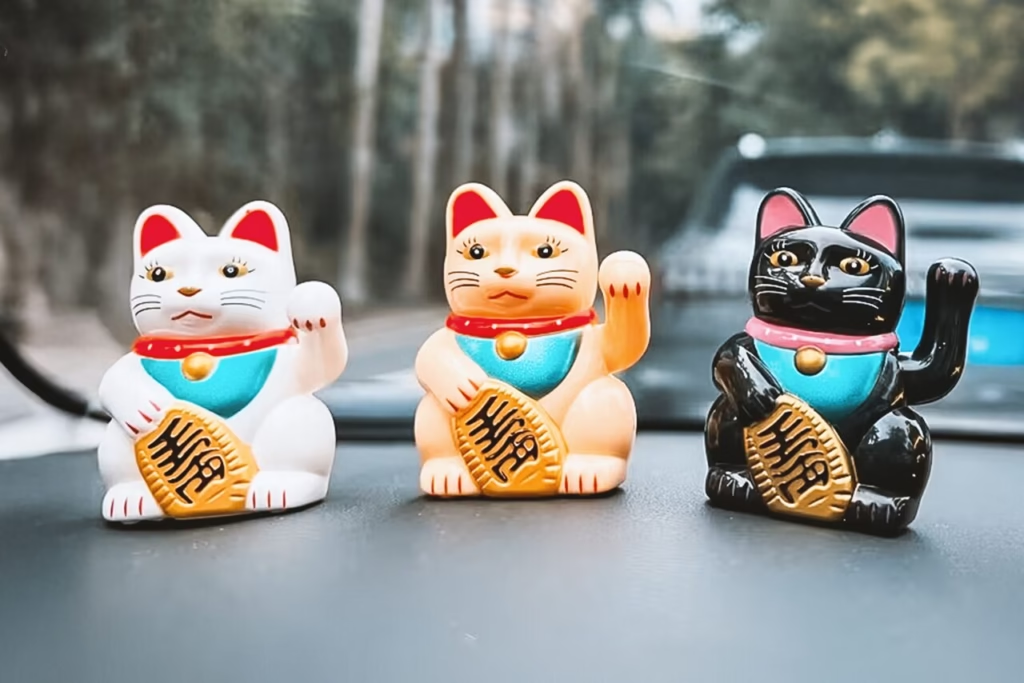
The maneki-neko (招き猫, or “beckoning cat”) was one of the most common dashboard charms you’d see in Filipino cars during the 2000s.
Long before minimalist interiors became the trend, a little golden cat with a waving paw sat proudly above the dashboard with its arm bobbing up and down as the car rolled over Manila’s famously uneven roads.
You’d see these in taxis, tricycles, jeepneys, family sedans, and vans doing their daily grind. I used to see them from street vendors weaving through traffic, selling everything from cigarettes, drinks, to dashboard ornaments. If you were stuck on EDSA or Commonwealth long enough, someone was bound to tap on your window offering a waving cat for a couple of hundred pesos.
For many drivers, especially those using their vehicles for livelihood, the maneki-neko symbolized swerte, a hope for safe trips, good business, and fewer headaches on the road. Today, you still spot them occasionally, but nowhere near as often.
- Steering Wheel Spinners (Suicide Knobs)
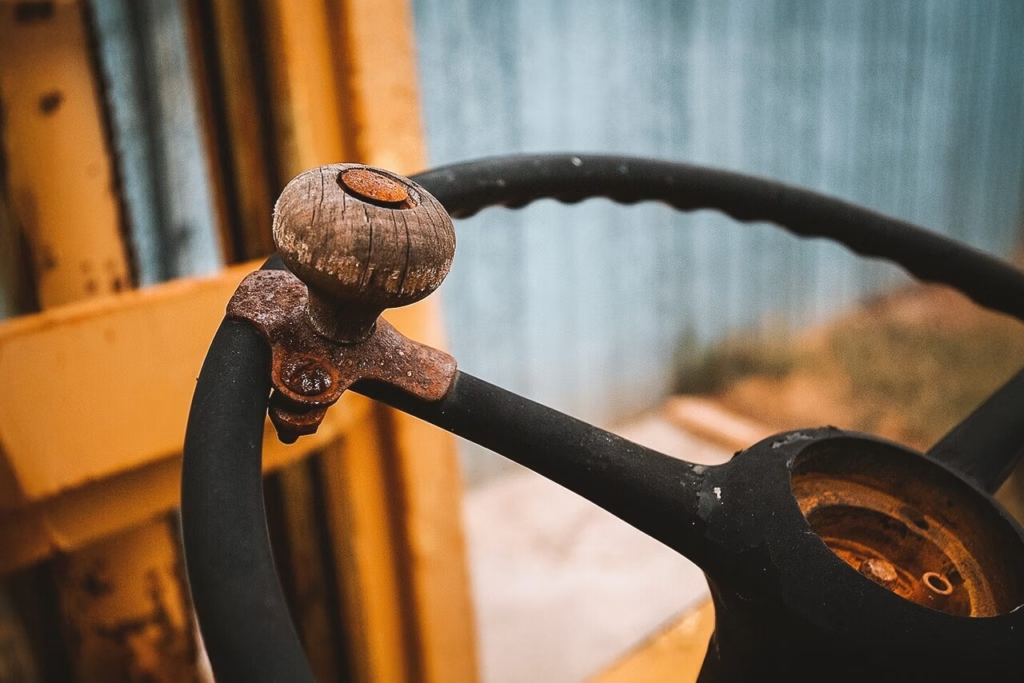
Also known as the Brodie knob or necker knob, but most commonly called the suicide knob. Clamped onto the steering wheel, it let drivers turn with just one hand, a lifesaver for old sedans, trucks, jeepneys, and owner-type jeeps that didn’t have power steering.
You’d see these on all sorts of vehicles, especially public utility rides where drivers needed to make quick, constant steering inputs. Jeepney drivers used them effortlessly while collecting fares and maneuvering tight streets.
The nickname “suicide knob” wasn’t just for drama. These knobs could jam, spin unexpectedly, or whip your hand during sudden turns or when the wheel snapped back, especially on vehicles without power steering. In emergency situations, having only one hand on the wheel made quick corrections harder, which is why many drivers frowned upon them.
The Era May Be Gone, But the Memories Aren’t
As car culture moved forward and technology evolved, many of these accessories faded away, replaced by cleaner dashboards, smarter screens, and quieter cabins. But for those who remember when every dashboard told a story, these little add-ons were more than just decoration.
They were memories.
They were personality.
They were proof that a car wasn’t just transportation, it was personal space, family time, and Filipino creativity on full display.
So the next time you’re in Banawe or stumble across a dusty box in Concorde, take a second look. You might just find a piece of history waiting for you on the back shelf.
Sources:
Edwards, P. (2014, July 2). The tasteless history of the peeing Calvin decal. Triviahappy. https://triviahappy.com/articles/the-tasteless-history-of-the-peeing-calvin-decal#.U7aw8vldWSp
Jao-Grey, M. (2001, October 29). Orange hand print & other direct marketing tales. Philstar.