

Before the music hit. Before the pyro flared.
There was that instant when you knew something bigger than life was about to happen. Sometimes it wasn’t a superstar on foot. Sometimes it was the roar of an engine, the glare of headlights, the slow roll of a vehicle that instantly told you who had arrived and what kind of chaos was coming.
For a generation of fans who grew up in the late 1990s and early 2000s, these moments appeared on TV and became an integral part of our daily lives. We asked our siblings to lie down with piles of pillows on their stomachs so we could practice a frog splash. We copied our favorite wrestlers’ signature moves, entrances, and bravado with friends in the living room or backyard, not to be violent, but because that is how we brought the excitement home.
And some of the most unforgettable parts of that excitement were the vehicles that carried them. Stone Cold’s beer truck. Eddie Guerrero’s bouncing lowrider. The Undertaker’s roaring chopper. These rides did more than transport WWE Superstars. They delivered spectacle, storytelling, and the kind of awe that made us sit closer to the screen and imagine ourselves right there in the midst of the chaos.
This is a ride back through those moments. A look at the cars, trucks, bikes, and four-wheelers that defined eras, personalities, and the feeling of a time when anything could happen the moment an engine started.
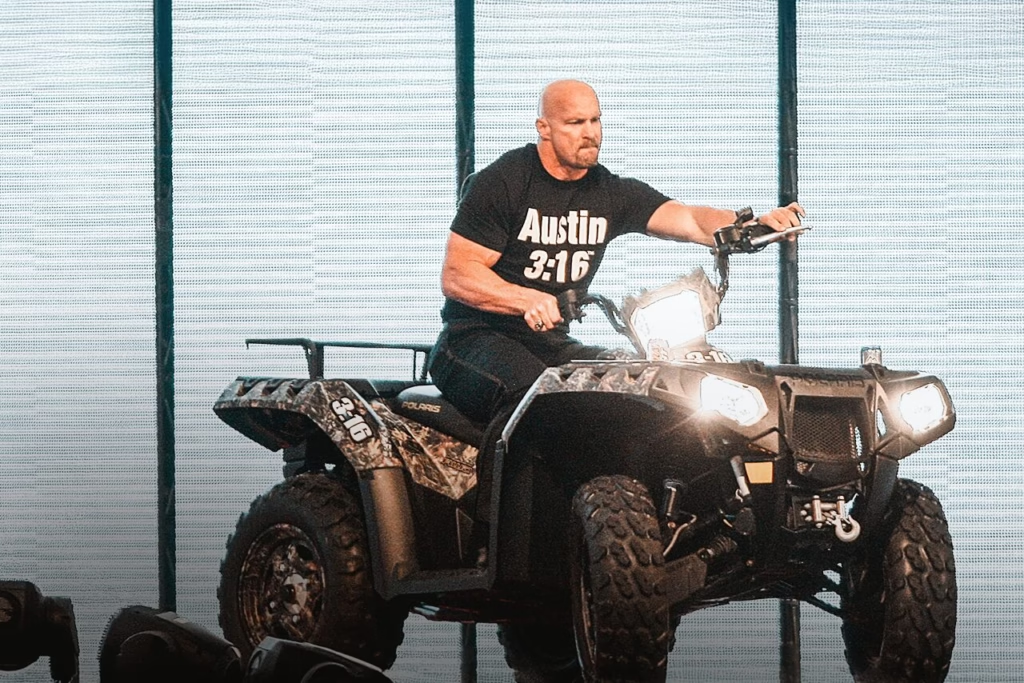
Stone Cold Steve Austin — the Four-Wheeler (ATV)
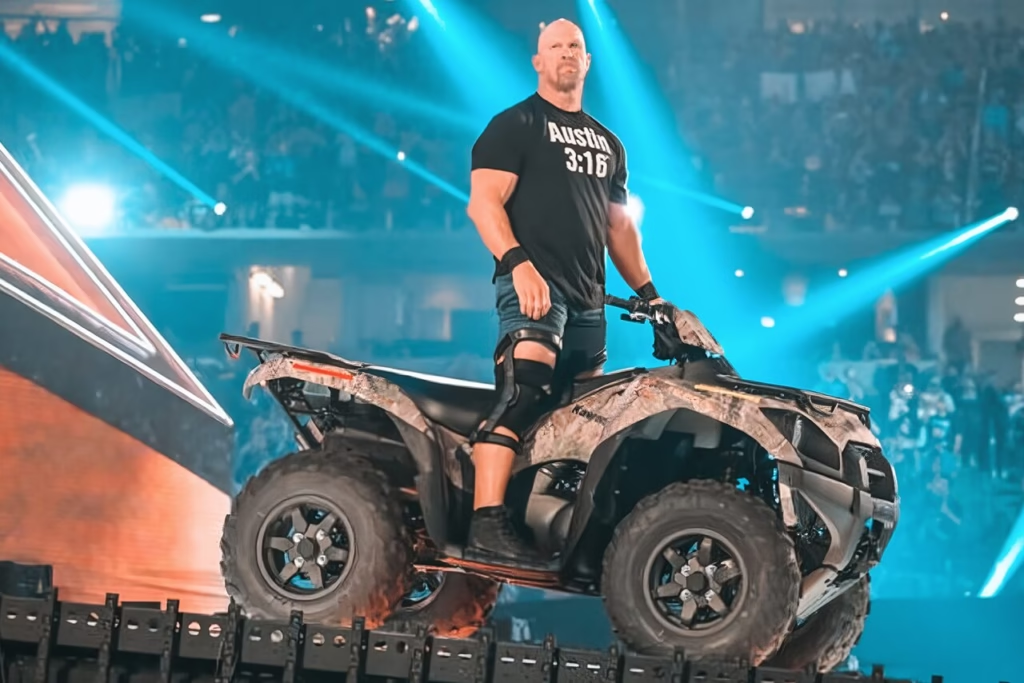
One of the Attitude Era’s defining images: Stone Cold Steve Austin roaring into WWE television on a four-wheel ATV, turning his arrival into an invasion. On Raw (September 28, 1998), Austin didn’t wait for an entrance cue or a clear path to the ring.
He stormed in on a utility-style all-terrain vehicle, commonly identified as a Polaris Sportsman, using its size and mobility to blow past security and tear through WWE headquarters in search of Vince McMahon.
The four-wheeler made every space fair game. Hallways, offices, loading areas. No ropes to stop him. No walls to slow him down. It captured Stone Cold at his purest: loud, unpredictable, and impossible to control. In an era defined by rebellion, the ATV wasn’t just how Austin entered the show. It was a declaration that once he arrived, there was nowhere left to hide.
The Undertaker — custom chopper / Harley-style motorcycle
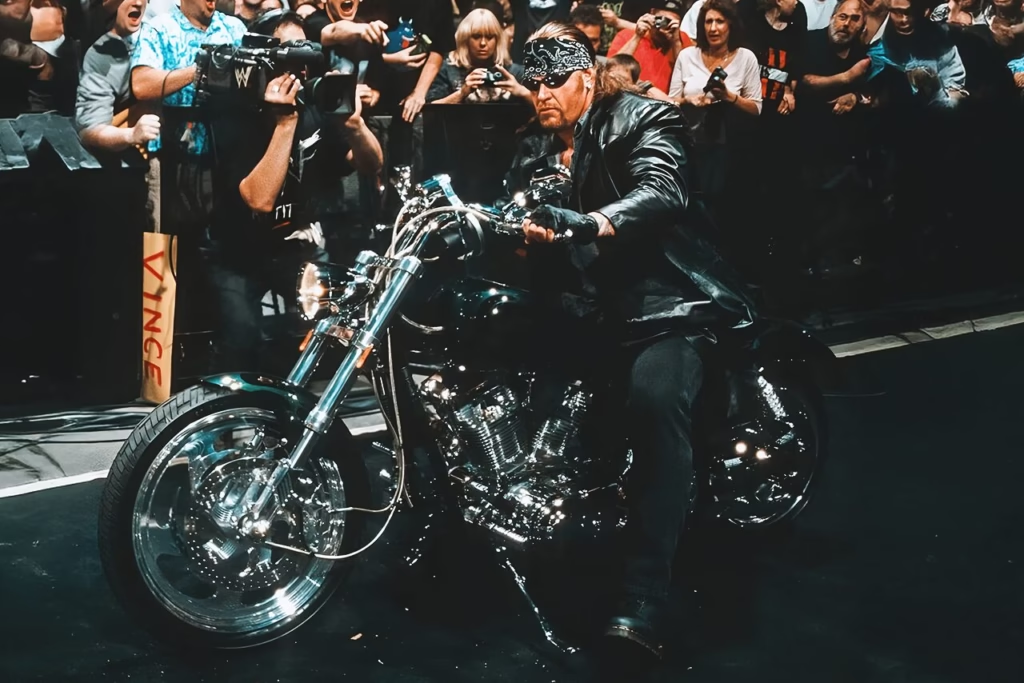
During his “American Badass” era (and in other entrances), The Undertaker rode in on a large, black chopper-style motorcycle — a custom-built bike with Harley-Davidson styling cues.
These motorcycles were customized for theatricality (extended front forks, custom paint, blacked-out components) and are part of the Undertaker’s image as a brooding, road-hardened badass. Photographs and memorabilia confirm the bike’s chopper/Harley lineage rather than a single showroom model.
Eddie Guerrero — lowriders (classic Chevrolet-style lowriders)
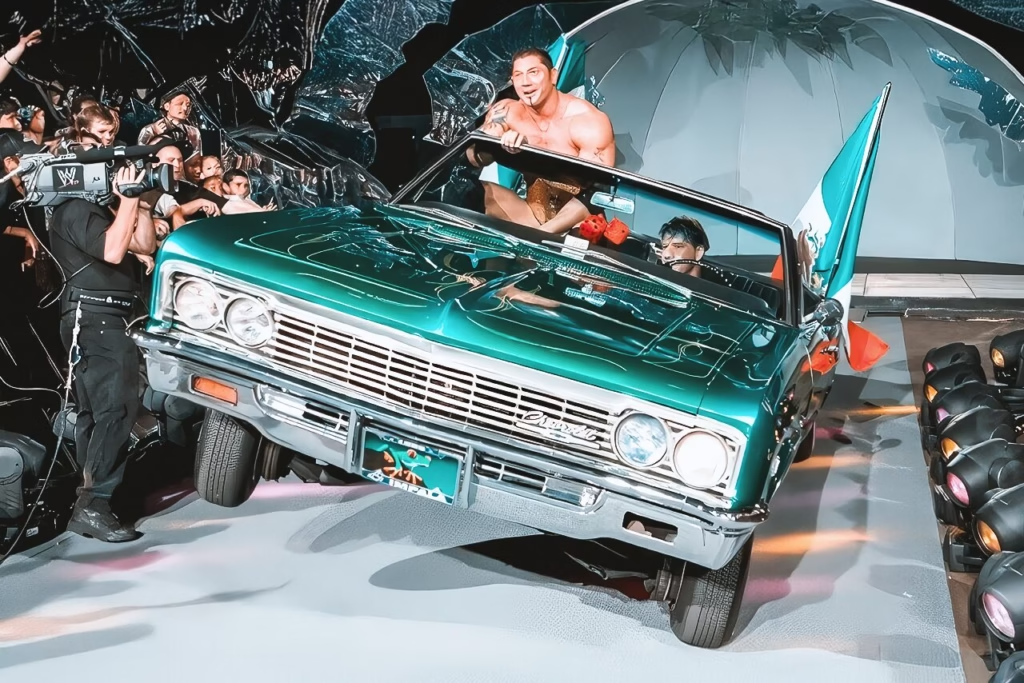
Eddie Guerrero didn’t just make an entrance. He cruised into it. Throughout his time in WWE, Eddie arrived in lowriders, often switching up paint schemes and designs from week to week, each one as vibrant as his personality.
Rooted in classic American car culture of the 1960s and 1970s, these builds typically featured Chevrolet Impala–style bodies, fully customized with hydraulics, chrome, and intricate detailing. Interviews and lowrider features have long noted that this wasn’t just a television gimmick. It reflected Eddie’s genuine love for lowrider culture, with WWE showcasing multiple custom cars to let Latino Heat roll into the spotlight in unmistakable style.
JBL (John Bradshaw Layfield) — the white stretch limousine
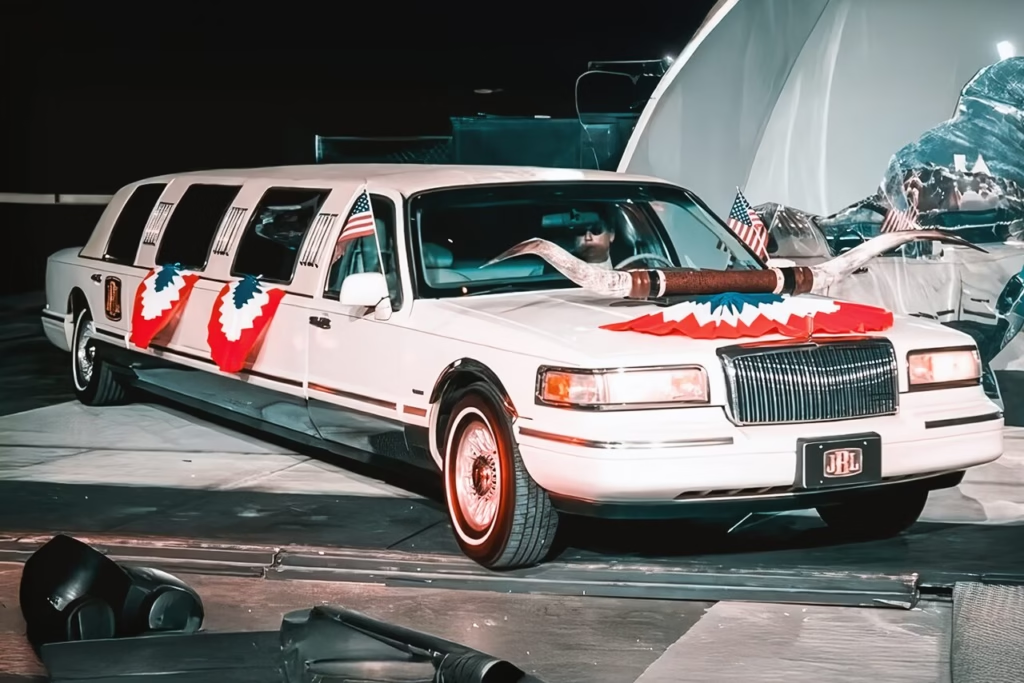
JBL’s “wealthy tycoon” persona was instantly defined by his signature arrival in a white stretch limousine—a rolling symbol of corporate power, privilege, and opulence. The limo wasn’t just an an entrance prop; it became a storytelling tool, often targeted or destroyed by rivals to heighten drama.
While media coverage highlights it as a classic stretch limousine, WWE never specified the exact chassis or coachbuilder, letting the vehicle serve purely as an icon of JBL’s luxurious, villainous image.
DX and other stables — prank-ready jeeps, tanks, and novelty vehicles
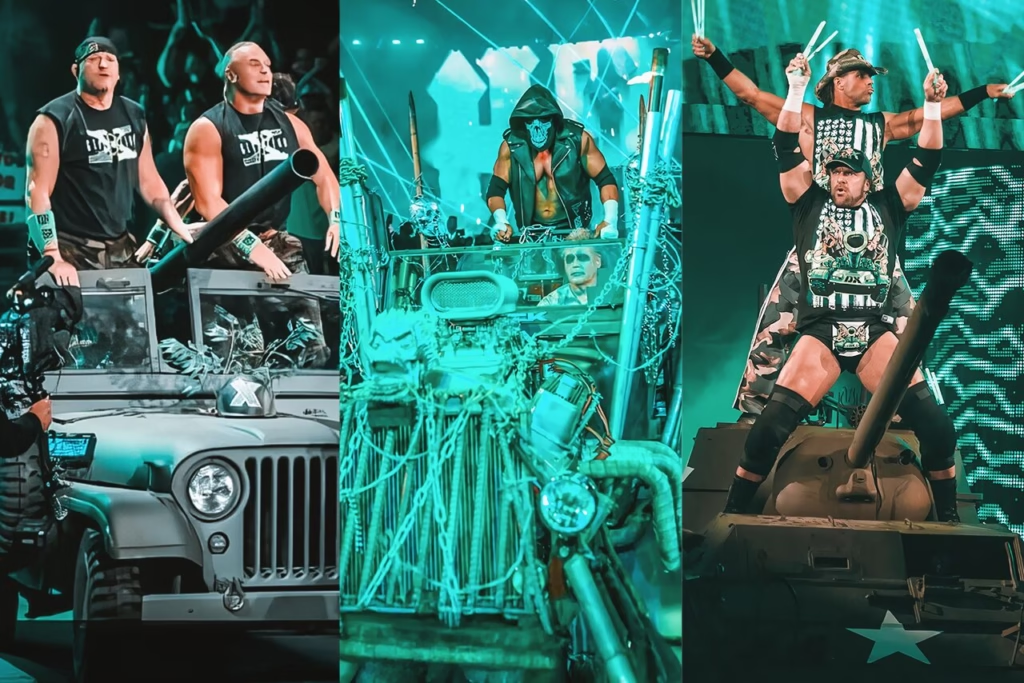
D-Generation X made entrances that felt like full-scale invasions, rolling in with military style jeeps, tanks, and vehicles equipped with prop guns.
These machines created a sense of chaos and intimidation, amplifying DX’s rebellious, no rules attitude. Each appearance turned the ramp into a battlefield, using spectacle and shock to make an unforgettable impact on the audience.
Looking back, it’s clear these vehicles were never just about spectacle. They were gateways to excitement, to imagination, to the kind of chaos we tried to recreate in our backyards and living rooms. The second an engine roared to life, you didn’t just watch a show—you felt the story unfolding. Defiance. Power. Swagger. Pure unfiltered chaos.
For a generation of fans growing up in the 90s and early 2000s, these rides are woven into the soundtrack of our childhood, as unforgettable as theme songs, catchphrases, and playground reenactments of our favorite scenes.
You don’t just remember what happened on screen—you remember the rush of sitting too close to the TV, leaning in, heart racing, wondering how far WWE would dare to go. The ramp could become a highway, the backstage a battlefield, and the rules nothing more than a suggestion—and every time, it left us wanting more.
Today, the trucks, bikes, lowriders, and four-wheelers may be retired, parked, or long dismantled, but the moments they created still move us. They still roar in our memories. They still take us back to a time when wrestling was unpredictable, loud, and alive.
Because in WWE, sometimes the most unforgettable entrances didn’t start with music.
They started with an engine.