

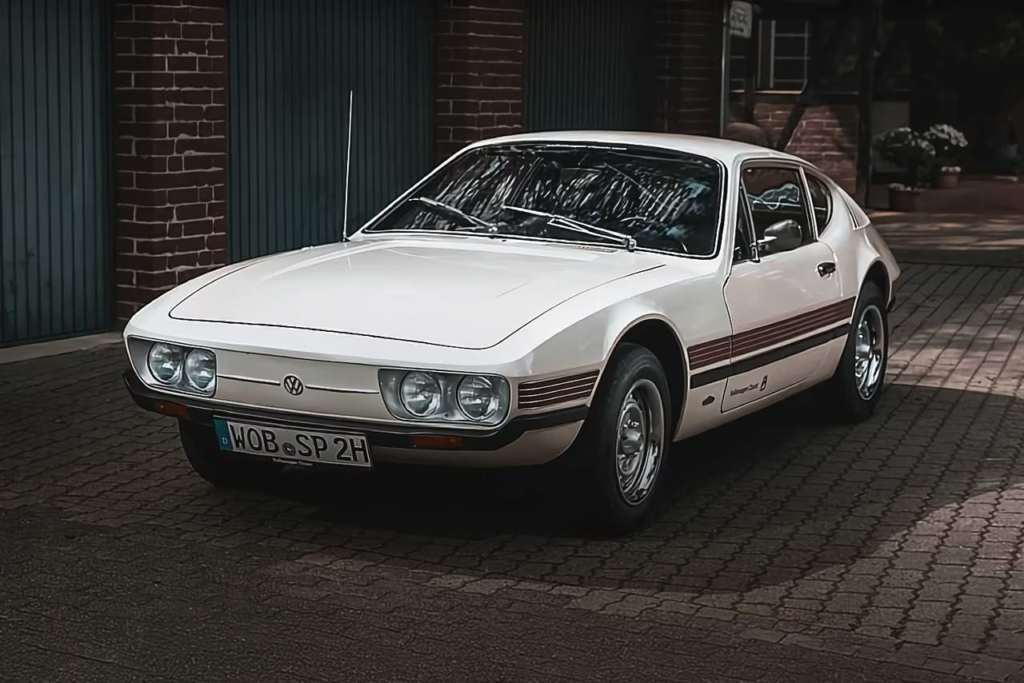
In the 1970s, the world of Volkswagen was far more than just a sea of Beetles and Kombis. While Germany focused on the upcoming Golf, two nations—separated by the Pacific Ocean but united by strict trade laws, were busy reinventing the air-cooled engine for their own markets. This is the story of the Volkswagen SP2 and the VW-DMG Toro, a tale of how Brazil’s “most beautiful Volkswagen” influenced one of the rarest sports cars ever built in the Philippines.
Why “Local” Was the Only Way
To understand these cars, you have to understand the borders they were built behind. In the 1970s, both Brazil and the Philippines operated under protectionist trade policies designed to encourage industrial growth.
In Brazil, the government had prohibited the import of fully built-up (CBU) vehicles as early as 1953. This meant that if you wanted a sports car, you couldn’t simply ship one in from Europe, you had to build it yourself. This then birthed “Projeto X” (Project X), which would eventually become the SP2.
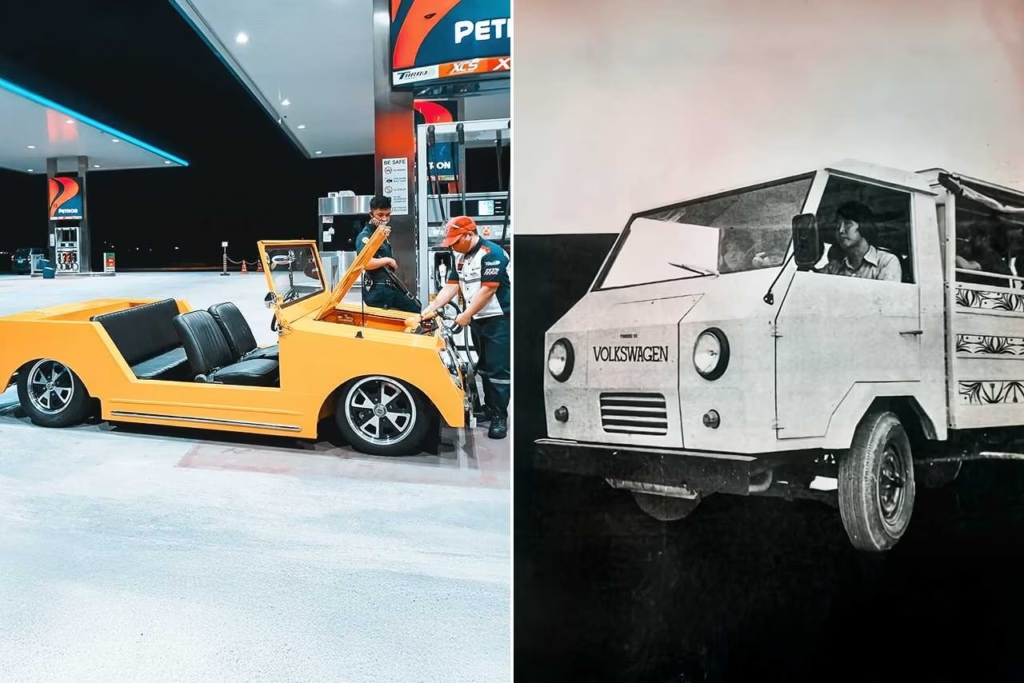
Photos Source: (Left) Gerry Sy (Right) https://www.facebook.com/share/p/1PodNzw1BE/
In the Philippines, the Progressive Car Manufacturing Program (PCMP) of 1973 required DMG to increase “local content.” This led to the creation of the Sakbayan (the “People’s Car”) and the Trakbayan utility vehicle. While these were utilitarian, DMG’s ambition didn’t stop there. By utilizing their logistical link with Volkswagen do Brasil, from whom they already imported parts and kits, DMG sought to create a sporty, sophisticated model that would mirror the flair of the Brazilian market.
SP2: “The Most Beautiful Volkswagen in the World”
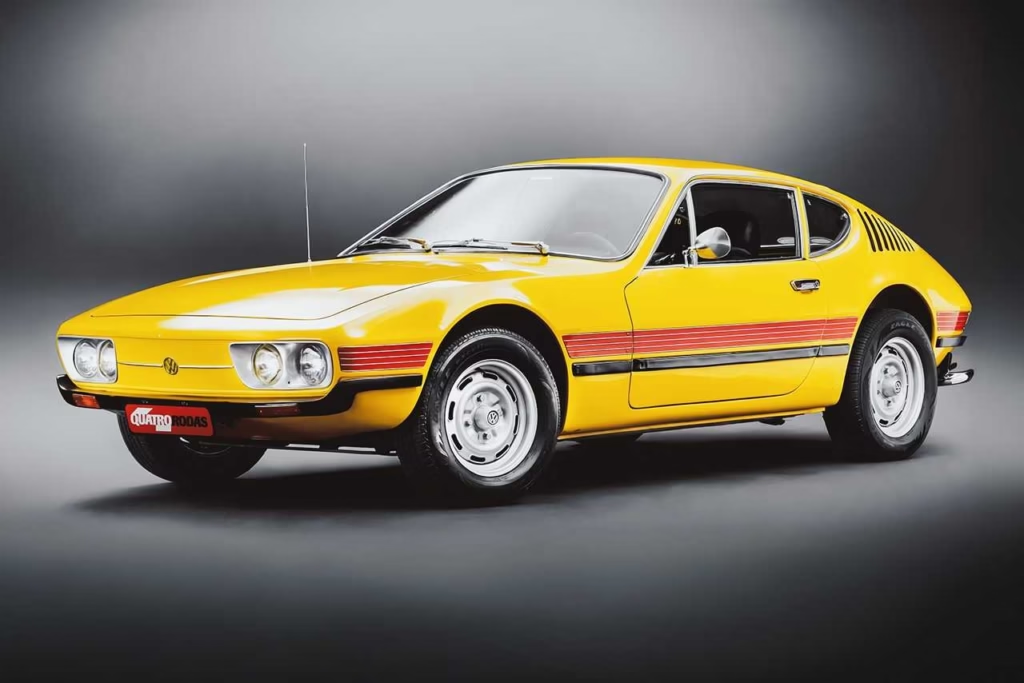
Photo Source https://www.combikombi.com/blog/the-complete-history-of-the-volkswagen-sp2-a-unique-brazilian-sports-car/
Released in 1972, the Volkswagen SP2 was a masterpiece of Brazilian design that proved a “developing” nation could out-style the world. The name stood for São Paulo (the city where it was born). However, once the public got behind the wheel, a more cynical nickname emerged, Sem Potência, Portuguese for “Without Power.”
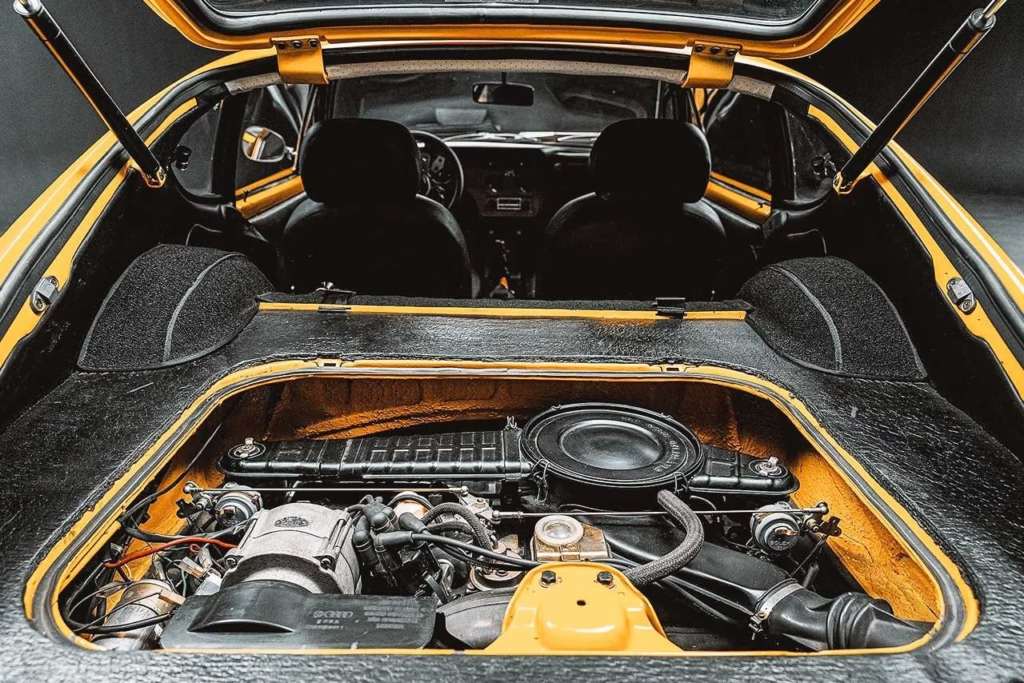
Photo Source https://www.combikombi.com/blog/the-complete-history-of-the-volkswagen-sp2-a-unique-brazilian-sports-car/
The reason for that was the SP2’s underpowered heart. It looked like a supercar, but underneath the steel body sat a 1.7-liter “Pancake” or boxer engine producing about 75 hp. To accommodate this flat engine and achieve its record-breaking low profile, the SP2 was built on the Brazilian Type 3 chassis. Unlike the Beetle, this foundation allowed the engine to sit low enough to fit beneath the rear cargo floor, making the SP2 the lowest car in the country at the time. While this gave the car its famously “shark-like” silhouette, the SP2’s performance never quite matched its aggressive, fastback aesthetics.
The VW-DMG Toro
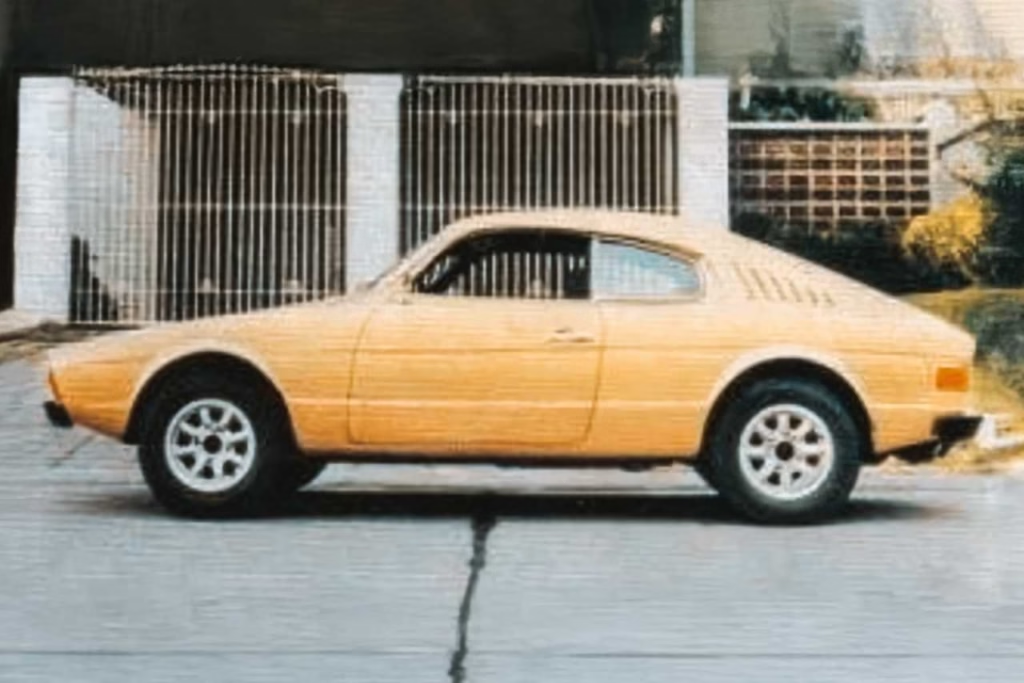
Photo Source: https://www.allcarindex.com/brand/philippines/dmg/toro
The Toro was the Philippine answer to the sports car dream. If the SP2 was the muse, the Toro was the resourceful protege. Developed under the leadership of Andy Ferreira (Chief Project Leader) and designed by Reynaldo M. Vergara II, the car’s inspiration was undeniable.
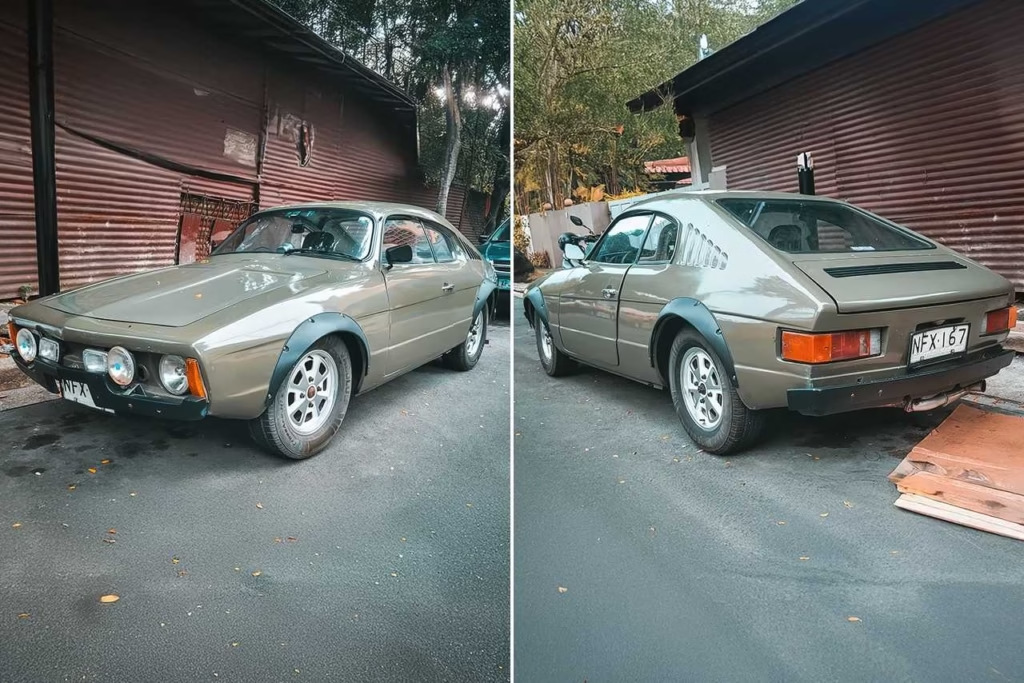
Photos Source: https://www.reddit.com/r/spotted/comments/w59ain/an_extremely_rare_volkswagendmg_toro_80s/
One look at the Toro reveals the unmistakable silhouette of its Brazilian cousin. From the long, low-slung front nose to the sweeping fastback rear and the distinct “shark-gill” vents on the C-pillar, you can tell the Toro was a homage to the SP2’s exotic styling.
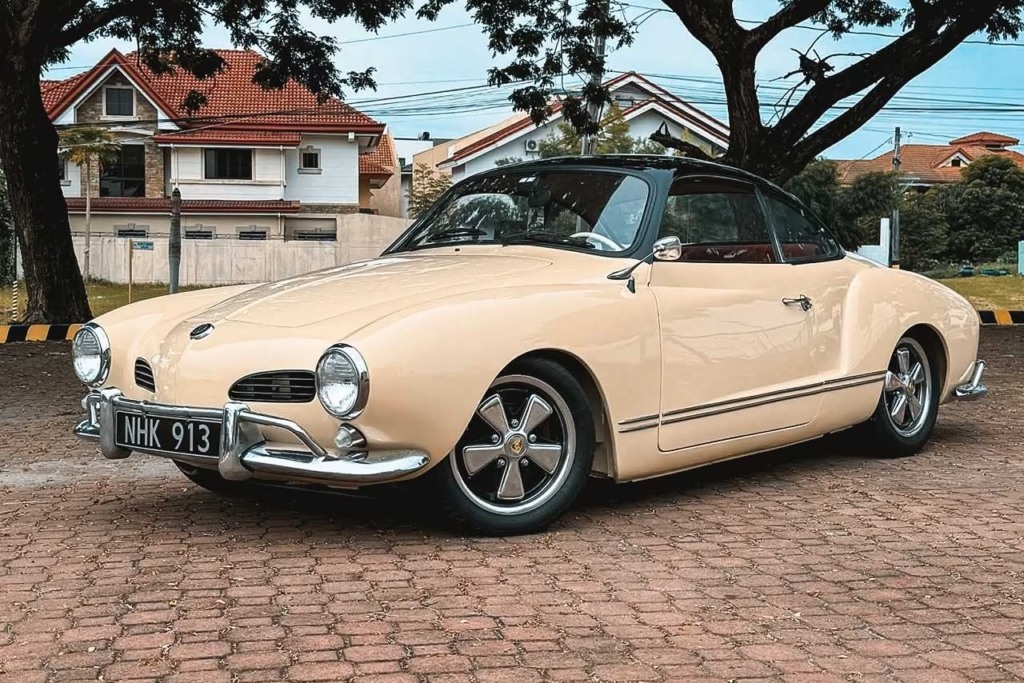
Karmann Ghia Photo By: Mat Go
While the Brazilian SP2 was built with a steel body, the Toro was built using fiberglass and was a masterclass in parts-bin engineering. It was built on the Karmann Ghia (Type 14) chassis, utilizing the windshield, door glass, and floorpan. To complete the look, DMG pulled from their existing supply chains and started using headlights and taillights from the VW Brasília.
The Legacy of the Toro
Compared to the SP2 having around 10,205 units produced, the production numbers of the Toro are debated, with some sources suggesting as few as 12 hand-built units ever left the factory from 1979 to 1982.
By 1980, the Philippine economy faced massive challenges as the Peso was devalued against the German Deutsche Mark. This made importing essential German and Brazilian components prohibitively expensive, leaving DMG’s lineup at a severe price disadvantage compared to the more affordable Japanese vehicles that were dominating the local market. Facing these economic hurdles, DMG Incorporated officially ceased its Volkswagen operations on March 31, 1981.
This eventually ended the Toro project before it could ever truly establish itself on the road. Today, it remains a rare footnote in Philippine automotive history and is considered the “Holy Grail” for any Volkswagen collectors.
Sources:
Pinoy Volks. (n.d.). DMG. https://ifcastro.tripod.com/id24.html
Pinoy Volks. (n.d.). Welcoming VW’s. https://ifcastro.tripod.com/id23.html
manilaghia. (2010, October 21). Volkswagen Concept: El Toro. Volkspinoy. https://volkspinoy.blogspot.com/2010/10/volkswagen-concept-el-toro.html
Torchinsky, J. (2016, November 15). This has to be the least-known air-cooled Volkswagen EV. Jalopnik. https://www.jalopnik.com/this-has-to-be-the-least-known-air-cooled-volkswagen-ev-1788967936/