

Parking is not as simple as spotting an open space and calling it a win. Around the world, it comes with its own unspoken rules, shared understandings, and cultural quirks. Each country’s parking habits quietly reveal how people view public space, community, order, and sometimes survival.
From trust-based systems to rule-heavy environments and everything in between, parking culture speaks volumes about how people coexist, compromise, and adapt. Here’s a look at how different countries approach the universal challenge of where to leave the car.
🇵🇭 Philippines
Hazard Lights as a Silent Claim
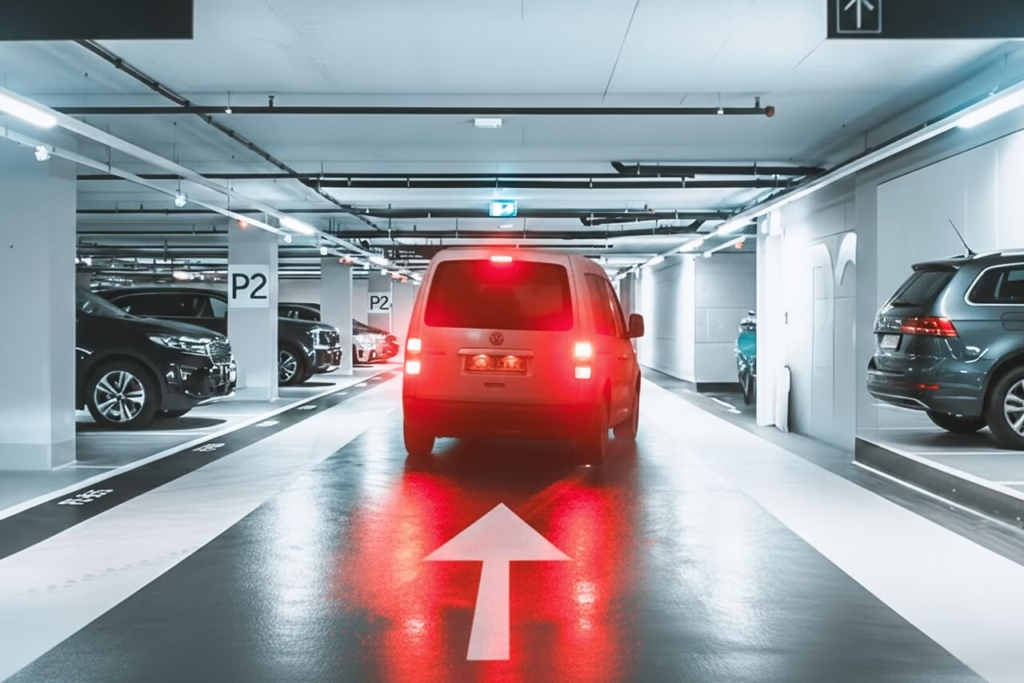
In the Philippines, hazard lights are a quiet declaration: “I saw the slot first.”
In parking lots, the moment you spot a car about to leave, turning on your hazard lights signals your intent. It’s the unspoken rule of first dibs. Once your hazards are on, most drivers understand and respectfully move along. No words needed. Just blinking lights and mutual awareness.
Of course, this system isn’t foolproof. Every now and then, a plot twist appears. Someone steps into the parking slot to “reserve” it for a car that hasn’t arrived yet. Suddenly, it’s hazards versus human barricade.
🇰🇷 South Korea

Double Parking, But Make It Trust-Based
In busy Korean neighborhoods, double parking is surprisingly normal. Cars are often left in neutral with the handbrake off, allowing others to gently push the vehicle aside if they need to get out.
No honking, no confrontation. Just quiet cooperation. It’s a system built on trust, efficiency, and the expectation that everyone will be considerate enough to make it work.
🇯🇵 Japan
Structure, Responsibility, and Zero Guesswork
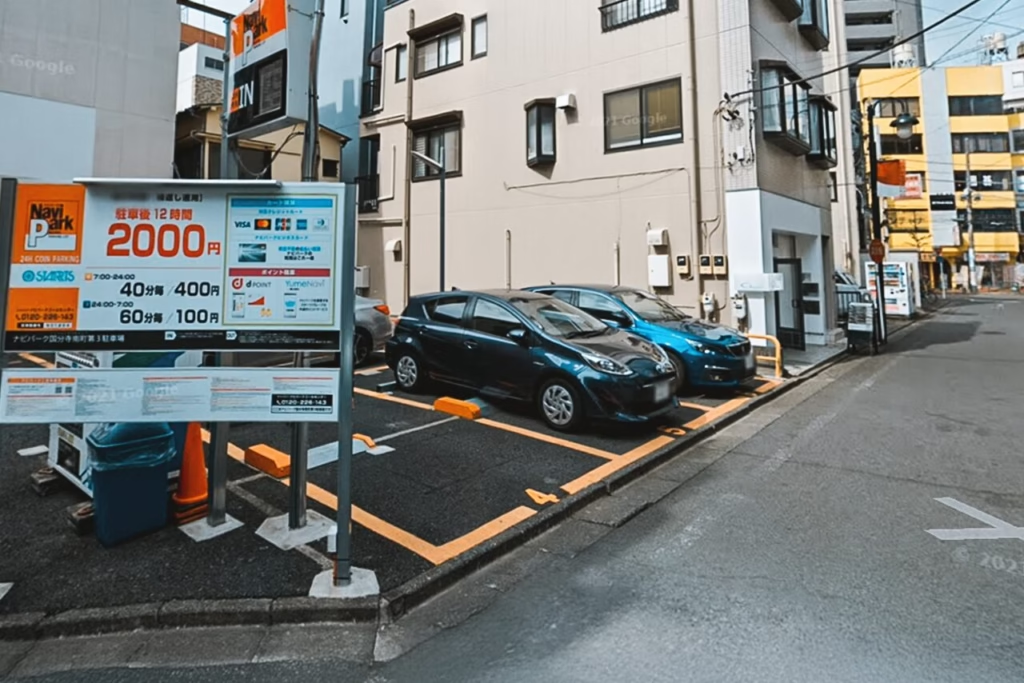
Japan’s parking culture is highly disciplined. Illegal parking is rare and socially frowned upon. Streets remain clear, and rules are strictly followed.
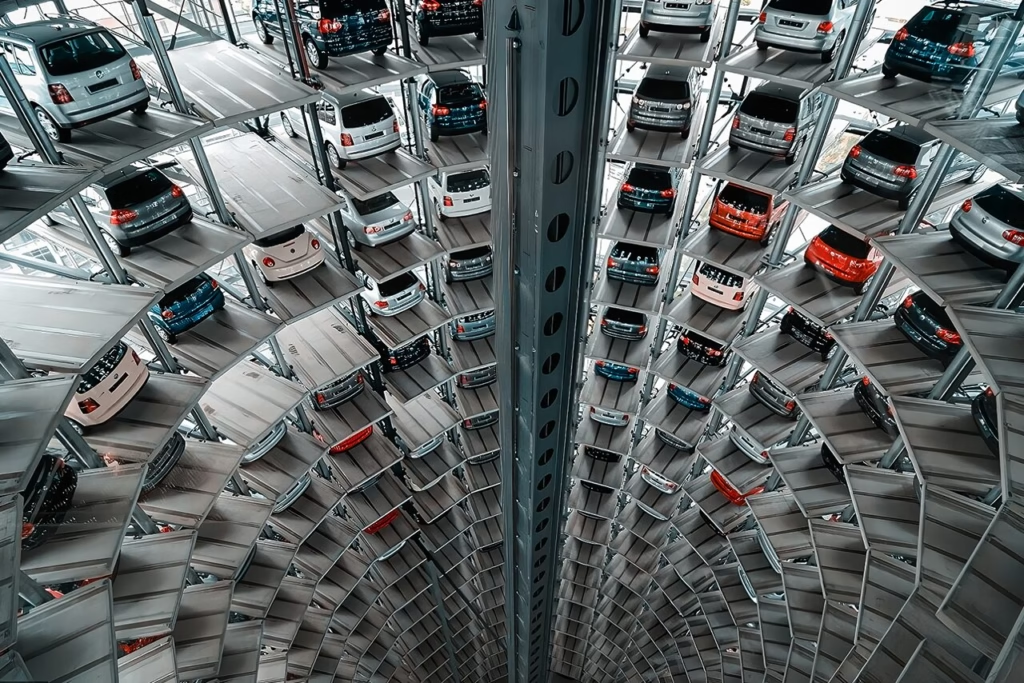
Many cities use automated parking towers where cars are stored vertically, disappearing with mechanical precision. Even more telling: in many areas, you cannot buy a car unless you prove you already have a designated parking space. In Japan, owning a car is a responsibility, not a convenience fueled by vibes.
🇮🇹 Italy

Precised Chaos
Italy turns parking into an art form. Cars squeeze into spaces that look physically impossible, and light bumper contact is expected, not alarming.
Double parking does happen, but often with a phone number displayed on the dashboard. It’s chaotic, yes, but still oddly courteous. Parking here reflects a culture that balances spontaneity with personal accountability.
🇨🇭 Switzerland
Exact Time, Exact Rules
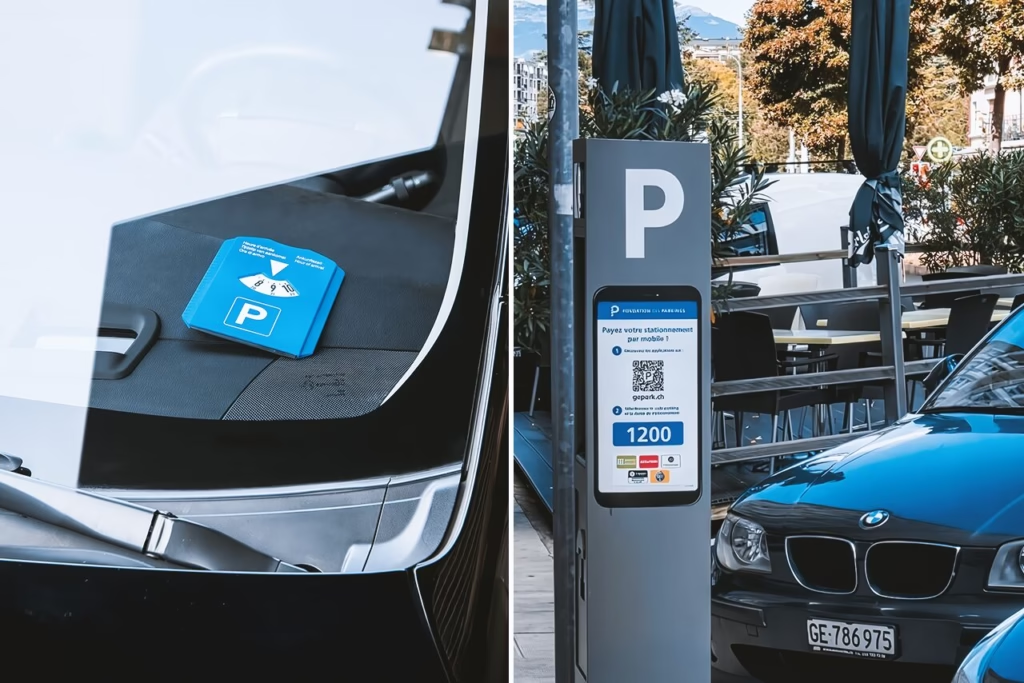
In Switzerland, parking rules are precise and strictly enforced. Many areas require a blue parking disc that shows your exact arrival time.
Forget to set it correctly or leave it unchecked, and a ticket is almost guaranteed. There’s little room for excuses. Parking culture here mirrors the country’s emphasis on order, punctuality, and structure.
🇷🇺 Russia

Practicality Over Formality
In Russia, especially during harsh winters, practicality takes priority. Sidewalks, snowbanks, and even frozen lakes can become parking spots.
If the car fits and doesn’t sink, it counts. During extreme conditions, rules soften in favor of survival. Parking becomes less about legality and more about adapting to the environment.
Every parking culture tells a story. Some rely on trust, others on structure, and some on pure adaptability. The way people park reflects how they navigate shared spaces, respect others, and respond to their surroundings.
So next time you’re circling for a spot, remember: you’re not just parking a car. You’re participating in culture.