

- Political and Economic Instability: Major brands like Delta Motors (Toyota) and Ford were forced to exit in the mid-1980s due to the turbulent end of the Martial Law era and a devalued economy that crushed local manufacturing.
- The 1997 Financial Crisis: Regional favorites like Daewoo and Proton disappeared after the Asian Financial Crisis led to corporate bankruptcy and a shift in market dominance toward established Japanese giants.
- A Market That Moved On: As the industry consolidated, some brands quietly stepped away. Volkswagen ended retail operations in late 2025, while others like Daihatsu and Francisco Motors adapted.
There was a time when Philippine roads carried far more names than we see today. Some were local, some international, some familiar, others quietly ambitious. They were part of daily life, seen in family driveways, taxi fleets, service roads, and old advertisements we barely remember now.
And then, almost without notice, many of them disappeared.
What happened to all of them?
Some vanished because of politics and industrial policy. Others were undone by global corporate collapse or regional financial crises. A few simply couldn’t keep up as the market changed faster than they could adapt. What remains today are memories, surviving examples on the road, and a long list of “what ifs.”
Delta Motors: The Toyota Before Toyota
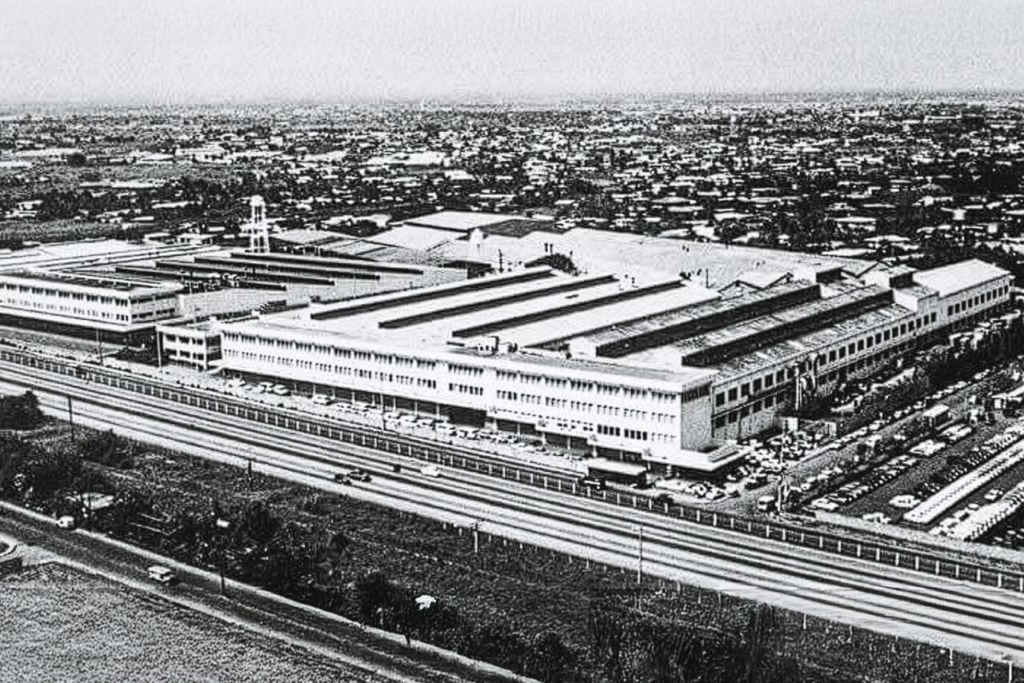
Long before Toyota Motor Philippines (TMP) became a dominant force, Toyota cars arrived via Delta Motors Corporation. From the 1960s through the early 1980s, Delta assembled vehicles locally, including the Corolla, Corona, and their own “Mini Cruiser.”
However, the final years of the Martial Law era placed significant strain on the industrial sector. In 1984, Toyota ended its partnership with Delta Motors(Toyota Motor Corporation, n.d.). While Toyota returned in 1988 under TMP, Delta Motors, deprived of its principal partner, was unable to re-establish itself.
Ford Philippines: In, Out, and Back Again

Ford has been part of Philippine motoring for longer than many realize. In the 1970s, Ford was a staple on local roads. Yet, by 1984, amid economic turbulence, Ford wound down local assembly.
They returned in 1997 and opened a plant in Sta. Rosa in 1999, producing the Lynx, Escape, and the Mazda 3 (Caña, 2023). By 2012, Ford shifted production to larger regional hubs, closing the plant. While Ford remains a major player today, its history is marked by cycles of entry, exit, and reinvention (“Ford Philippines to close Sta. Rosa factory,” 2012).
Opel: Always Almost There
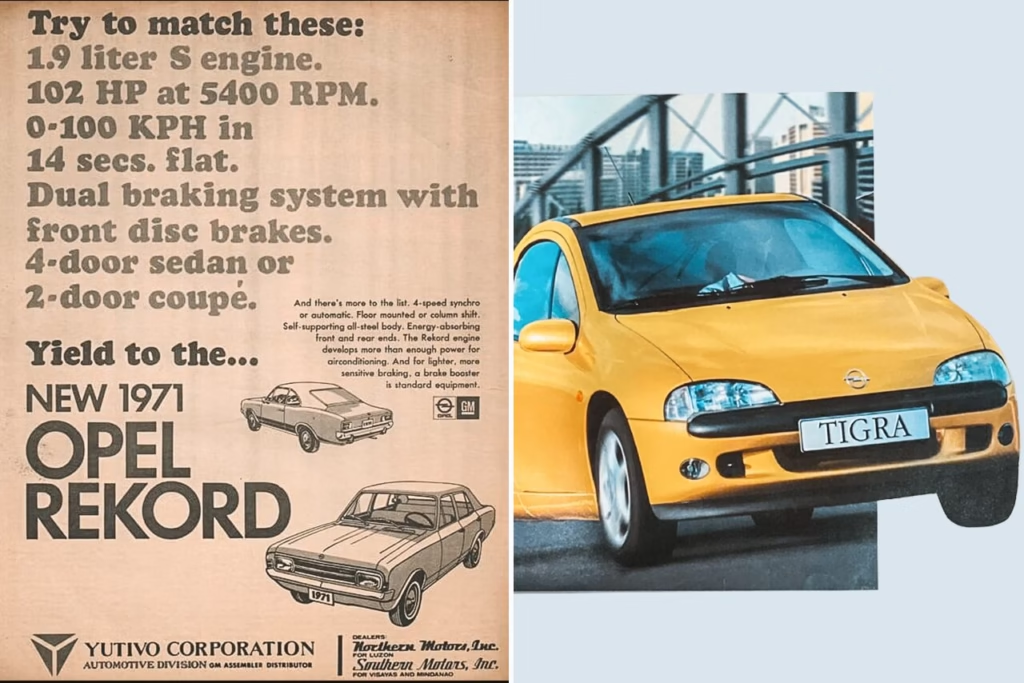
Opel was a familiar European alternative in the 1970s before pulling out in 1985. The brand made a spirited comeback in the mid-90s with cars like the Astra and Tigra, appealing to those seeking German engineering.
However, it struggled against Japanese dominance and limited support. By 2005, GM withdrew the Opel name locally, shifting its focus to Chevrolet (“Automotive industry in the Philippines,” n.d.).
Daewoo: Everywhere, Then Gone
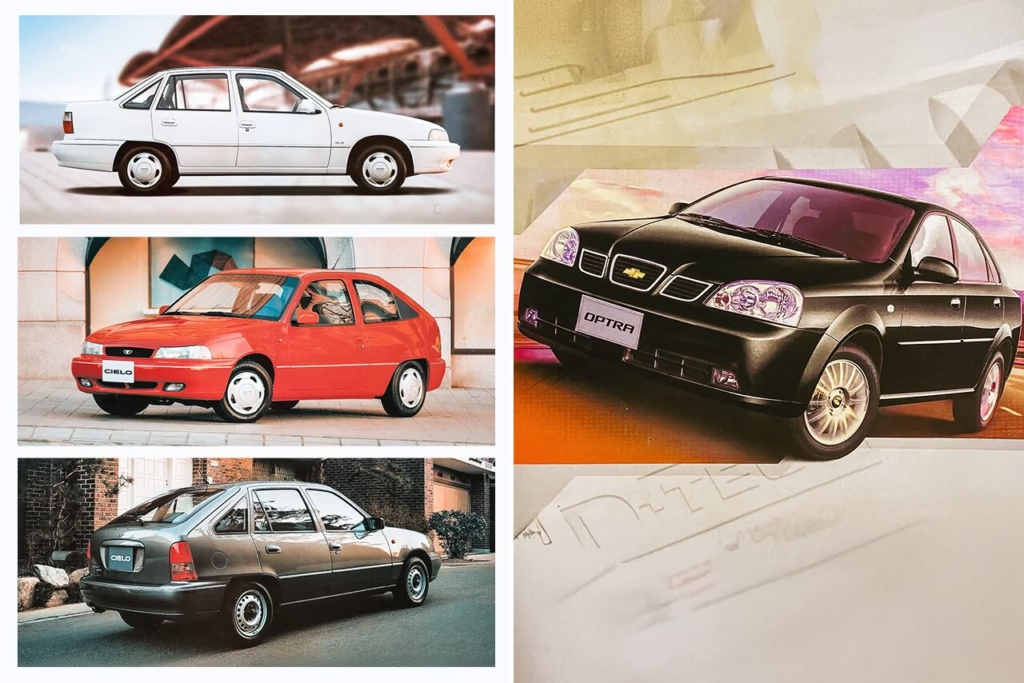
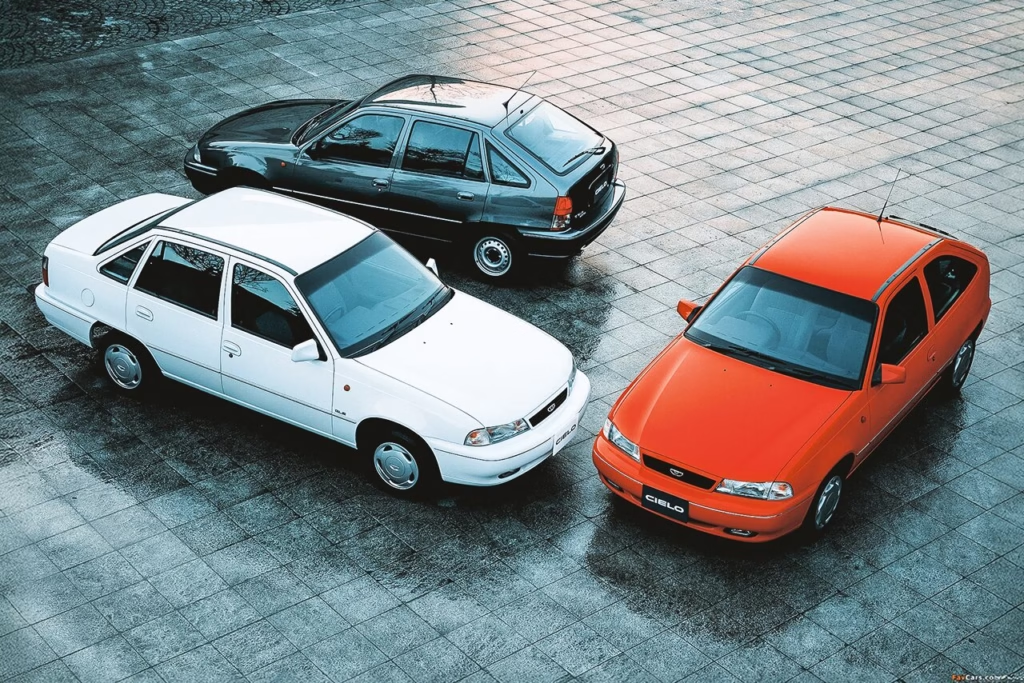
In the 1990s, the Daewoo Racer and Cielo were the go-to choices for first-time car buyers. That momentum was halted by the 1997 Asian Financial Crisis and corporate accounting scandals in Korea. While Daewoo’s passenger car operations were later absorbed by General Motors, several Daewoo models, such as the Optra continued on Philippine roads under the Chevrolet badge.
While Daewoo’s passenger cars were eventually absorbed by Chevrolet, the brand name still lives on in the Philippines today through its active bus manufacturing division (“Automotive industry in the Philippines,” n.d.).
Proton: ASEAN Ambitions, Short-Lived Locally
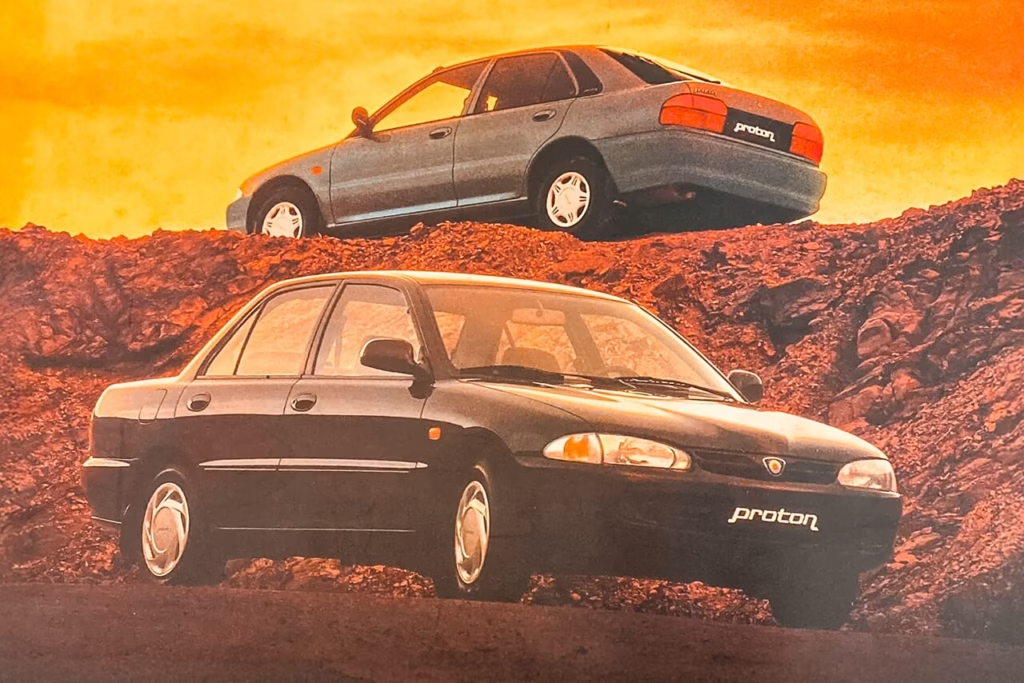
Malaysia’s national carmaker entered the Philippines in the 90s with the Wira and Persona. Built on Mitsubishi platforms, they were reliable but lacked a distinct identity to pull buyers away from established Japanese giants. Following the 1997 Asian Financial Crisis, Proton quietly exited the local market (“Automotive industry in the Philippines,” n.d.).
Fiat: A Short Stay in the Philippine Market
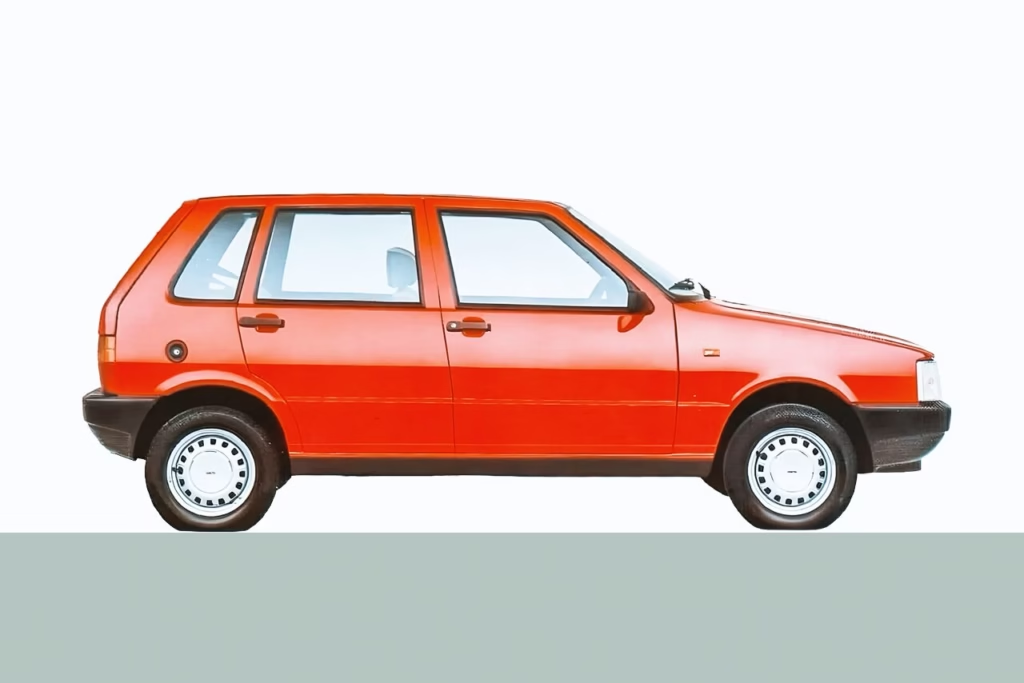
In the 1990s, Fiat attempted to capture the mass market with the Uno. Despite a local assembly effort, it was plagued by concerns over parts availability and aftersales service (“Automotive industry in the Philippines,” n.d.). Fiat soon stepped away from the mainstream, remaining only as a niche, high-end brand today.
Francisco Motors: The Local Brand That Refused to Disappear
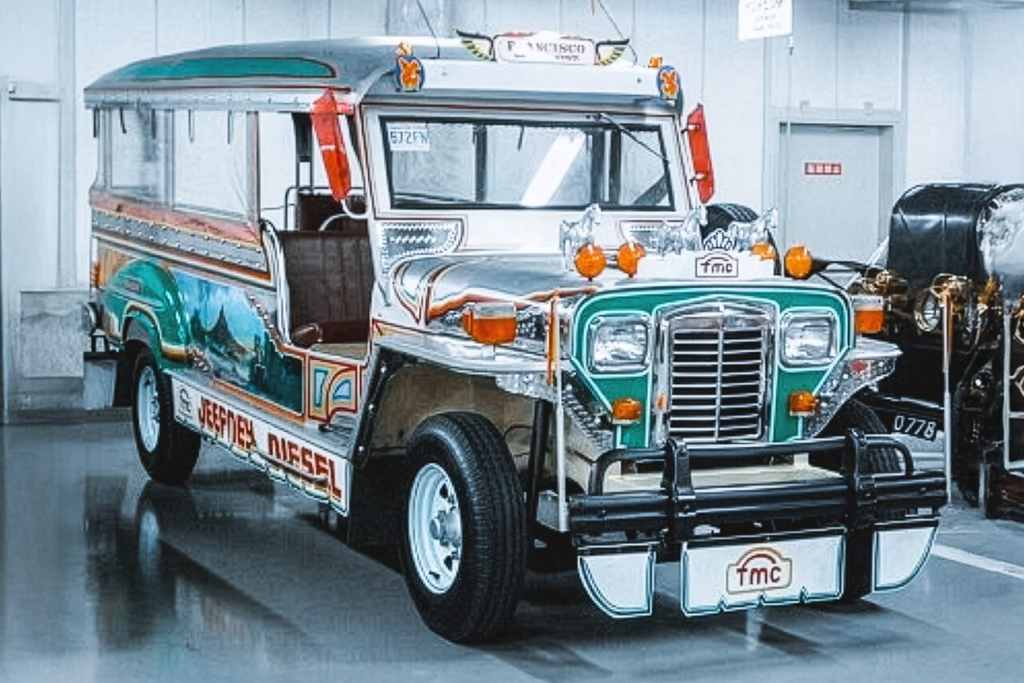
While many foreign brands came and went, Francisco Motors Corporation followed a different path.
Founded in the postwar years, the company became best known for producing utility vehicles and jeepneys, including models like the Anfra and Harabas. Rather than competing directly with foreign passenger cars, Francisco Motors focused on vehicles built for local conditions and transport needs.
In the 1990s, the company briefly stepped into passenger car production by assembling the Fiat Uno via the People’s Car Program; however, it was short-lived.
Unlike many foreign brands that exited the country, Francisco Motors remained active, continuing to build and innovate in the local jeepney industry. Recently, the company has been developing electric jeepneys and exploring new transport solutions for the Philippine market (Banzon, 2024).
Not every story from this period ended in disappearance.
Daihatsu: Gone in Name, Not in DNA
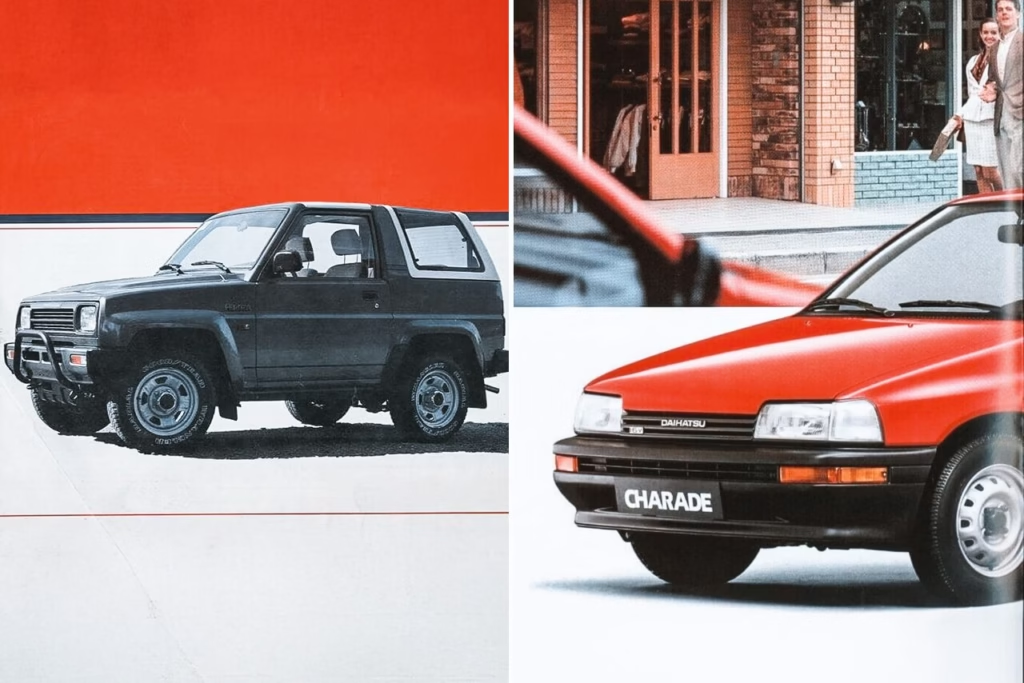
The Charade and Feroza were icons of practicality. While Daihatsu stopped selling cars under its own badge in the Philippines years ago, its presence is arguably stronger than ever. Today, Daihatsu’s engineering provides the platforms for Toyota’s most popular models, including the Wigo, Rush, and Raize.
Volkswagen: Many Returns, No Permanent Home
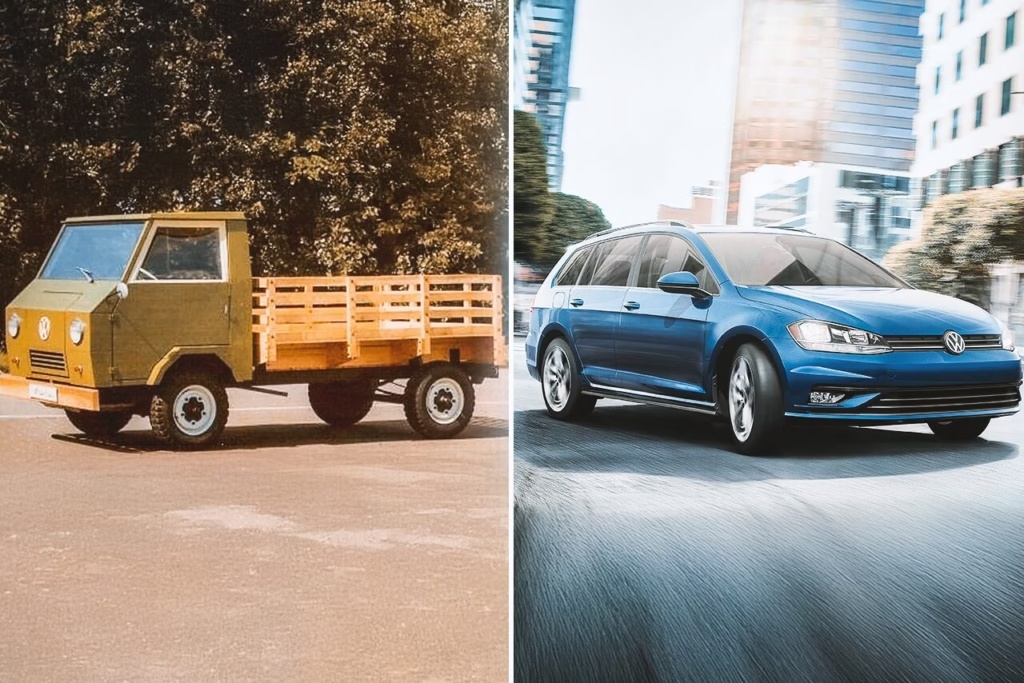
Volkswagen’s history in the Philippines stretches back to the 1960s, when the brand was distributed by DMG Motors (Domingo M. Guevarra Inc.). Under DMG, Volkswagen models such as the Beetle, Kombi, and the locally developed Sakbayan and Trakbayan found their way onto Philippine roads, marking the brand’s first real foothold in the country.
Decades later, Volkswagen returned in 2013 under the Ayala Group (Domingo, 2025). However, in September 2025, the distribution partnership officially ended, halting new-car sales once again. While service and warranties remain for existing owners, the “People’s Car” has once more paused its retail operations in the Philippines (“Volkswagen pulls out of Philippine automotive market,” 2025).
What the Road Left Behind
Philippine roads didn’t lose these brands overnight. They faded slowly, one by one, as policies shifted, economies stumbled, and consumer tastes narrowed. What remains isn’t just a smaller list of car badges, but a reminder that the automotive landscape we know today was shaped as much by what disappeared as by what endured.
Some names may return. Others will remain memories. But every empty badge tells a story of a market that quietly moved on.
Sources:
Automotive industry in the Philippines. (n.d.). In Wikipedia.
https://en.wikipedia.org/wiki/Automotive_industry_in_the_Philippines
Banzon, S. (2024, May 13). Francisco Motors revives the Harabas as an EV. Top Gear Philippines. https://www.topgear.com.ph/news/car-news/francisco-motors-harabas-ev-preview-a2578-20240513
Caña, P. J. (2023, May 22). Ford used to have assembly and production plants in the Philippines. What happened? Esquire Philippines. https://www.esquiremag.ph/long-reads/features/ford-history-philippines-a00289-20230522-lfrm
Domingo, R. W. (2025, September 19). Volkswagen pulls out of Philippine automotive market. Philippine Daily Inquirer. https://business.inquirer.net/547844/volkswagen-pulls-out-of-philippine-market
Ford Philippines to close Sta. Rosa factory in December. (2012, June 27). GMA News Online. https://www.gmanetwork.com/news/money/companies/263331/ford-philippines-to-close-sta-rosa-factory-in-december/story/
Toyota Motor Corporation. (n.d.). Activities by region—Asia. Toyota Global. https://www.toyota-global.com/company/history_of_toyota/75years/data/automotive_business/sales/activity/asia/index.html
Volkswagen pulls out of Philippine automotive market. (2025, September 19). BusinessWorld Online. https://www.bworldonline.com/corporate/2025/09/19/699571/volkswagen-pulls-out-of-philippine-market/